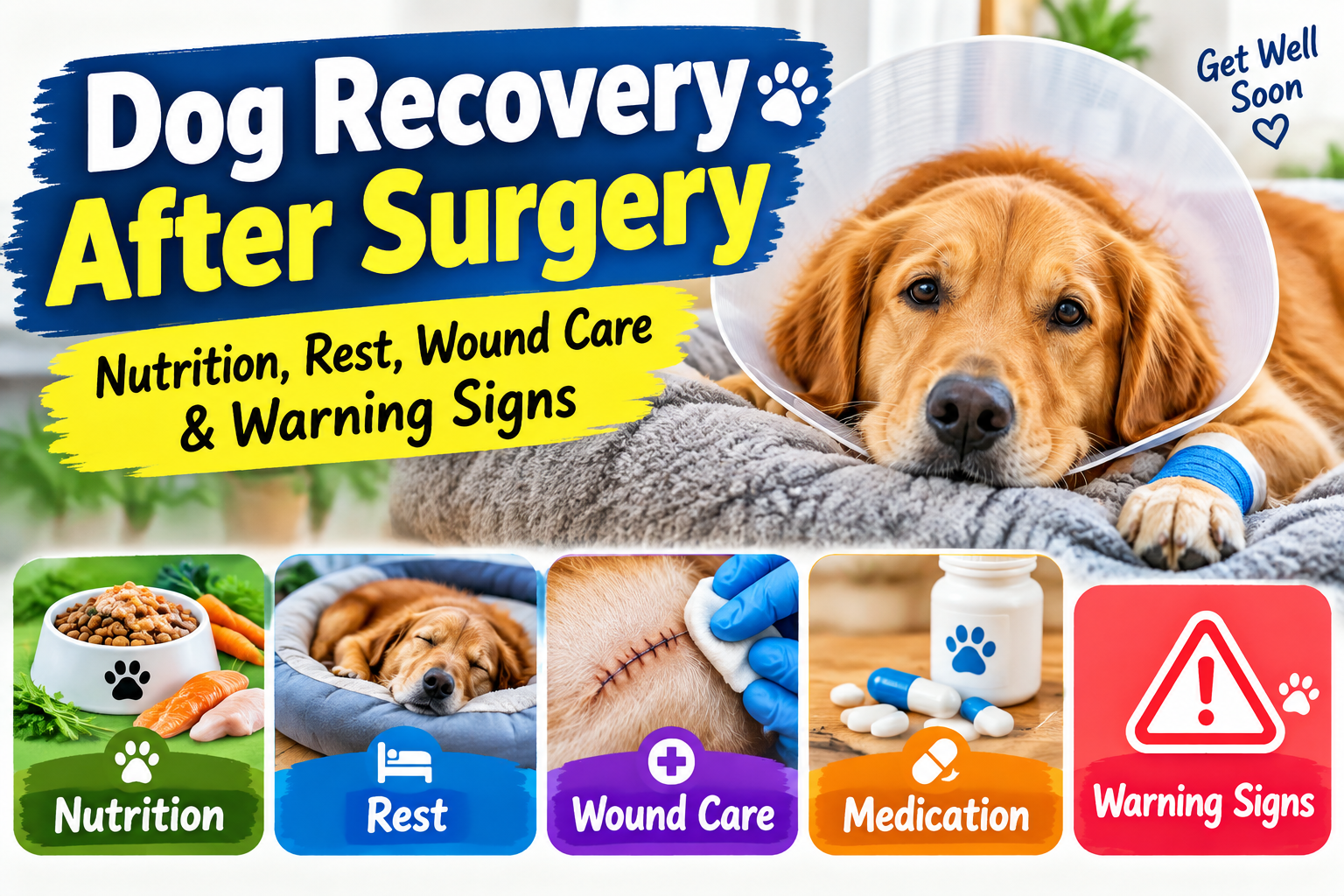
Dog Recovery After Surgery: Nutrition, Rest, Wound Care & Warning Signs
Dog surgery can be stressful for both pets and their owners. Whether your dog has undergone a routine procedure such as spaying or neutering, dental surgery, tumor removal, orthopedic surgery, or an emergency operation, proper post-surgery care plays an important role in recovery. During this period, your dog needs plenty of rest, appropriate nutrition, careful wound care, and close monitoring.
When their owners adhere to the veterinarian’s instructions, the majority of dogs recover well from surgery. Every dog is unique, though, and the length of time it takes to recover depends on the kind of surgery, age, general health, and any underlying medical issues.
This guide describes how to take care of your dog following surgery, including wound care, medication, exercise limitations, nutrition, and warning signs that call for veterinary care.
What to Expect After Dog Surgery
It is normal for a dog to behave differently during the first few hours or days after surgery. Anesthesia and pain medications can make your dog sleepy, confused, weak, or less interested in food.
Your dog may sleep more than usual during the first 24 hours. Mild changes in appetite, activity, and behavior can also occur. Your veterinarian should explain what is considered normal for your dog’s particular procedure.
Give your dog a quiet, comfortable place to recover. Avoid unnecessary handling, loud noises, visitors, and activities that could cause excitement.
If your dog appears to be getting worse rather than gradually improving, contact your veterinarian.
1. Give Your Dog Plenty of Rest
Rest is one of the most important parts of recovery after surgery. Even if your dog seems energetic, internal tissues may still be healing.
Create a comfortable recovery area where your dog can lie down without being disturbed. A clean, soft bed placed on a non-slip surface can help your dog feel secure.
For many surgeries, your veterinarian may recommend restricting running, jumping, climbing stairs, and rough play. These activities can place pressure on the surgical site and may cause the incision to open.
Keep your dog on a leash for short bathroom breaks unless your veterinarian gives different instructions.
If you have other pets at home, consider separating them temporarily. Another dog or cat may accidentally bump, lick, or play with the recovering pet.
2. Follow the Veterinarian’s Medication Instructions
Your dog may receive pain medication, antibiotics, anti-inflammatory medication, or other prescriptions after surgery.
Give all medications exactly as prescribed. Do not increase, decrease, or stop medication without speaking with your veterinarian.
Never give your dog human painkillers unless a veterinarian specifically tells you to do so. Some common human medications can be dangerous or even life-threatening to dogs.
If your dog vomits after taking medication, refuses medication, or develops unusual symptoms, contact your veterinary clinic for advice.
Keeping a simple medication schedule can help you avoid missed or repeated doses.
3. Provide Proper Nutrition
Nutrition is essential for tissue repair and recovery. However, your dog may have a reduced appetite immediately after anesthesia.
Offer food according to your veterinarian’s instructions. In many cases, smaller meals may be easier to tolerate than one large meal.
Fresh drinking water should usually be available unless your veterinarian has given specific fluid restrictions.
A balanced diet containing adequate protein, calories, vitamins, minerals, and essential nutrients supports normal healing. Avoid suddenly changing your dog’s diet unless recommended by your veterinarian.
If your dog has a medical condition such as kidney disease, diabetes, pancreatitis, or gastrointestinal disease, nutritional requirements may be different.
Do not give fatty table scraps, spicy foods, or unfamiliar treats during recovery.
What If Your Dog Will Not Eat?
A temporary decrease in appetite can occur after surgery, but prolonged refusal to eat should not be ignored.
You can ask your veterinarian whether warming your dog’s regular food slightly or offering smaller portions is appropriate. Some dogs may be more comfortable eating soft food after certain procedures, particularly dental surgery.
If your dog refuses food for an extended period, repeatedly vomits, or seems extremely weak, contact your veterinarian.
4. Keep the Surgical Wound Clean and Dry
Proper incision care is essential after surgery.
Check the surgical site at least once or twice a day if your veterinarian recommends monitoring it. Look for excessive redness, swelling, bleeding, discharge, separation of the incision, or a bad smell.
A small amount of redness or mild swelling can sometimes occur during normal healing. However, significant changes should be discussed with your veterinarian.
Keep the incision dry unless your veterinarian has specifically instructed you to clean it.
Do not apply hydrogen peroxide, alcohol, creams, oils, herbal products, or other substances to the surgical site unless your veterinarian recommends them. Some products can damage healing tissue or delay recovery.
Avoid bathing or swimming until your veterinarian confirms that the incision has healed sufficiently.
5. Prevent Licking and Chewing
Dogs naturally want to lick wounds, but excessive licking can damage the incision and introduce bacteria.
Your veterinarian may recommend an Elizabethan collar, commonly called an e-collar or cone. Depending on the surgery and location of the wound, another protective recovery garment may sometimes be appropriate.
Keep the protective device on for the recommended period. Removing it for long periods can allow your dog to quickly damage the incision.
If the cone makes eating or drinking difficult, ask your veterinarian how to make your dog more comfortable rather than removing it without supervision.
6. Control Exercise During Recovery
One of the biggest mistakes owners make is allowing a recovering dog to exercise too much too soon.
Your dog may appear completely normal before the tissues are fully healed. Running, jumping, climbing stairs, and playing can place stress on healing tissues.
Follow your veterinarian’s exercise restrictions carefully.
For some procedures, short controlled leash walks may be allowed. Other surgeries may require much stricter activity restriction.
Keep your dog away from slippery floors and furniture where jumping on and off could occur.
If your dog is very active, you may need to use a crate, playpen, or small recovery room to limit movement.
7. Monitor Bathroom Habits
Changes in urination or bowel movements can occur after anesthesia, medication, reduced food intake, and changes in activity.
Your dog may take some time to have a normal bowel movement after surgery. However, difficulty urinating, repeated attempts to urinate, blood in the urine, severe constipation, or persistent diarrhea should be discussed with your veterinarian.
Take your dog outside for bathroom breaks as instructed, keeping activity calm and controlled.
8. Help Your Dog Stay Comfortable
Comfort can make the recovery period easier.
Keep your dog’s bed in a quiet area away from excessive noise and household traffic. Maintain a comfortable room temperature and provide easy access to water.
Some dogs become anxious after surgery. Gentle reassurance can help, but avoid excessive excitement or physical activity.
Do not force your dog to interact, play, or walk if your veterinarian has recommended rest.
9. Attend Follow-Up Appointments
Follow-up veterinary visits are an important part of recovery.
Your veterinarian may need to check the incision, remove stitches or staples if they are not dissolvable, assess healing, or adjust medication.
Even if your dog appears completely recovered, do not skip a recommended follow-up appointment.
Some problems occur beneath the skin and may not be obvious from the outside.
Warning Signs After Dog Surgery
Knowing the warning signs can help you recognize complications early.
Contact your veterinarian promptly if you notice:
- Significant or increasing swelling around the incision
- Heavy bleeding
- Pus or thick discharge
- Foul odor from the wound
- The incision opening
- Severe or worsening redness
- Persistent vomiting or diarrhea
- Difficulty breathing
- Collapse or extreme weakness
- Severe or uncontrolled pain
- Pale, blue, or unusual-looking gums
- Inability to urinate
- Persistent refusal to eat or drink
- High fever or significant changes in body temperature
- Severe lethargy that does not improve
- Continuous crying, restlessness, or inability to get comfortable
Some symptoms require emergency veterinary care. If your dog has difficulty breathing, collapses, has uncontrolled bleeding, or appears critically ill, seek emergency veterinary attention immediately.
How Long Does Dog Recovery Take?
Recovery time depends heavily on the type of surgery.
Minor procedures may require only several days of restricted activity, while orthopedic procedures and major abdominal surgeries may require several weeks or longer.
Your dog’s age, general health, nutritional status, surgical procedure, and ability to follow activity restrictions can all influence recovery.
Never assume that your dog is fully healed simply because the incision looks better. Internal tissues can take longer to recover.
Always follow the specific timeline provided by your veterinarian.
Tips for a Smooth Dog Surgery Recovery
You can make recovery easier by preparing before your dog comes home.
Create a clean and quiet recovery space.
Keep medications organized and follow the prescribed schedule.
Prepare appropriate food and fresh water.
Prevent access to stairs and furniture if necessary.
Use a cone or protective garment if recommended.
Check the incision regularly.
Limit running, jumping, and rough play.
Keep follow-up appointments.
Write down unusual symptoms so you can accurately explain them to your veterinarian.
Most importantly, be patient. Dogs often want to return to their normal routine before their bodies are ready.
Frequently Asked Questions
Can my dog eat normally after surgery?
Some dogs can return to their normal diet relatively quickly, while others may need smaller meals or a temporary dietary adjustment. Follow your veterinarian’s feeding instructions, especially after gastrointestinal, dental, or major abdominal surgery.
How do I stop my dog from licking the incision?
An e-collar or veterinarian-approved recovery garment can help prevent licking and chewing. Keep the protective device on for the recommended period.
Can my dog walk after surgery?
Walking restrictions depend on the procedure. Your veterinarian may allow short, controlled leash walks for bathroom breaks, but running and jumping are commonly restricted during healing.
Should I clean my dog’s surgical wound?
Only clean the incision if your veterinarian specifically instructs you to do so. Do not apply household disinfectants, alcohol, hydrogen peroxide, or other products without veterinary guidance.
When should I call the veterinarian?
Call your veterinarian if your dog develops worsening pain, excessive swelling, bleeding, discharge, vomiting, severe weakness, breathing problems, inability to urinate, or other concerning changes.
Final Thoughts
Dog recovery after surgery requires patience, observation, and careful attention to your veterinarian’s instructions. Providing adequate nutrition, plenty of rest, appropriate medication, proper wound protection, and controlled activity can support a smoother recovery.
Every surgical procedure is different, so your veterinarian’s instructions should always take priority over general advice. Monitor your dog’s behavior and surgical site regularly, and do not hesitate to contact your veterinary clinic if something seems unusual.
With proper care and monitoring, many dogs recover successfully and gradually return to their normal, happy lives.