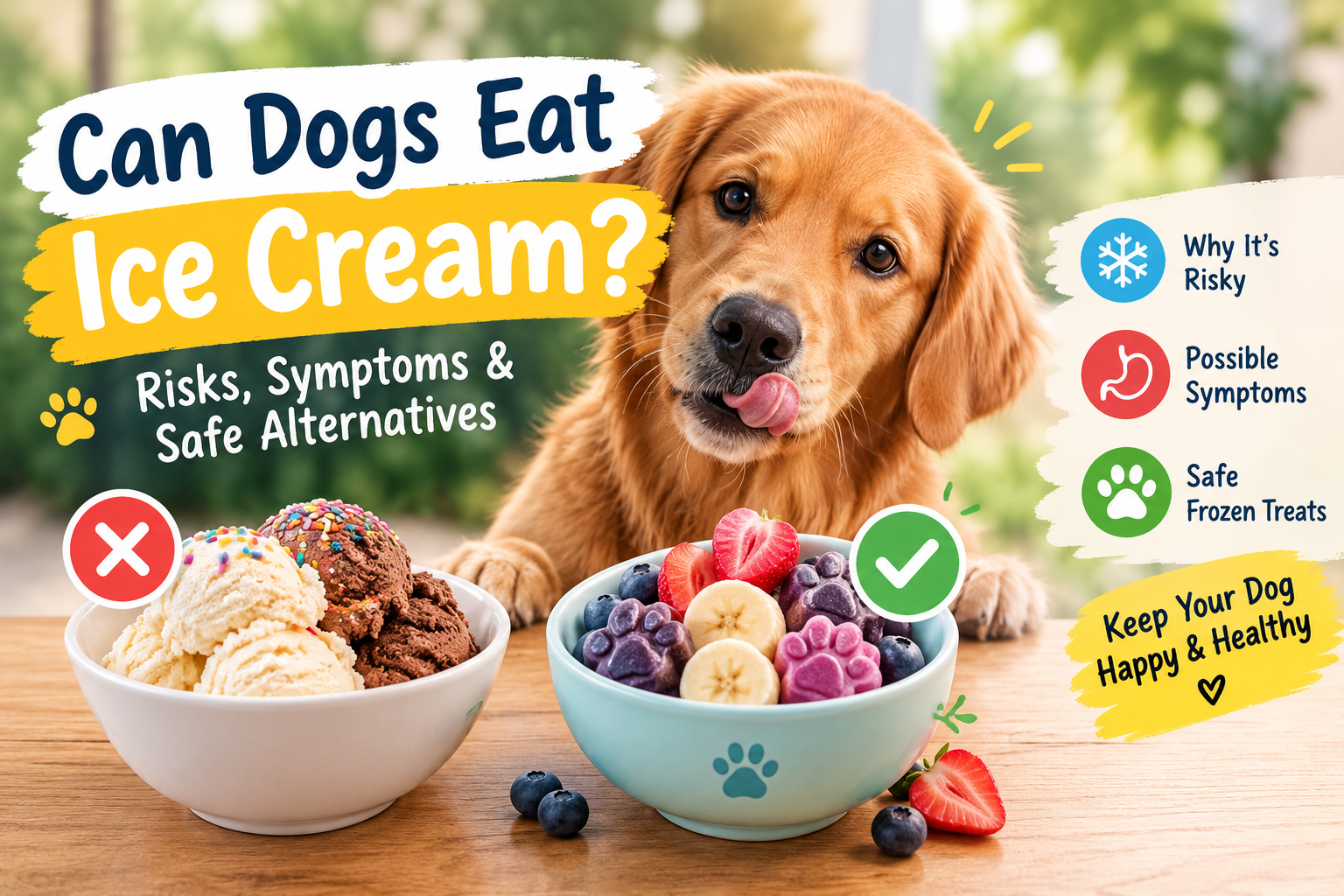
Introduction
On a hot summer day, sharing a little ice cream with your dog might seem like a harmless way to help them cool down. Many dogs are curious about the sweet smell and creamy texture of this popular dessert. However, before offering your furry friend a spoonful, it is important to understand whether ice cream is safe for dogs.
Can dogs eat ice cream? The short answer is that dogs should generally avoid regular human ice cream. A tiny lick of plain ice cream may not cause a problem for every dog, but larger amounts can lead to digestive upset. Some varieties also contain ingredients that are toxic to dogs.
Ice cream is often high in sugar and fat, and many adult dogs have difficulty digesting lactose. Certain flavours may contain chocolate, xylitol, or other dangerous ingredients that can cause serious health problems.
In this guide, you will learn why ice cream can be harmful to dogs, which flavours are especially risky, what to do if your dog eats ice cream, and which frozen treats are safer alternatives.
Can Dogs Eat Ice Cream Safely?
Regular ice cream is not recommended as a treat for dogs. Although a small lick of plain vanilla ice cream may not harm a healthy dog, it does not provide any essential nutrients that dogs cannot obtain from a balanced diet.
Dogs have different nutritional needs from humans. Their digestive systems may not tolerate the dairy, sugar, and fat found in many commercial ice creams.
The risk also depends on your dog’s size, age, health condition, the quantity eaten, and the ingredients in the product.
For example, a small dog may experience digestive problems after eating an amount that a larger dog tolerates without obvious symptoms. Dogs with diabetes, pancreatitis, obesity, or sensitive stomachs may face additional risks.
The safest approach is to avoid feeding your dog regular ice cream and choose treats specifically made for canine nutrition.
Youtube Video
Why Is Ice Cream Bad for Dogs?
Several ingredients commonly found in ice cream can cause problems for dogs. Understanding these risks can help you make safer choices for your pet.
1. Lactose Can Cause Digestive Problems
Milk and cream contain lactose, a natural sugar that requires the enzyme lactase for digestion. Many adult dogs produce less lactase than they did when they were puppies.
As a result, some dogs cannot digest dairy products properly. Eating ice cream may cause symptoms such as:
- Diarrhoea or loose stools
- Gas and bloating
- Vomiting
- Abdominal discomfort
- Reduced appetite
Not every dog reacts to dairy in the same way. However, because lactose intolerance is common in adult dogs, regular ice cream is best avoided.
2. High Sugar Content Can Harm Your Dog
Ice cream often contains significant amounts of added sugar. Dogs do not need sugary desserts to stay healthy, and frequent consumption can contribute to unwanted weight gain.
Too much sugar may also increase the risk of dental problems and make it harder to maintain a healthy body weight.
For dogs that already have diabetes or other metabolic conditions, sugary foods can be particularly inappropriate.
Even ice cream labelled as low-fat or sugar-free may not be suitable. Always check the ingredient list before allowing your dog to eat any human dessert.
3. High Fat Levels May Trigger Pancreatitis
Cream-based ice cream can contain substantial amounts of fat. While dogs need an appropriate amount of dietary fat, very rich foods may cause digestive problems.
In some dogs, consuming a high-fat meal can contribute to pancreatitis, an inflammation of the pancreas that requires veterinary treatment.
Signs may include repeated vomiting, abdominal pain, weakness, loss of appetite, and unusual tiredness.
If your dog eats a large amount of fatty ice cream and develops these symptoms, contact a veterinarian promptly.
4. Xylitol Can Be Extremely Toxic
Some sugar-free products contain xylitol, a sweetener that is highly toxic to dogs. Exposure can cause a dangerous drop in blood sugar and, in severe cases, liver damage.
Do not assume that sugar-free ice cream is safer for your pet.
If your dog eats a product containing xylitol, seek emergency veterinary advice immediately, even if your dog appears normal. Do not wait for symptoms to develop.
Check ingredient labels carefully and keep sugar-free desserts out of your dog’s reach.
What Happens If a Dog Eats Ice Cream?
The effects depend on the amount eaten, the ingredients, and your dog’s individual sensitivity.
Mild Symptoms
After eating plain ice cream, some dogs may develop digestive upset within several hours. Possible symptoms include:
- Gas or bloating
- Loose stools
- Mild diarrhoea
- Vomiting
- Temporary stomach discomfort
A dog that has eaten only a tiny lick may experience no symptoms at all. Nevertheless, monitor your pet and avoid giving them more ice cream.
Serious Symptoms to Watch For
Some ice cream ingredients can cause a medical emergency. Warning signs include repeated vomiting, severe weakness, tremors, seizures, collapse, or significant abdominal pain.
If the product contains chocolate, xylitol, raisins, or macadamia nuts, contact your veterinarian or an emergency veterinary clinic immediately.
Tell the veterinarian what your dog ate, approximately how much was consumed, and when it happened. Keep the packaging if possible.
Do not induce vomiting or give home remedies unless a veterinary professional specifically instructs you to do so.
Can Puppies Eat Ice Cream?
Puppies should not be given regular ice cream. Their digestive systems are still developing, and rich, sugary foods can upset their stomachs.
Diarrhoea and vomiting are especially concerning in young puppies because they can become dehydrated more quickly than healthy adult dogs.
Puppies also need a complete, balanced diet formulated for growth. Human desserts do not provide the right nutritional balance for their development.
Instead of ice cream, offer small portions of appropriate puppy treats or a veterinarian-approved frozen snack. Make sure any treat is suitable for your puppy’s age and size.
If a puppy develops vomiting, diarrhoea, unusual weakness, or refuses food after eating ice cream, contact a veterinarian promptly.
Can Dogs Eat Different Types of Ice Cream?
Not all ice cream flavours carry the same risks. Some ingredients are more dangerous than others, but most human ice creams are still unsuitable for dogs.
Can Dogs Eat Vanilla Ice Cream?
Plain vanilla ice cream is generally less concerning than chocolate ice cream, provided it does not contain a dangerous sweetener or another toxic ingredient.
However, vanilla ice cream still contains dairy, sugar, and fat. It may cause digestive upset and is not a healthy everyday treat.
If your dog accidentally licks a small amount of ordinary vanilla ice cream, monitor them for symptoms. Avoid deliberately feeding it to your pet.
Can Dogs Eat Chocolate Ice Cream?
No. Chocolate ice cream should never be offered to dogs.
Chocolate contains theobromine and caffeine, substances that can be toxic to dogs. The level of risk depends on the type and quantity of chocolate, the amount eaten, and the dog’s size.
Dark chocolate and cocoa-rich products can be especially dangerous.
If your dog eats chocolate ice cream, contact a veterinarian promptly for advice. Do not wait for symptoms, as early treatment may improve the outcome.
Can Dogs Eat Dairy-Free Ice Cream?
Dairy-free ice cream is not automatically safe for dogs. These products may contain coconut milk, nut-based ingredients, added sugar, oils, or artificial sweeteners.
Some ingredients may cause stomach upset, while others can be toxic.
Always inspect the full ingredient list. Avoid products containing xylitol, chocolate, macadamia nuts, or other ingredients known to be dangerous to dogs.
A simple frozen treat made from dog-safe ingredients is generally a better choice.
Can Dogs Eat Soft-Serve Ice Cream?
Soft-serve ice cream has many of the same disadvantages as regular ice cream. It can contain dairy, sugar, and fat, and its ingredients vary by brand.
A small accidental lick of plain soft-serve may not cause a problem, but it is not recommended as a regular dog treat.
Be especially careful with chocolate toppings, syrups, sugar-free sauces, and other additions.
Healthy Frozen Treats for Dogs
If your dog enjoys cold snacks, there are several alternatives that can provide a refreshing treat without the unnecessary ingredients found in human ice cream.
1. Frozen Blueberries
Blueberries are a convenient option for many dogs. They contain fibre and beneficial plant compounds and can be served fresh or frozen.
Wash them first and offer a small quantity. For very small dogs, consider cutting or gently crushing the berries to reduce the risk of choking.
2. Frozen Strawberries
Strawberries can be offered in moderation as an occasional snack. Wash them, remove the green tops, and cut them into appropriately sized pieces.
Avoid adding sugar, syrup, chocolate, or whipped cream.
3. Frozen Banana Bites
Bananas provide fibre and nutrients but also contain natural sugar. Cut a small amount of banana into bite-sized pieces and freeze them.
Because bananas contain carbohydrates, keep portions modest, especially for dogs that need to manage their weight.
4. Plain Yogurt Frozen Treats
Some dogs tolerate plain, unsweetened yogurt better than milk, although it can still cause digestive problems in lactose-sensitive pets.
If your dog has previously tolerated yogurt, you can freeze a small amount with dog-safe fruit. Choose a product without added sugar or artificial sweeteners, and check carefully for xylitol.
Dogs with dairy sensitivities should avoid this option.
5. Frozen Dog-Specific Treats
Commercial frozen treats made specifically for dogs can be a convenient alternative. Choose products with clearly listed ingredients and appropriate nutritional information.
Look for options without added sugar and avoid products containing ingredients that are toxic to dogs.
Treats should complement a complete, balanced diet rather than replace regular meals.
How Much Ice Cream Can a Dog Eat?
There is no universally safe portion of human ice cream for every dog. Even a small amount may cause digestive upset in a sensitive pet, while a larger quantity can increase the risk of complications.
If your dog accidentally eats a small lick of plain vanilla ice cream, it is usually reasonable to monitor them for symptoms, provided the product contains no toxic ingredients.
However, do not intentionally feed ice cream as a treat.
The amount consumed matters, but the ingredients matter just as much. A small quantity of a product containing xylitol can be far more dangerous than a larger lick of ordinary vanilla ice cream.
For regular rewards, choose small dog treats that fit within your pet’s daily calorie needs. As a general guideline, treats should make up no more than about 10% of a dog’s daily calories, with the remainder coming from complete and balanced food.
What Should You Do If Your Dog Eats Ice Cream?
If your dog eats ice cream accidentally, stay calm and follow these steps.
Step 1: Check the ingredients. Look for chocolate, xylitol, raisins, macadamia nuts, and other potentially dangerous ingredients.
Step 2: Estimate how much was eaten. Consider your dog’s size, the amount missing, and whether your pet ate any cone, toppings, or packaging.
Step 3: Contact your veterinarian when necessary. Seek immediate professional advice if the product contains a toxic ingredient, your dog ate a substantial amount, or your pet has an existing health condition that increases the risk.
Step 4: Watch for symptoms. Monitor for vomiting, diarrhoea, abdominal discomfort, unusual tiredness, tremors, or changes in behaviour.
Step 5: Avoid home treatments without guidance. Do not force your dog to vomit or administer medication unless instructed by a veterinary professional.
If your dog collapses, has seizures, struggles to breathe, or becomes severely weak, seek emergency veterinary care immediately.
How to Keep Your Dog Cool Without Ice Cream
Ice cream is not necessary to help your dog stay comfortable in warm weather. There are safer ways to support your pet.
- Provide fresh, clean drinking water throughout the day.
- Keep your dog in a cool, shaded, or air-conditioned area during extreme heat.
- Walk your dog during cooler morning or evening hours.
- Offer appropriately sized frozen dog treats.
- Avoid leaving your dog inside a parked vehicle.
- Watch for heavy panting, excessive drooling, weakness, confusion, or collapse.
These signs can indicate overheating or heatstroke. If you suspect heatstroke, begin moving your dog to a cooler area, use cool—not ice-cold—water while arranging veterinary care, and seek immediate professional help.
Never rely on ice cream as a way to cool an overheated dog.
Frequently Asked Questions
1. Can dogs eat ice cream occasionally?
It is best to avoid feeding regular human ice cream, even occasionally. A tiny accidental lick of plain ice cream may not cause harm, but dairy, sugar, and fat can trigger digestive problems.
2. Is vanilla ice cream toxic to dogs?
Plain vanilla ice cream is not generally considered inherently toxic, but it is not recommended because of its dairy, sugar, and fat content. Products containing xylitol or other dangerous ingredients pose a much greater risk.
3. What should I do if my dog eats chocolate ice cream?
Contact your veterinarian promptly and provide details about the product, amount eaten, and your dog’s weight. Do not wait for symptoms to appear.
4. Can dogs eat sugar-free ice cream?
Sugar-free ice cream should not be given to dogs unless a veterinarian has confirmed that its ingredients are appropriate. Some products contain xylitol, which can be extremely toxic to dogs.
5. Is frozen yogurt safe for dogs?
Plain, unsweetened frozen yogurt may be tolerated by some dogs, but it can still cause digestive upset and may contain added sugar or unsafe sweeteners. A dog-specific frozen treat is generally a better option.
6. What is the best alternative to ice cream for dogs?
Small portions of frozen blueberries, strawberries, or banana can be suitable for many healthy dogs. Dog-specific frozen treats are another option. Always consider your dog’s size, dietary needs, and food sensitivities.
7. Can ice cream cause diarrhoea in dogs?
Yes. Lactose, high fat levels, and added sugar may contribute to diarrhoea or other digestive symptoms. Persistent diarrhoea, repeated vomiting, or weakness warrants veterinary advice.
Final Verdict: Can Dogs Eat Ice Cream?
So, can dogs eat ice cream? Although a small lick of plain ice cream may not harm every dog, regular human ice cream is not a recommended treat for dogs.
Its dairy content can cause digestive upset, while its sugar and fat levels offer little nutritional benefit. Certain varieties also contain ingredients, such as chocolate or xylitol, that can cause serious health problems.
The better choice is to offer dog-safe frozen treats made with simple ingredients, such as small portions of suitable fruit or specially formulated dog treats.
Every dog has different nutritional needs, so introduce new foods carefully and consult your veterinarian if your pet has a medical condition or a sensitive stomach.
With the right treats, plenty of fresh water, and good care, you can help your dog enjoy warm days without the unnecessary risks of human ice cream.