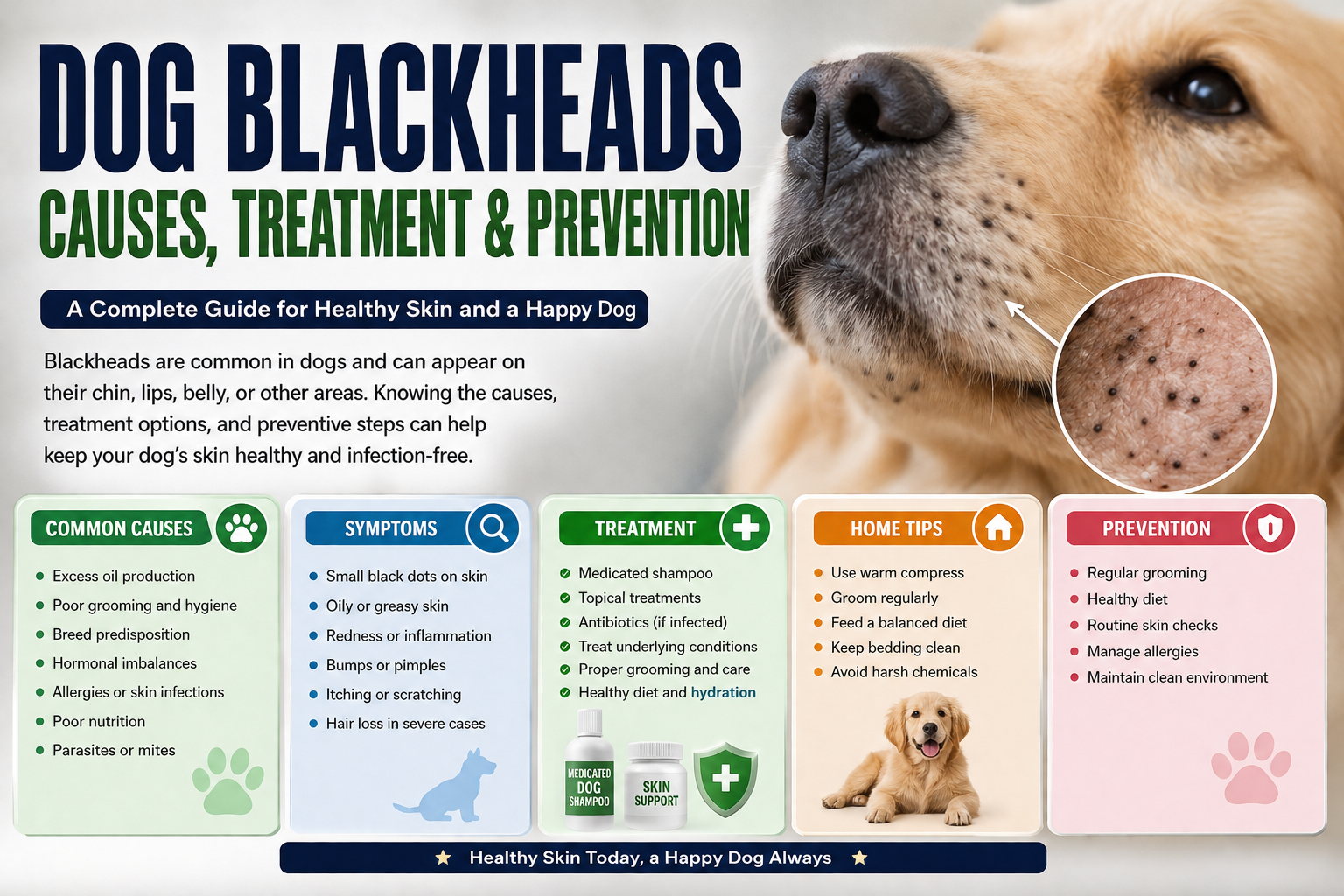
Dog Blackheads: Causes, Symptoms, and Diagnosis
Many dog owners are surprised to discover small black spots on their pet’s skin. At first glance, these spots may look like dirt, flea droppings, or tiny scabs. However, in some cases, they are dog blackheads, also known as comedones. While blackheads are commonly associated with humans, dogs can develop them too.
Dog blackheads are often harmless, but they can also signal an underlying skin condition that requires treatment. If left untreated, blackheads may become infected, leading to discomfort, inflammation, and more serious skin problems.
In this guide, you’ll learn everything you need to know about dog blackheads, including their causes, symptoms, risk factors, and diagnosis.
Table of Contents
- What Are Dog Blackheads?
- Can Dogs Really Get Blackheads?
- Common Causes of Dog Blackheads
- Which Dogs Are More Likely to Develop Blackheads?
- Signs and Symptoms
- How Veterinarians Diagnose Dog Blackheads
- When Should You Visit a Vet?
What Are Dog Blackheads?
Dog blackheads are clogged hair follicles filled with oil (sebum), dead skin cells, and debris. The dark color appears when the material inside the pore is exposed to oxygen, causing oxidation.
Unlike fleas or ticks, blackheads are not parasites. They are a type of skin condition that can appear anywhere on a dog’s body but are most commonly found on the:
- Chin
- Lips
- Belly
- Chest
- Armpits
- Tail area
- Neck
Some dogs develop only a few blackheads, while others may have dozens scattered across their skin.
Can Dogs Really Get Blackheads?
Yes. Dogs can develop blackheads just like people.
In veterinary medicine, these blackheads are called comedones. They form when hair follicles become blocked with excess oil and dead skin cells.
Not every black spot is a blackhead. Flea dirt, dried blood, skin pigmentation, and tiny scabs can look similar. If you’re unsure, it’s best to have your dog’s skin examined by a veterinarian.
Blackheads themselves are usually not painful. However, if bacteria enter the clogged pore, it can develop into a painful pimple, boil, or skin infection.
What Causes Dog Blackheads?
Several factors can contribute to blackhead formation in dogs.
1. Excess Oil Production
Some dogs naturally produce more skin oil than others. Excess sebum can clog hair follicles and create blackheads.
Dogs with oily skin are more likely to experience recurring blackheads.
2. Poor Skin Hygiene
Dogs that are not groomed regularly can accumulate dirt, dead skin, and oil.
Without routine bathing and brushing, pores become clogged, increasing the risk of blackheads.
3. Breed Predisposition
Certain breeds are genetically more prone to blackheads because of their skin structure.
Commonly affected breeds include:
- Schnauzers
- Chinese Crested Dogs
- Hairless breeds
- Doberman Pinschers
- Bulldogs
Miniature Schnauzers are especially known for developing Schnauzer Comedo Syndrome, a condition characterized by numerous blackheads along the back.
4. Hormonal Imbalances
Hormonal disorders can affect oil production in the skin.
Conditions such as:
- Hypothyroidism
- Cushing’s disease
may increase the likelihood of blackheads and other skin problems.
5. Allergies
Food allergies and environmental allergies may cause chronic skin inflammation.
Repeated scratching and irritation can damage hair follicles, making them more likely to clog.
6. Parasites
Mites such as Demodex can contribute to blocked follicles.
Dogs with mange often develop secondary bacterial infections that resemble severe acne.
7. Skin Infections
Bacterial or fungal infections may cause inflammation around hair follicles.
As the follicles become swollen and blocked, blackheads can develop.
8. Poor Nutrition
A diet lacking essential fatty acids, vitamins, and minerals may negatively affect skin health.
Balanced nutrition helps maintain healthy skin and reduces excessive oil production.
9. Obesity
Overweight dogs often develop skin folds where moisture and bacteria collect.
These warm, damp environments can increase the risk of clogged pores and infections.
10. Genetics
Some dogs inherit skin conditions that make them more susceptible to blackheads throughout their lives.
These cases often require long-term skin management rather than a permanent cure.
Which Dogs Are More Likely to Develop Blackheads?
Although any dog can develop blackheads, the risk is higher in:
- Hairless breeds
- Miniature Schnauzers
- Dogs with oily skin
- Dogs with skin allergies
- Older dogs
- Dogs with hormonal diseases
- Obese dogs
- Dogs living in humid climates
Owners of these dogs should regularly inspect the skin for early signs of clogged pores.
Symptoms of Dog Blackheads
Dog blackheads are usually easy to recognize.
Common symptoms include:
- Tiny black dots on the skin
- Rough or bumpy skin texture
- Oily patches
- Mild redness around follicles
- Small pimples
- Hair loss near affected areas
- Crusty skin
- Itching (if infection develops)
- Unpleasant skin odor in severe cases
If bacteria infect the blackheads, additional symptoms may appear:
- Swelling
- Pus-filled bumps
- Bleeding
- Pain when touched
- Excessive licking or scratching
How Veterinarians Diagnose Dog Blackheads
Most veterinarians can diagnose blackheads through a physical examination.
However, additional tests may be recommended if the condition is severe or recurrent.
Common diagnostic tests include:
Skin Scraping
Used to detect mites such as Demodex.
Cytology
Samples from the skin are examined under a microscope to identify bacteria or yeast.
Fungal Culture
Performed if ringworm or fungal infection is suspected.
Blood Tests
Blood work may help diagnose hormonal diseases such as hypothyroidism or Cushing’s disease.
Skin Biopsy
In rare or unusual cases, a small skin sample may be taken to rule out tumors or chronic skin diseases.
When Should You Visit a Veterinarian?
While a few blackheads are often harmless, veterinary care is recommended if your dog has:
- Large numbers of blackheads
- Painful or swollen bumps
- Bleeding skin
- Pus or foul-smelling discharge
- Persistent itching
- Hair loss around affected areas
- Recurrent skin infections
- Blackheads that continue to spread
Early diagnosis helps prevent complications and ensures your dog receives the most appropriate treatment.
Best Treatments for Dog Blackheads
The treatment for dog blackheads depends on the underlying cause. Mild cases often improve with proper grooming and skin care, while severe or infected blackheads may require veterinary treatment.
1. Medicated Dog Shampoo
One of the most effective treatments is using a veterinarian-approved medicated shampoo. These shampoos help remove excess oil, dead skin cells, and bacteria from the skin.
Ingredients that are commonly recommended include:
- Benzoyl peroxide
- Chlorhexidine
- Sulfur
- Salicylic acid (only products formulated for dogs)
Bathing your dog every 1–2 weeks, or as directed by your veterinarian, can help keep pores clean and reduce new blackheads.
2. Topical Treatments
For localized blackheads, your veterinarian may recommend:
- Antibacterial wipes
- Medicated sprays
- Prescription creams
- Antiseptic gels
These products reduce bacteria and inflammation while preventing clogged pores from worsening.
3. Antibiotics
If the blackheads become infected, oral or topical antibiotics may be necessary.
Signs of infection include:
- Pus
- Swelling
- Pain
- Redness
- Warm skin
Always complete the full course of antibiotics prescribed by your veterinarian.
4. Treat the Underlying Disease
Sometimes blackheads are only a symptom of another health problem.
Your veterinarian may diagnose conditions such as:
- Hypothyroidism
- Cushing’s disease
- Allergies
- Mange (Demodex mites)
- Skin infections
Treating the root cause usually improves the skin over time.
Safe Home Remedies for Dog Blackheads
Home care can help mild cases, but it should never replace veterinary treatment if the skin is infected.
Warm Compress
Applying a warm, damp cloth to the affected area for 5–10 minutes can soften clogged pores and improve circulation.
Regular Grooming
Brush your dog several times a week to remove loose hair, dirt, and dead skin.
Gentle Bathing
Use only dog-safe shampoos. Human acne products can irritate a dog’s skin and may be toxic.
Healthy Diet
A balanced diet rich in:
- Omega-3 fatty acids
- Vitamin E
- Zinc
- High-quality protein
supports healthy skin and coat.
Keep Bedding Clean
Wash your dog’s bedding weekly to reduce bacteria, dirt, and allergens.
What NOT to Do
Many owners accidentally make blackheads worse.
Avoid these common mistakes:
- Do not squeeze or pop blackheads.
- Do not use human acne creams without veterinary approval.
- Do not scrub the skin aggressively.
- Do not use alcohol or hydrogen peroxide on your dog’s skin.
- Do not ignore signs of infection.
Popping blackheads can introduce bacteria and lead to painful abscesses.
How to Prevent Dog Blackheads
Prevention is easier than treatment.
Follow these simple tips:
Groom Regularly
Regular brushing removes dirt, oils, and dead skin before pores become clogged.
Bathe When Needed
Use a veterinarian-approved shampoo and avoid over-bathing, which can dry out the skin.
Feed a Nutritious Diet
Choose a high-quality dog food that contains balanced nutrients for healthy skin.
Maintain a Healthy Weight
Keeping your dog at a healthy weight reduces skin folds where bacteria and moisture can accumulate.
Manage Allergies
Work with your veterinarian to identify and control food or environmental allergies.
Check Your Dog’s Skin
Inspect your dog’s skin weekly, especially if they are a breed prone to blackheads.
Early detection helps prevent complications.
Can Dog Blackheads Go Away on Their Own?
Mild blackheads may disappear with better grooming and skin care.
However, recurring or widespread blackheads usually indicate an underlying problem that requires veterinary evaluation.
Ignoring persistent blackheads can lead to infections and chronic skin disease.
Are Dog Blackheads Contagious?
No.
Blackheads themselves are not contagious to other dogs or humans.
However, if the underlying cause is parasites such as mites or a fungal infection, those conditions may require treatment and appropriate hygiene measures.
Frequently Asked Questions (FAQs)
Why does my dog have black dots on its belly?
Black dots may be blackheads, skin pigmentation, flea dirt, or clogged pores. A veterinarian can determine the exact cause.
Can I use human blackhead remover on my dog?
No. Human acne products often contain ingredients that can irritate or harm dogs. Always use products specifically made for canine skin.
Are dog blackheads painful?
Most blackheads are painless. They become painful only if they become infected or develop into pimples or boils.
Which dog breeds are most likely to get blackheads?
Miniature Schnauzers, Chinese Crested Dogs, Bulldogs, Doberman Pinschers, and other hairless or oily-skinned breeds are more prone to developing blackheads.
Can diet affect my dog’s skin?
Yes. Poor nutrition can contribute to dry skin, excessive oil production, and other skin problems. Feeding a balanced, high-quality diet supports healthy skin and coat.
Final Thoughts
Dog blackheads are a common skin condition that can affect dogs of all ages and breeds. While they are often harmless, they should not be ignored if they become widespread, inflamed, or infected.
Regular grooming, proper nutrition, routine skin checks, and prompt veterinary care are the best ways to keep your dog’s skin healthy. If your dog develops persistent blackheads or signs of infection, consult your veterinarian for an accurate diagnosis and an effective treatment plan.
With the right care, most dogs recover well and enjoy healthy, comfortable skin.