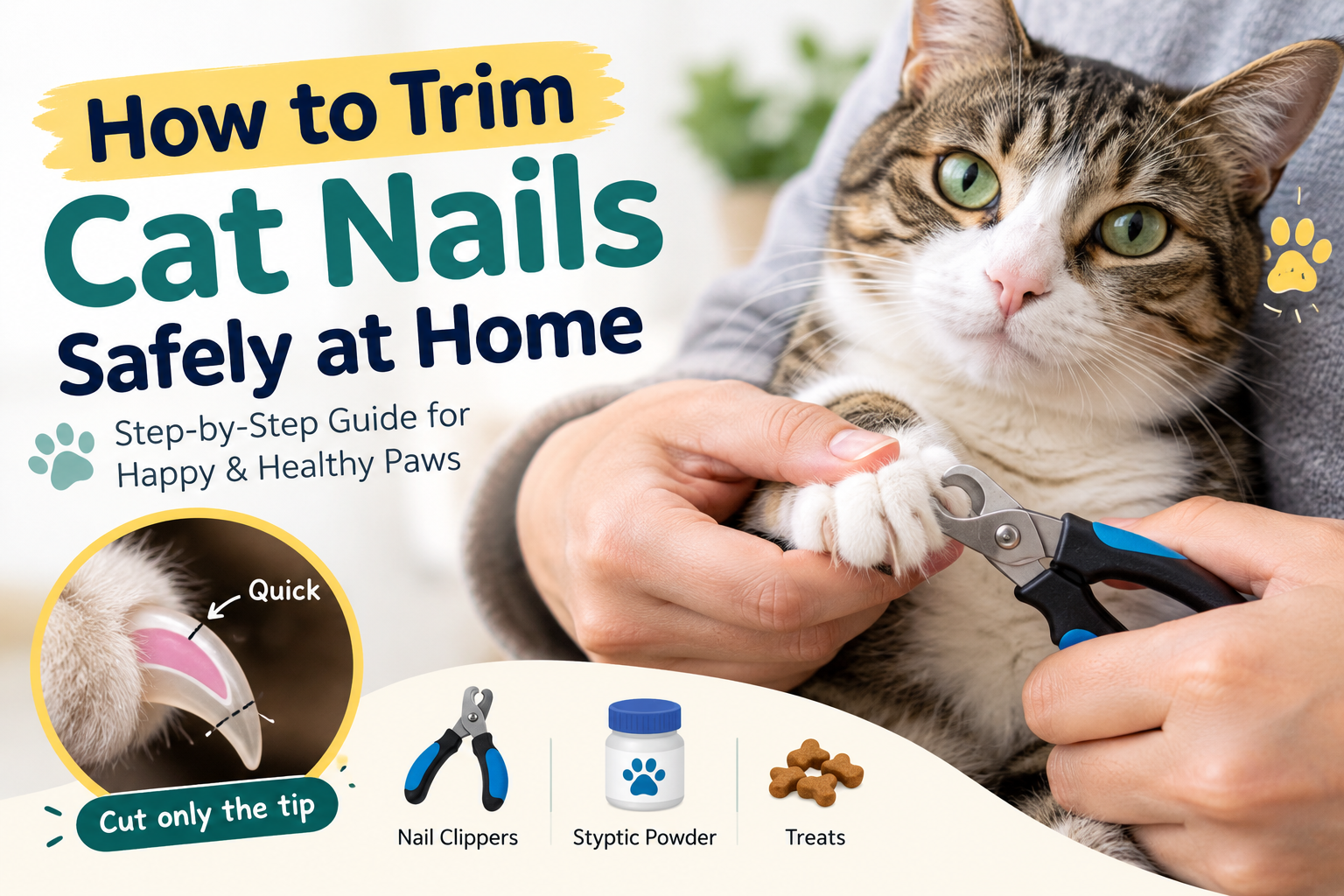
How to Trim Cat Nails Safely: A Step-by-Step Guide for Pet Owners
Introduction
Trimming your cat’s nails is an important part of maintaining healthy paws and preventing accidental scratches around your home. However, many cats dislike having their feet handled, which can make nail trimming challenging for pet owners. Some cats remain calm during the process, while others may pull away, hide, or become anxious.
The good news is that learning how to trim cat nails safely at home can become much easier with patience, the right tools, and a gentle approach. You do not need to trim every nail in one sitting, and forcing your cat to cooperate can make future sessions more stressful.
Whether you have a playful kitten or an older cat, this guide explains how to prepare your pet, choose suitable nail clippers, avoid cutting too deeply, and recognize when professional help is the better option.
Why Is Cat Nail Trimming Important?
Cats naturally maintain their claws by scratching surfaces and shedding the outer layers of their nails. However, some cats may not wear down their claws enough, particularly as they become older or less active.
When claws become excessively long, they may catch on carpets, blankets, and furniture. In severe cases, a curved nail can grow into the paw pad, causing pain, swelling, and infection.
Regularly checking your cat’s nails helps you identify problems before they become serious. Trimming the sharp tips may also reduce accidental scratches during play and help protect household furniture.
Not every cat needs frequent nail trimming. Outdoor cats and active cats may naturally maintain their claws more effectively, while indoor cats, senior cats, and cats with limited mobility may need additional care.
How to Trim Cat Nails at Home: Step-by-Step Instructions
The key to successful cat nail trimming is to keep the experience calm and stop before your cat becomes overwhelmed. Follow these steps for a safer and more comfortable session.
1. Help Your Cat Get Comfortable With Paw Handling
Before introducing nail clippers, allow your cat to become familiar with having its paws touched.
Begin by gently stroking your cat’s legs and paws when it is relaxed. Briefly touch a toe, offer a favorite treat, and then let your cat return to its normal activity.
Repeat this process regularly. Gradually increase the time you spend handling the paws, but stop if your cat shows signs of discomfort.
Some cats adjust within days, while others need several weeks or longer. Kittens may learn more easily, but adult and senior cats can also become comfortable with patient training.
Youtube Video
2. Gather the Right Nail-Trimming Supplies
Prepare everything before you begin so you do not have to interrupt the process.
Useful supplies include:
- Cat nail clippers: Choose a small, sharp clipper designed specifically for cats.
- Styptic powder: Keep this nearby to help control bleeding if you accidentally cut the quick.
- Cat treats: Use small treats as rewards before, during, and after trimming.
- A soft towel: This may help provide gentle support if your cat is comfortable with it.
- Good lighting: Clear visibility helps you identify the safe cutting area.
Avoid using dull clippers because they may crush or split the nail instead of cutting cleanly.
3. Choose a Quiet and Relaxing Time
Choose a moment when your cat is sleepy, comfortable, or resting after playtime. Avoid trimming immediately after a stressful event or when your cat is excited and energetic.
Sit in a comfortable position with your cat securely supported on your lap or beside you. Speak softly and keep your movements slow.
If your cat becomes nervous, do not try to finish every nail at once. A short, positive session is better than a prolonged struggle.
4. Hold the Paw Gently
Take one paw in your hand without squeezing it. Apply gentle pressure to the top and underside of a toe to extend the claw.
Cats can retract their claws, so you may need to extend each nail gently before trimming it.
If your cat repeatedly pulls its paw away, allow a break. Never twist the leg, squeeze the paw forcefully, or pin your cat down in a way that causes distress.
For cats that tolerate assistance, another person can offer treats while you handle the clippers. However, both people should prioritize the cat’s comfort and safety.
5. Identify the Quick Before Cutting
The quick is the sensitive inner part of the nail containing blood vessels and nerves. Cutting into it can cause pain and bleeding.
In many cats with light-colored nails, the quick appears as a pink area inside the claw. You should avoid this area and leave a comfortable margin between the cutting point and the quick.
Dark nails can make the quick difficult to see. In this situation, remove only a very small amount from the pointed tip at a time.
When learning how to trim cat nails, remember that removing less is safer than trying to make the claws extremely short.
6. Trim Only the Sharp Tip
Position the clipper carefully and remove just the curved, sharp end of the nail.
Avoid cutting straight into the pink area or taking off a large section at once. Check the nail after each small cut, especially if your cat has dark claws.
Focus on one nail at a time. Offer a treat or praise after each successful cut to help your cat develop a positive association with the process.
If your cat becomes restless, stop and finish another day. You may only need to trim one or two nails during the first few sessions.
7. Continue With the Other Paws Gradually
Once your cat is comfortable, move on to the remaining nails. Many owners find the front paws easier to handle, but every cat is different.
Check the back claws as well, because they can become overgrown even when the front nails appear healthy.
Do not force your cat to tolerate all four paws in one session. You can divide the task into several short sessions over a few days.
After trimming, reward your cat with treats, gentle affection, or another activity it enjoys.
How Short Should You Cut a Cat’s Nails?
You generally only need to remove the sharp, curved tip of the nail. Cat claws do not need to be cut extremely short to reduce scratching damage.
The safe amount depends on the length and shape of the individual claw. Always avoid the quick, and do not attempt to shorten an overgrown nail dramatically in one session.
If your cat has very long nails, the quick may extend farther toward the tip than expected. Removing too much at once can cause injury.
In these cases, gradual trimming or assistance from a veterinarian or experienced groomer may be safer.
What Should You Do If You Cut Your Cat’s Nail Too Short?
Accidents can happen even when you are careful. If you accidentally cut the quick, your cat may pull its paw away, and the nail may begin to bleed.
Try to remain calm and follow these steps:
- Stop trimming immediately and gently support the affected paw.
- Apply a small amount of pet-safe styptic powder to the bleeding nail.
- Use gentle, steady pressure as directed on the product label.
- Give your cat time to relax in a quiet place.
If you do not have styptic powder, clean gauze and gentle pressure may help while you seek appropriate guidance. Cornstarch may sometimes help control minor bleeding, but it is not a substitute for veterinary care when bleeding continues.
Contact a veterinarian if the bleeding does not stop after several minutes of steady pressure, the nail is badly damaged, or your cat appears to be in significant pain. Do not use human medications on your cat unless your veterinarian specifically recommends them.
Once the situation is under control, give your cat a break. Avoid immediately attempting to trim the remaining nails.
What Are the Best Tools for Cat Nail Trimming?
Using appropriate tools can make the process easier and help reduce the risk of injury.
Cat Nail Clippers
Cat-specific clippers are available in several designs, including scissor-style, nipper-style, and guillotine-style models. Choose a design that feels comfortable in your hand and allows you to see the nail clearly.
The blades should be sharp and clean. If the tool crushes or splits the nail, replace it or have it serviced as appropriate.
Styptic Powder
Styptic powder is useful for controlling minor bleeding caused by accidentally cutting the quick. Keep it within reach before starting a trimming session.
Use a product intended for this purpose and follow its directions. If bleeding persists, contact your veterinarian.
Treats and Rewards
Small treats can help your cat associate paw handling with a positive experience.
Offer rewards when your cat allows you to touch its paws, accepts the clippers nearby, or calmly permits a nail to be trimmed. This gradual approach can be especially helpful for nervous cats.
A Soft Towel
A towel can provide a comfortable surface or help support a cat that already enjoys being wrapped gently. However, wrapping should never become forceful restraint.
If your cat struggles intensely, growls, bites, or appears frightened, stop and seek professional guidance instead of trying to hold it more tightly.
How Often Should You Trim Your Cat’s Nails?
Many indoor cats benefit from nail checks every two to four weeks, although some need trimming more frequently and others less often.
The ideal schedule depends on your cat’s age, activity level, scratching habits, and natural nail growth.
Kittens may need more frequent checks because their claws are small and sharp. Older cats may require additional attention because they can become less active and may not shed their outer nail layers as effectively.
Rather than following a strict schedule, inspect the nails regularly and trim them when the tips become excessively sharp or long.
Remember that scratching posts help cats maintain their claws, but they do not always eliminate the need for nail care.
Signs That Your Cat’s Nails Need Attention
Watch for these signs that your cat may need a nail check:
- Claws frequently catch on blankets or carpets.
- Nails appear unusually long or strongly curved.
- A claw begins to grow toward the paw pad.
- Your cat repeatedly licks or chews a paw.
- You notice redness, swelling, bleeding, or tenderness around a nail.
- Your cat has difficulty walking comfortably.
If a nail is embedded in the paw pad, broken near the base, or surrounded by swelling or discharge, arrange veterinary care. Do not attempt to dig out an embedded claw or cut away damaged tissue yourself.
When Should You Visit a Veterinarian or Professional Groomer?
Some cats are too frightened or uncomfortable to tolerate nail trimming at home. If your cat becomes aggressive, struggles intensely, or repeatedly tries to bite, professional assistance may be the safest choice.
A trained groomer may be able to trim the nails of a cat that tolerates gentle handling. A veterinarian is the better option when your cat has painful paws, damaged claws, mobility problems, or severe anxiety.
Veterinary advice is particularly important for senior cats and cats with medical conditions that may affect their comfort or handling needs.
Never punish your cat for resisting nail trimming. Fearful behavior is a signal to slow down, change your approach, or seek help.
Can Cats Manage Without Nail Trimming?
Yes, many healthy cats maintain their claws naturally through scratching and the shedding of outer nail layers. Routine clipping is not essential for every cat.
However, natural wear does not always keep indoor cats’ nails at a safe length. Some cats, especially older cats, may develop overgrown claws that require attention.
Provide suitable scratching posts, inspect the paws regularly, and trim the nails when necessary. Scratching posts should supplement nail checks rather than replace them entirely.
Tips for Making Nail Trimming Easier
A few simple habits can help make nail care less stressful:
- Start slowly: Introduce paw handling before attempting to use clippers.
- Keep sessions short: Trim only a few nails if your cat becomes restless.
- Use positive reinforcement: Reward calm behavior with treats and praise.
- Avoid force: Stop if your cat shows strong signs of fear or distress.
- Check every paw: Remember to inspect the back claws as well as the front ones.
- Keep supplies nearby: Have your clippers and styptic powder ready before beginning.
- Stay consistent: Short, gentle practice sessions can build confidence over time.
Your cat may never enjoy nail trimming, but a patient approach can help make the experience more manageable.
Frequently Asked Questions
Is it safe to trim a cat’s nails at home?
Yes, trimming your cat’s nails at home is generally safe when you use suitable clippers, remove only the tips, and avoid the quick. If your cat becomes distressed or has a nail problem, consult a professional.
How often should indoor cats have their nails trimmed?
Many indoor cats need trimming every two to four weeks, but the frequency varies. Check the nails regularly and adjust the schedule to your cat’s needs.
Should I trim all four paws?
You should check all four paws. If trimming every nail in one sitting causes stress, divide the process into shorter sessions.
Do scratching posts eliminate the need for nail trimming?
No. Scratching posts help cats scratch naturally and shed the outer layers of their claws, but some cats still develop long or sharp nails that need trimming.
Can I use human nail clippers on my cat?
It is better to use clippers designed for cats. Cat-specific tools can provide better visibility and control, helping you trim the nail without crushing it.
What happens if I never trim my cat’s nails?
Some cats manage well without routine trimming. Others, particularly older or less active cats, may develop overgrown claws that catch on objects or grow into the paw pads. Regular nail checks help you decide whether trimming is necessary.
Final Thoughts
Learning how to trim cat nails safely takes patience, practice, and the right equipment. Start by helping your cat become comfortable with paw handling, choose a quiet moment, and trim only the sharp tips while avoiding the sensitive quick.
You do not need to finish every nail in one sitting. Short sessions, gentle handling, and positive rewards can help make nail care easier for both you and your cat.
If your cat is frightened, has painful or overgrown claws, or will not tolerate trimming, ask a veterinarian or qualified groomer for help. Regular paw checks and suitable scratching surfaces can also support your cat’s comfort and overall well-being.
Disclaimer: This article is for general educational purposes and does not replace professional veterinary advice. Consult a veterinarian if your cat has an injured nail, persistent bleeding, swelling, or signs of pain.