Why Is My Dog Not Eating and Losing Weight? Causes, Symptoms & Treatment Guide

Watching your dog refuse food and gradually lose weight can be worrying for any pet owner. A healthy dog usually has a good appetite, so when your furry friend suddenly stops eating or begins looking thinner, it’s often a sign that something isn’t right.

There are many possible reasons why a dog may stop eating, ranging from simple issues like stress or a change in diet to serious medical conditions such as infections, digestive disorders, dental disease, or even cancer. Understanding the cause is the first step toward helping your dog recover.

In this guide, you’ll learn the most common reasons dogs stop eating, why they lose weight, the symptoms to watch for, and when it’s time to visit a veterinarian.


Table of Contents

  • Why Is My Dog Not Eating?
  • Common Causes of Weight Loss in Dogs
  • Symptoms That Should Never Be Ignored
  • How Veterinarians Diagnose Appetite Loss
  • When Should You Visit a Vet?

Why Is My Dog Not Eating?

Dogs may refuse food for many different reasons. Sometimes the problem lasts only a day, while other times it can indicate a serious health condition.

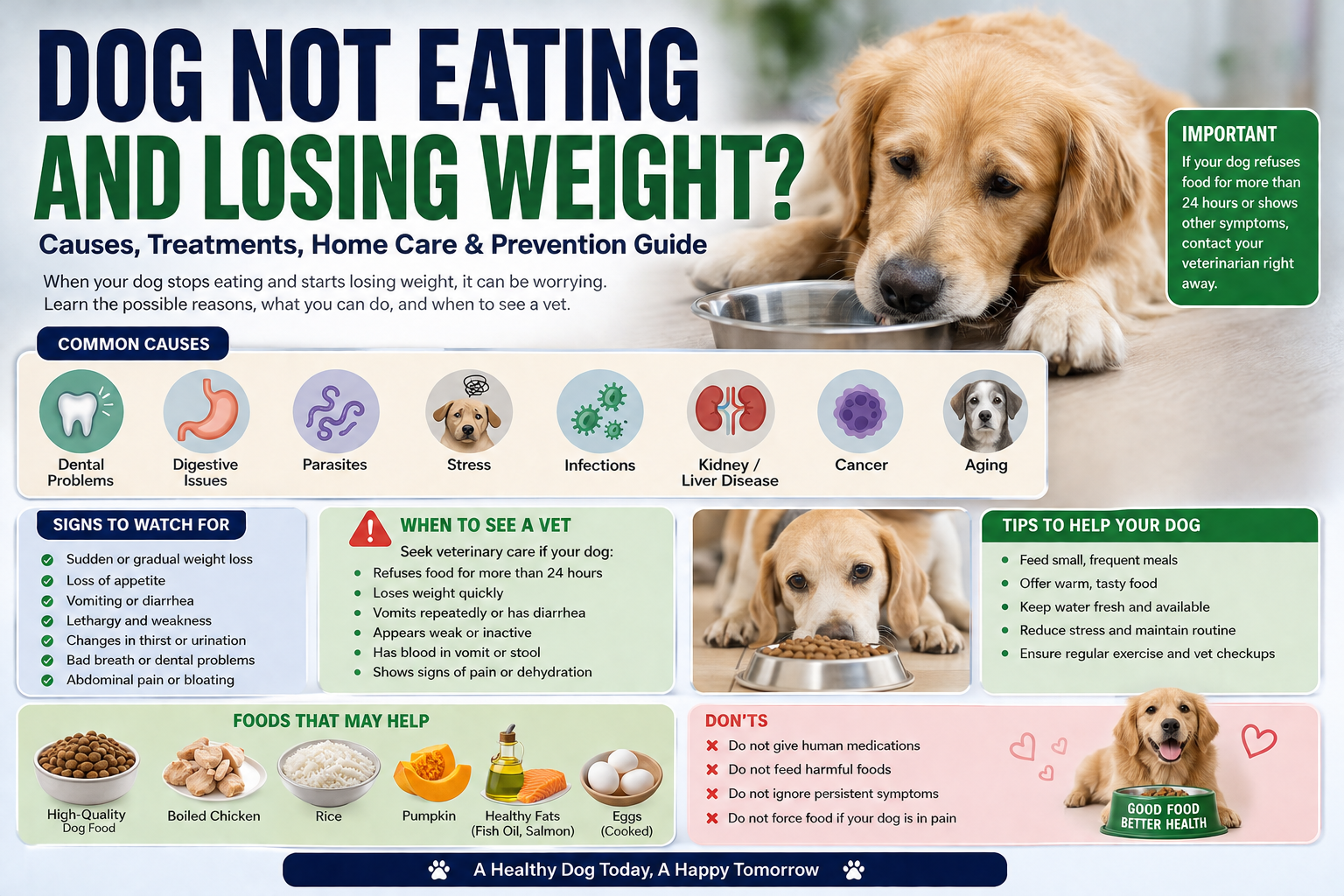
If your dog refuses food for more than 24 hours—especially if accompanied by weight loss or other symptoms—it’s important to investigate the cause.


Common Causes of Weight Loss and Appetite Loss in Dogs

1. Dental Problems

One of the most common reasons dogs stop eating is dental pain.

Conditions such as:

  • Broken teeth
  • Gum disease
  • Tooth abscesses
  • Mouth ulcers

can make chewing painful. Your dog may approach the food bowl but walk away after taking a few bites.

Signs of Dental Disease

  • Bad breath
  • Drooling
  • Pawing at the mouth
  • Difficulty chewing
  • Bleeding gums

2. Digestive Problems

Digestive disorders often reduce a dog’s appetite.

Common digestive issues include:

  • Upset stomach
  • Gastritis
  • Intestinal blockage
  • Pancreatitis
  • Inflammatory bowel disease (IBD)

Dogs with digestive problems may also experience vomiting, diarrhea, abdominal pain, or constipation.


3. Parasites

Internal parasites steal nutrients from your dog’s body.

Common parasites include:

  • Roundworms
  • Hookworms
  • Tapeworms
  • Whipworms

A dog with worms may continue eating but still lose weight because the parasites consume nutrients before the dog’s body can absorb them.

Symptoms of Worms

  • Weight loss
  • Pot-bellied appearance
  • Diarrhea
  • Vomiting
  • Worms in stool
  • Dull coat

4. Stress and Anxiety

Dogs can lose their appetite when they are stressed.

Stress may be caused by:

  • Moving to a new home
  • Loud fireworks
  • Traveling
  • Boarding kennels
  • Separation anxiety
  • New pets or family members

Most dogs begin eating normally once they feel safe and comfortable again.


5. Change in Food

Some dogs are picky eaters.

Changing to a new brand or flavor of food can cause them to refuse meals temporarily.

Introduce new food gradually over 7–10 days by mixing it with the old food.


6. Infections

Bacterial and viral infections often reduce appetite.

Examples include:

  • Kennel cough
  • Parvovirus
  • Distemper
  • Tick-borne diseases

Dogs with infections usually appear tired and may have fever, coughing, vomiting, or diarrhea.


7. Kidney Disease

Dogs with kidney disease frequently lose interest in food.

As toxins build up in the bloodstream, dogs may experience:

  • Nausea
  • Vomiting
  • Bad breath
  • Increased thirst
  • Frequent urination
  • Weight loss

Kidney disease is more common in senior dogs.


8. Liver Disease

The liver plays a major role in digestion.

When it becomes diseased, dogs may show:

  • Poor appetite
  • Vomiting
  • Weight loss
  • Yellow eyes or gums (jaundice)
  • Lethargy

Early treatment improves the chances of recovery.


9. Cancer

Unfortunately, some cancers cause gradual weight loss and appetite decline.

Possible warning signs include:

  • Unexplained weight loss
  • Lumps or swelling
  • Low energy
  • Difficulty breathing
  • Persistent vomiting
  • Chronic diarrhea

Older dogs are generally at greater risk, though cancer can occur at any age.


10. Aging

Senior dogs often eat less because of:

  • Slower metabolism
  • Reduced sense of smell
  • Dental disease
  • Arthritis
  • Chronic illness

Regular veterinary checkups help detect age-related problems early.


Symptoms That Should Never Be Ignored

A dog that isn’t eating may also develop other symptoms.

Watch for:

  • Rapid weight loss
  • Vomiting
  • Diarrhea
  • Blood in stool
  • Weakness
  • Lethargy
  • Fever
  • Bad breath
  • Difficulty swallowing
  • Excessive drooling
  • Drinking much more water
  • Pale gums
  • Labored breathing

If your dog has several of these symptoms together, seek veterinary care promptly.


How Veterinarians Diagnose Appetite Loss

Finding the underlying cause is essential for proper treatment.

Your veterinarian may recommend:

Physical Examination

The vet checks your dog’s weight, mouth, abdomen, temperature, and overall condition.

Blood Tests

Blood tests help detect:

  • Kidney disease
  • Liver disease
  • Infection
  • Diabetes
  • Anemia

Fecal Examination

A stool sample is examined for intestinal parasites and worms.

Urinalysis

Urine testing evaluates kidney function, hydration, and infection.

X-rays or Ultrasound

Imaging can detect:

  • Intestinal blockage
  • Tumors
  • Organ enlargement
  • Foreign objects
  • Internal injuries

Dental Examination

A thorough oral exam may reveal painful dental conditions that prevent eating.


When Should You Visit a Veterinarian?

A dog skipping one meal is not always an emergency. However, veterinary attention is recommended if your dog:

  • Refuses food for more than 24 hours
  • Is rapidly losing weight
  • Vomits repeatedly
  • Has diarrhea lasting more than a day
  • Appears weak or depressed
  • Has blood in vomit or stool
  • Shows signs of dehydration
  • Has difficulty breathing
  • Experiences severe abdominal pain

Early diagnosis and treatment greatly improve the chances of recovery and help prevent serious complications.
Best Treatments for a Dog That Won’t Eat and Is Losing Weight

The right treatment depends on the underlying cause of your dog’s appetite loss and weight loss. Some dogs recover with simple dietary changes, while others need medication or veterinary care.

1. Treat the Underlying Medical Condition

If your veterinarian finds a health problem, treating that condition is the first priority.

Common treatments may include:

  • Antibiotics for bacterial infections
  • Deworming medication for parasites
  • Pain relief for dental disease
  • Medication for stomach ulcers or gastritis
  • Treatment for kidney or liver disease
  • Surgery if there is an intestinal blockage
  • Cancer treatment if tumors are diagnosed

Never give human medicines to your dog unless your veterinarian specifically recommends them.


2. Encourage Your Dog to Eat

Many dogs regain their appetite with small changes.

Try these tips:

  • Warm the food slightly to enhance its smell.
  • Offer small meals several times a day.
  • Feed in a quiet, stress-free environment.
  • Use high-quality wet food if your dog refuses dry kibble.
  • Mix a small amount of plain boiled chicken with rice (only as a temporary diet, unless your vet advises otherwise).

If your dog still refuses food for more than a day, contact your veterinarian.


3. Keep Your Dog Hydrated

Dogs that stop eating may also drink less water.

Signs of dehydration include:

  • Dry gums
  • Sunken eyes
  • Weakness
  • Loss of skin elasticity

Always provide fresh, clean water. If your dog refuses to drink, seek veterinary care promptly.


Best Foods to Help a Dog Gain Healthy Weight

If your veterinarian has ruled out serious illness, these nutritious foods may help your dog regain weight safely.

High-Quality Commercial Dog Food

Choose foods that are:

  • High in protein
  • Rich in healthy fats
  • Complete and balanced
  • Designed for active or underweight dogs

Lean Protein Sources

Protein helps rebuild muscle.

Examples include:

  • Boiled chicken
  • Turkey
  • Lean beef
  • Fish
  • Eggs (fully cooked)

Healthy Carbohydrates

Carbohydrates provide energy.

Good options include:

  • Cooked rice
  • Sweet potatoes
  • Oatmeal
  • Pumpkin

Healthy Fats

Healthy fats increase calories and support skin and coat health.

Examples:

  • Fish oil (vet-approved)
  • Salmon
  • Sardines (plain, in water)
  • Flaxseed oil (under veterinary guidance)

Always introduce new foods gradually to avoid digestive upset.


Home Care Tips

Many dogs improve with consistent home care.

Feed on a Regular Schedule

Offer meals at the same times every day to establish a routine.

Exercise Daily

Light exercise can stimulate appetite and maintain muscle mass.

Reduce Stress

Keep your dog’s environment calm. Avoid sudden changes in routine, loud noises, or unnecessary stress.

Brush Teeth Regularly

Good dental hygiene helps prevent painful oral disease that can interfere with eating.

Monitor Weight

Weigh your dog weekly and record any changes. Rapid weight loss should always be discussed with your veterinarian.


Foods to Avoid

Some human foods are dangerous for dogs and should never be fed.

Avoid:

  • Chocolate
  • Grapes and raisins
  • Onions
  • Garlic
  • Avocado
  • Alcohol
  • Xylitol (found in sugar-free gum and candy)
  • Cooked bones
  • Excessively fatty foods

These foods can cause serious illness or even be life-threatening.


How to Prevent Weight Loss in Dogs

Prevention is easier than treatment. Follow these tips to keep your dog healthy.

Feed a Balanced Diet

Choose a complete, high-quality dog food that meets your dog’s age, size, and activity level.

Keep Up With Deworming

Regular parasite prevention protects your dog from worms that can cause weight loss.

Schedule Routine Veterinary Checkups

Annual (or more frequent for senior dogs) exams can detect health problems early.

Vaccinate on Time

Vaccinations help protect against infectious diseases that can reduce appetite.

Maintain Good Dental Care

Brush your dog’s teeth regularly and have dental problems treated promptly.

Provide Fresh Water Daily

Clean water supports overall health and digestion.


Frequently Asked Questions (FAQs)

Why is my dog eating very little and losing weight?

Possible causes include dental disease, parasites, digestive disorders, infections, kidney disease, liver disease, stress, or cancer. A veterinary examination is recommended if symptoms persist.


Can worms cause weight loss even if my dog eats?

Yes. Intestinal parasites absorb nutrients, meaning your dog may continue eating but still lose weight.


How long can a dog go without eating?

Most healthy dogs should not go more than 24–48 hours without food. Puppies, senior dogs, or dogs with medical conditions should be evaluated sooner.


Can stress make my dog stop eating?

Yes. Changes in environment, travel, fireworks, separation anxiety, or new pets can temporarily reduce appetite.


When should I take my dog to the veterinarian?

Seek veterinary care if your dog:

  • Refuses food for more than 24 hours
  • Loses weight quickly
  • Vomits repeatedly
  • Has diarrhea lasting more than a day
  • Appears weak, dehydrated, or in pain
  • Has blood in vomit or stool

Final Thoughts

A dog that won’t eat and is losing weight should never be ignored. While the cause may be something minor, such as stress or a change in diet, it can also be a sign of a serious medical condition. Paying attention to changes in appetite, body weight, and behavior allows you to act quickly and seek veterinary advice when needed.

Providing a balanced diet, regular exercise, routine parasite control, good dental care, and scheduled veterinary checkups can help prevent many of the common causes of weight loss. If your dog refuses food for more than a day or shows signs of illness, early treatment offers the best chance for a full recovery and a healthy, active life.

Leave a Reply

Your email address will not be published. Required fields are marked *