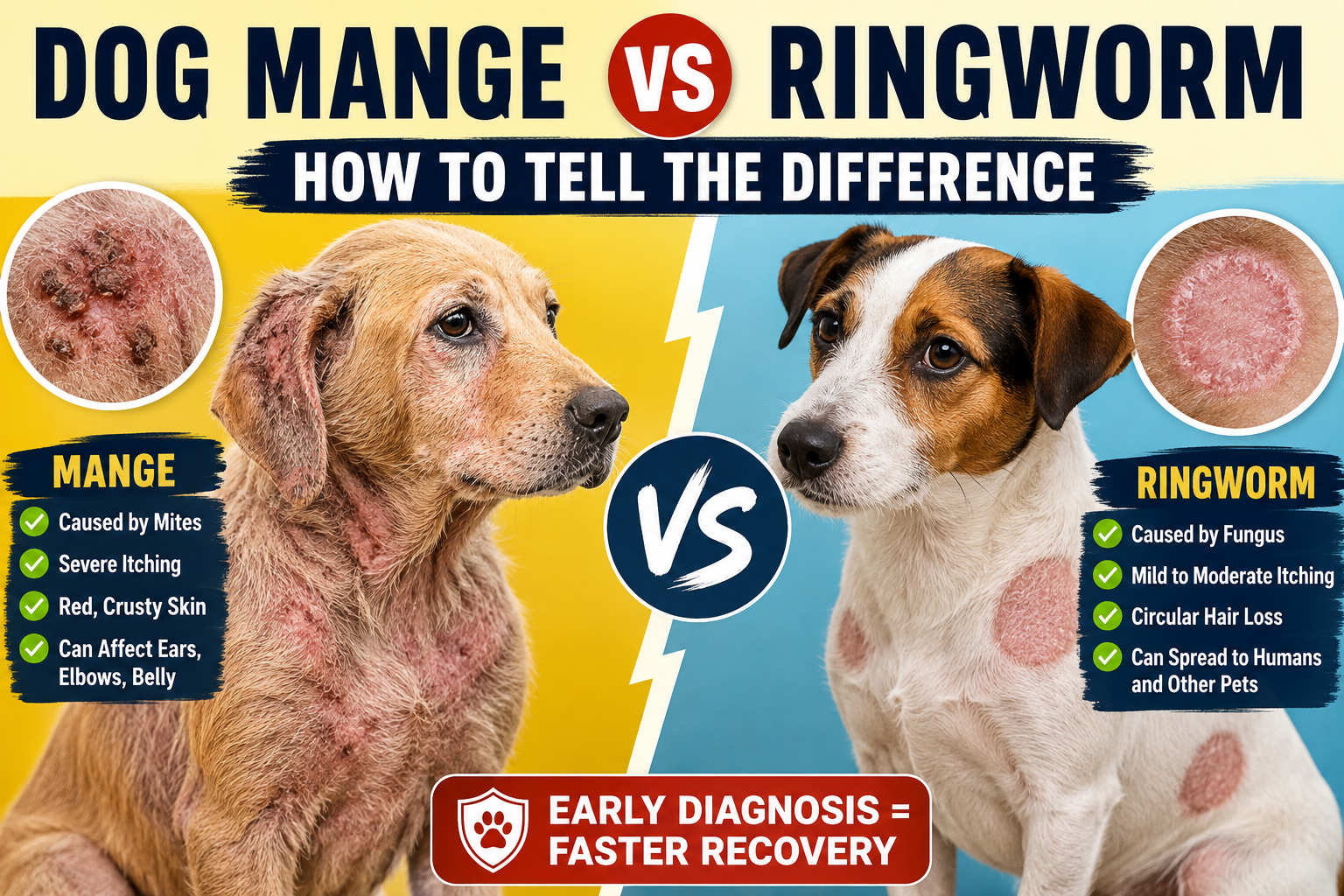
Skin problems are among the most common reasons dogs visit the veterinarian. Two conditions that often confuse pet owners are mange and ringworm. Both can cause hair loss, itching, and irritated skin, making it difficult to know which problem your dog has.
Although they may appear similar, dog mange and ringworm are completely different diseases. Mange is caused by microscopic mites, while ringworm is a fungal infection. Because the treatments are entirely different, identifying the correct condition is essential for your dog’s health and recovery.
This guide explains the differences between dog mange and ringworm, including symptoms, causes, diagnosis, treatment options, and prevention tips.
What Is Mange in Dogs?
Mange is a skin disease caused by tiny mites that live on or beneath your dog’s skin. These mites irritate the skin, leading to inflammation, hair loss, and severe itching.
There are two primary types of mange.
1. Demodectic Mange (Demodex)
Demodectic mange occurs when Demodex mites, which normally live on healthy dogs, multiply excessively due to a weakened immune system.
It commonly affects:
- Puppies
- Senior dogs
- Dogs with weakened immunity
- Dogs suffering from illness
This form of mange is not usually contagious to healthy dogs or humans.
2. Sarcoptic Mange (Scabies)
Sarcoptic mange is caused by Sarcoptes scabiei mites.
This form is:
- Extremely itchy
- Highly contagious
- Can spread to other dogs
- Can temporarily infect humans
Because it spreads quickly, prompt treatment is essential.
What Is Ringworm in Dogs?
Despite its name, ringworm is not caused by worms.
Ringworm is a fungal infection affecting:
- Skin
- Hair
- Nails
The fungi feed on keratin, the protein found in skin and hair.
The most common fungi responsible include:
- Microsporum canis
- Microsporum gypseum
- Trichophyton species
Ringworm spreads through:
- Direct contact
- Contaminated bedding
- Grooming tools
- Furniture
- Soil
It is highly contagious and can spread to humans and other pets.
Dog Mange vs Ringworm: Key Differences
| Feature | Mange | Ringworm |
|---|---|---|
| Cause | Microscopic mites | Fungus |
| Contagious | Sarcoptic: Yes Demodectic: Usually No | Yes |
| Hair Loss | Patchy or widespread | Circular patches |
| Itching | Severe (especially sarcoptic) | Mild to moderate |
| Skin Appearance | Thick, crusty, red | Circular, scaly lesions |
| Humans at Risk | Sarcoptic only | Yes |
| Treatment | Anti-parasitic medication | Antifungal medication |
Symptoms of Mange
Signs depend on the type of mange.
Common symptoms include:
- Intense scratching
- Hair loss
- Red skin
- Crusts
- Thickened skin
- Scabs
- Open sores
- Bad odor from infected skin
- Restlessness
- Weight loss in severe cases
Demodectic mange often begins around:
- Eyes
- Mouth
- Front legs
Sarcoptic mange usually affects:
- Ears
- Elbows
- Belly
- Chest
The itching becomes almost unbearable.
Symptoms of Ringworm
Ringworm usually develops more slowly than mange.
Typical symptoms include:
- Circular bald spots
- Broken hairs
- Dry skin
- Gray crusts
- Mild redness
- Scaly patches
- Brittle nails
- Occasional itching
Unlike mange, ringworm often causes well-defined circular lesions, making it easier to recognize.
Why Do They Look So Similar?
Both diseases damage hair follicles and irritate the skin.
As a result, both conditions may cause:
- Hair loss
- Redness
- Skin inflammation
- Scaling
- Crusts
- Secondary bacterial infections
Without veterinary testing, it can be difficult to tell them apart.
Causes of Mange
Mange develops due to different factors depending on the type.
Demodectic Mange Causes
- Weak immune system
- Genetics
- Malnutrition
- Chronic illness
- Stress
Sarcoptic Mange Causes
- Contact with infected dogs
- Animal shelters
- Dog parks
- Boarding facilities
- Wildlife exposure
Causes of Ringworm
Ringworm fungi thrive in warm, humid environments.
Dogs become infected by:
- Sharing brushes
- Shared bedding
- Grooming salons
- Soil
- Contact with infected cats
- Contact with infected dogs
Young puppies are particularly vulnerable.
Which Dogs Are Most at Risk?
Dogs with increased risk include:
- Puppies
- Elderly dogs
- Rescue dogs
- Shelter dogs
- Dogs with poor nutrition
- Dogs with weakened immunity
- Long-haired breeds
- Dogs living in humid climates
How Veterinarians Diagnose Mange
Your veterinarian may perform:
Skin Scraping
Tiny skin samples are examined under a microscope to identify mites.
Hair Examination
Hair follicles are checked for Demodex mites.
Physical Examination
The pattern of hair loss provides important clues.
Medical History
Questions about exposure to infected animals help narrow the diagnosis.
How Veterinarians Diagnose Ringworm
Diagnosis often includes:
Fungal Culture
The most accurate method.
Wood’s Lamp Examination
Some ringworm species glow under ultraviolet light.
PCR Testing
Modern DNA testing can rapidly identify fungal organisms.
Microscopic Hair Examination
Infected hairs may reveal fungal spores.
Treatment for Mange
Treatment depends on the specific mite.
Common treatments include:
Prescription Medications
Modern parasite medications often eliminate mites effectively.
Medicated Shampoos
These reduce skin irritation and secondary infections.
Antibiotics
Used when bacterial infections develop.
Immune Support
Dogs with demodectic mange may need nutritional and immune support.
Treatment usually lasts several weeks to several months.
Treatment for Ringworm
Ringworm treatment focuses on eliminating fungal organisms.
Common options include:
- Oral antifungal medication
- Antifungal shampoo
- Lime sulfur dips
- Medicated creams
- Environmental cleaning
Treatment often continues for 6–12 weeks, even after the skin appears normal.
Can Humans Catch Mange or Ringworm?
Mange
Demodectic mange rarely spreads to humans.
Sarcoptic mange can temporarily infect people, causing itchy red bumps that usually resolve once the dog is treated.
Ringworm
Yes.
Ringworm is highly contagious to people.
Children, elderly individuals, and people with weakened immune systems have the greatest risk.
Wash hands thoroughly after handling infected pets.
Can Dogs Have Both at the Same Time?
Yes.
Although uncommon, a dog may develop mange and ringworm simultaneously.
Dogs with weakened immune systems are particularly susceptible.
Proper laboratory testing is necessary to identify both conditions.
How to Prevent Mange
Reduce your dog’s risk by:
- Feeding a balanced diet
- Keeping vaccinations current
- Regular veterinary checkups
- Monthly parasite prevention (as recommended by your veterinarian)
- Avoiding contact with infected animals
- Maintaining good hygiene
How to Prevent Ringworm
Prevention includes:
- Cleaning bedding regularly
- Washing grooming tools
- Vacuuming carpets frequently
- Disinfecting kennels
- Limiting exposure to infected animals
- Quarantining infected pets until treatment is complete
When to See a Veterinarian
Seek veterinary care immediately if your dog has:
- Rapid hair loss
- Severe itching
- Bleeding skin
- Crusty lesions
- Bad skin odor
- Circular bald patches
- Skin infection
- Fever
- Loss of appetite
- Lethargy
Early treatment prevents complications and reduces the spread of contagious infections.
Frequently Asked Questions (FAQs)
Is mange worse than ringworm?
Both conditions require treatment. Sarcoptic mange often causes more intense itching, while ringworm spreads more easily to people.
Can I treat mange at home?
Home remedies are not recommended. Prescription medications from a veterinarian are the safest and most effective option.
Can ringworm heal without treatment?
Some mild cases may improve over time, but treatment is recommended to shorten recovery and reduce the risk of spreading the infection.
Does every bald spot mean ringworm?
No. Hair loss can also be caused by mange, allergies, bacterial infections, hormonal disorders, fleas, or trauma.
How long does recovery take?
- Mange: Typically 4–12 weeks, depending on the type and severity.
- Ringworm: Usually 6–12 weeks, with treatment often continuing until follow-up tests confirm the infection is gone.
Final Thoughts
While dog mange and ringworm may look alike at first glance, they are very different conditions with different causes and treatments. Mange results from microscopic mites, whereas ringworm is caused by a contagious fungus. Paying attention to the pattern of hair loss, the level of itching, and the appearance of the skin can provide helpful clues, but only a veterinarian can make a definitive diagnosis through proper testing.
Prompt treatment not only helps your dog recover more quickly but also reduces the risk of spreading contagious infections to other pets or family members. If you notice persistent scratching, bald patches, or unusual skin lesions, schedule a veterinary visit as soon as possible. Early care is the best way to keep your dog healthy, comfortable, and free from long-term skin complications.