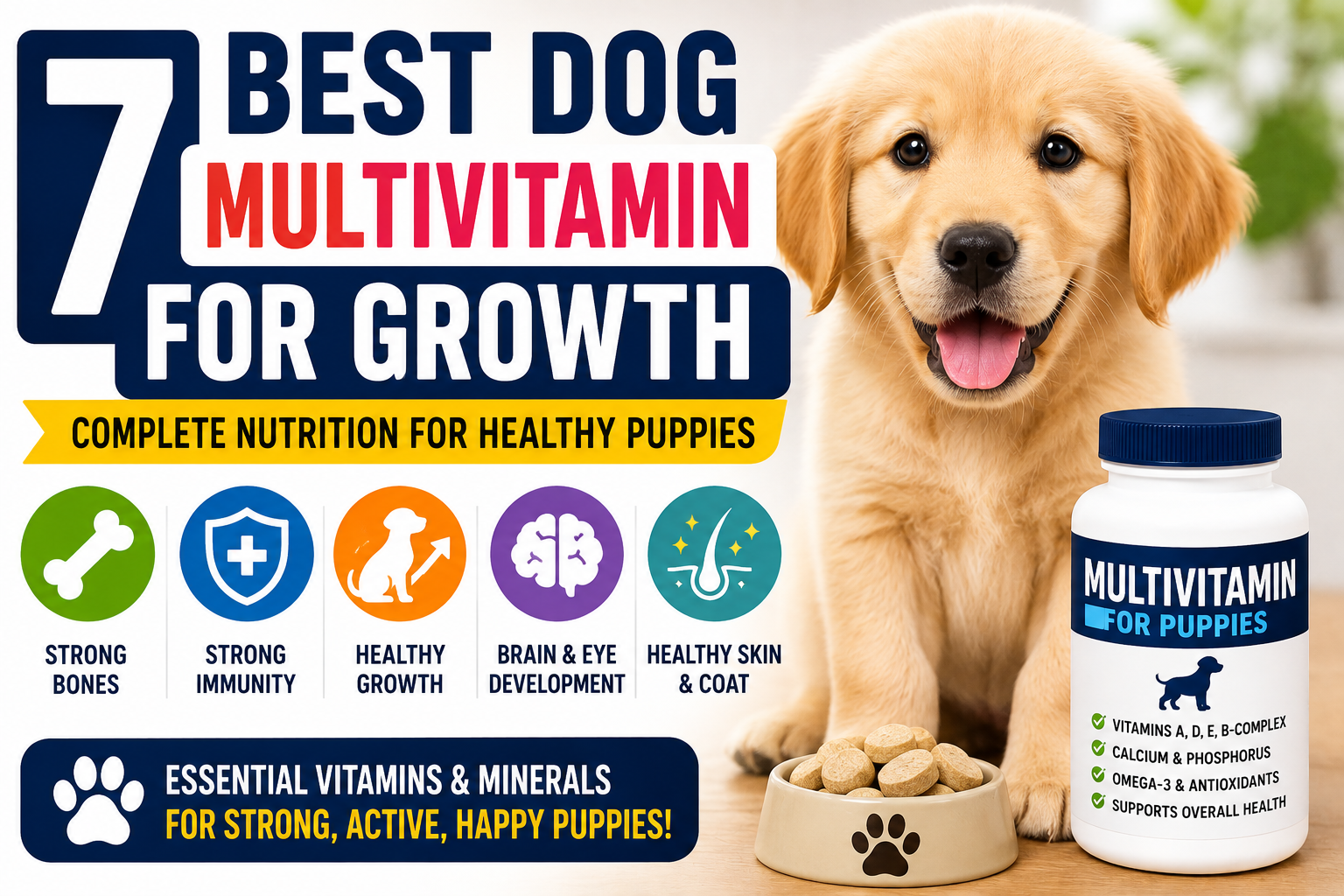
Puppyhood is one of the most important stages of a dog’s life. During the first months of development, puppies grow rapidly and need adequate nutrition to support their bones, muscles, immune system, brain, skin, and overall development.
Many pet parents search for the best dog multivitamin for growth because they want to make sure their puppy is getting every nutrient needed for healthy development. However, more vitamins do not always mean better growth. A healthy puppy eating a complete and balanced diet may not need an additional multivitamin at all.
The right supplement should be selected based on the puppy’s diet, age, breed size, health, and specific nutritional needs. Giving unnecessary vitamins—especially minerals such as calcium or fat-soluble vitamins—can sometimes cause problems.
This guide covers seven types of dog multivitamins and nutritional supplements that may be useful when supplementation is appropriate, along with what to look for and what mistakes puppy owners should avoid.
Do Puppies Need Multivitamins for Growth?
Most healthy puppies that eat a complete and balanced puppy food do not require a daily multivitamin.
Commercial puppy foods are formulated to provide the nutrients needed for growth when fed according to the manufacturer’s instructions.
However, a veterinarian may recommend supplementation in certain situations, such as:
- A confirmed nutritional deficiency
- A properly formulated homemade diet
- Poor appetite or inadequate food intake
- Certain digestive or absorption problems
- Specific medical conditions
- Recovery from illness
- Special nutritional requirements
The goal should always be to correct an identified nutritional need rather than adding multiple supplements without a reason.
7 Best Dog Multivitamins for Growth
The following categories represent some of the most useful types of puppy supplements. They are not ranked by brand or popularity because the ideal product depends on the individual puppy.
1. Puppy Multivitamin With Essential Vitamins and Minerals
A puppy-specific multivitamin is designed to provide a combination of nutrients such as vitamins A, D, E, B vitamins, and selected minerals.
A properly formulated product may be considered when a puppy has a nutritional need that is not fully met through its regular diet.
Potential benefits
Depending on the formulation, a multivitamin may support:
- Normal metabolism
- Immune function
- Bone development
- Skin and coat health
- Energy production
- General nutritional health
What to look for
Choose a product specifically formulated for puppies or dogs and check that the label clearly states the amounts of each nutrient.
Avoid products that promise extremely rapid growth or claim to replace a balanced diet.
2. Puppy Multivitamin With Omega-3 Fatty Acids
Omega-3 fatty acids are not vitamins, but they are important nutrients that may be included in some puppy supplements.
DHA, an omega-3 fatty acid, plays an important role in normal brain and eye development.
Omega-3 fatty acids are commonly obtained from ingredients such as fish oil or certain marine sources.
Potential benefits
An appropriate source of omega-3 fatty acids may support:
- Brain development
- Eye development
- Skin health
- Coat condition
- Normal inflammatory responses
When choosing an omega-3 supplement, look for clearly stated amounts of EPA and DHA rather than relying only on the total amount of fish oil.
3. Puppy Multivitamin With B Vitamins
B vitamins are involved in energy metabolism and many normal cellular processes.
A puppy growing rapidly needs adequate nutrition to support energy production and normal development.
B vitamins include nutrients such as:
- Thiamine
- Riboflavin
- Niacin
- Pantothenic acid
- Vitamin B6
- Folate
- Vitamin B12
A complete puppy food generally provides these nutrients in appropriate amounts.
Supplementation may be considered when a veterinarian identifies a nutritional reason for it.
Potential benefits
B vitamins support:
- Energy metabolism
- Normal nervous-system function
- Cellular processes
- Appetite and general nutritional health
A puppy multivitamin should not be used as a substitute for adequate calories and protein.
4. Puppy Multivitamin With Antioxidants
Some canine multivitamins contain antioxidant nutrients such as vitamin E and vitamin C.
Antioxidants help protect cells from oxidative damage as part of normal biological processes.
Vitamin E is an essential nutrient for dogs, while dogs can generally synthesize their own vitamin C.
Therefore, vitamin C is not necessarily required as a daily supplement for a healthy puppy.
Potential benefits
Depending on the formulation, antioxidant nutrients may support:
- Normal immune function
- Cellular health
- Skin health
- Overall wellness
Avoid assuming that higher doses provide greater benefits. Some vitamins can become harmful when consumed excessively.
5. Puppy Bone and Growth Support Supplement
Bone and growth supplements often combine vitamins and minerals intended to support skeletal development.
These products may contain nutrients such as calcium, phosphorus, vitamin D, or other minerals.
However, this category requires particular caution.
Puppies should not routinely receive extra calcium simply because they are growing.
Too much calcium can interfere with normal skeletal development, especially in large- and giant-breed puppies.
Best approach
If you believe your puppy needs a bone supplement, ask your veterinarian first.
Your veterinarian can assess the puppy’s diet and determine whether additional nutrients are actually necessary.
6. Puppy Multivitamin With Digestive Support
Some puppy supplements combine vitamins with digestive-support ingredients such as probiotics.
Probiotics are beneficial microorganisms that may help support normal intestinal health in some dogs.
They are not technically vitamins, but they may be included in comprehensive puppy supplements.
Potential benefits
Depending on the product and individual puppy, digestive-support supplements may help maintain:
- Normal digestive function
- Healthy intestinal microorganisms
- Stool quality
- Nutrient utilization
If a puppy has persistent diarrhea, vomiting, weight loss, or poor growth, do not rely on a supplement alone. These symptoms require veterinary evaluation.
7. Veterinary-Recommended Puppy Supplement
The safest and most appropriate “best multivitamin” for some puppies may be a supplement specifically selected by a veterinarian.
Veterinarians can consider:
- Puppy age
- Current weight
- Breed
- Expected adult size
- Growth rate
- Existing diet
- Medical history
- Medications
- Laboratory results when necessary
This is especially important for puppies eating homemade diets or those with health conditions.
A veterinary nutrition professional can also help formulate a balanced homemade diet for growing puppies.
What Nutrients Are Important for Puppy Growth?
A puppy needs much more than vitamins to grow properly.
Protein
Protein supplies amino acids needed for muscle development, tissue repair, enzymes, hormones, and other biological functions.
Growing puppies need a diet that provides adequate high-quality protein.
Calcium and Phosphorus
These minerals are essential for normal bones and teeth.
However, the balance and total amount matter.
Adding extra calcium to a complete puppy diet can be harmful.
Vitamin D
Vitamin D helps regulate calcium and phosphorus metabolism and contributes to normal skeletal development.
Too much vitamin D can be dangerous, so vitamin D supplementation should be carefully controlled.
Vitamin A
Vitamin A supports normal vision, immune function, skin, and growth.
Both deficiency and excessive intake can cause problems.
Vitamin E
Vitamin E is an important antioxidant nutrient that supports normal cellular and immune function.
Omega-3 Fatty Acids
DHA is particularly important during puppy development and is associated with normal brain and eye development.
How to Choose the Best Puppy Multivitamin
Before purchasing a puppy multivitamin, consider the following factors.
Choose a Puppy-Specific Formula
Puppies have different nutritional requirements from adult dogs.
Choose a supplement formulated specifically for growing dogs when supplementation is recommended.
Check the Nutrient Amounts
A good label should clearly identify the amounts of vitamins, minerals, and other active ingredients.
Avoid products with vague proprietary blends that make it difficult to determine what your puppy is actually receiving.
Consider Your Puppy’s Food
Look at the nutritional adequacy statement on your puppy’s regular food.
If it is complete and balanced for growth, your puppy may already be receiving the nutrients it needs.
Avoid Megadoses
High doses do not automatically produce faster or healthier growth.
Fat-soluble vitamins such as A and D can accumulate in the body and cause toxicity when consumed excessively.
Choose Reputable Manufacturers
Look for transparent labeling and quality-control information.
Your veterinarian may be able to recommend trustworthy supplement manufacturers.
Do Large-Breed Puppies Need More Vitamins?
Large-breed puppies do need carefully controlled nutrition, but that does not mean they need more vitamins.
In fact, controlling the amount and balance of nutrients is especially important for large and giant breeds.
Feeding a puppy food specifically formulated for the appropriate growth requirements is usually more important than adding a multivitamin.
Breeds such as Great Danes, Mastiffs, German Shepherds, Labrador Retrievers, and other large dogs should not receive extra calcium or vitamin D without veterinary guidance.
Signs Your Puppy May Have a Nutritional Problem
A puppy that is not growing normally may have many possible health or nutritional problems.
Contact your veterinarian if you notice:
- Poor weight gain
- Weakness
- Persistent diarrhea
- Repeated vomiting
- Loss of appetite
- Poor muscle development
- Difficulty walking
- Limping
- Abnormal bone development
- Poor coat condition
- Unusual lethargy
These signs do not necessarily mean your puppy needs a multivitamin.
Parasites, infections, digestive disorders, congenital conditions, and other illnesses can also affect growth.
A proper veterinary examination is important.
Common Mistakes When Giving Puppy Vitamins
Giving Human Multivitamins
Human supplements may contain inappropriate doses or ingredients for dogs.
Never assume that a human vitamin is safe for a puppy.
Adding Calcium Without Advice
Extra calcium can interfere with normal skeletal development.
This is particularly important for large-breed puppies.
Using Multiple Supplements
Giving a puppy a multivitamin, calcium supplement, bone supplement, and omega-3 product at the same time may result in unnecessary nutrient intake.
Always consider the complete nutritional picture.
Expecting Supplements to Make Puppies Grow Faster
Healthy growth is not about maximizing growth speed.
The goal is appropriate growth.
Rapid growth can be problematic in some puppies, particularly large breeds.
Ignoring the Main Diet
Supplements cannot compensate for an inadequate diet.
A complete and balanced puppy food should generally be the foundation of nutrition.
Best Daily Routine for Healthy Puppy Growth
A healthy growth routine involves more than supplements.
Feed an Appropriate Puppy Diet
Choose food formulated for your puppy’s life stage and size.
Follow Feeding Guidelines
Avoid significantly overfeeding or underfeeding.
Your veterinarian can help monitor body condition and growth.
Provide Fresh Water
Puppies should always have access to clean, fresh water.
Schedule Veterinary Checkups
Regular examinations allow your veterinarian to monitor weight, development, teeth, bones, and overall health.
Provide Appropriate Exercise
Puppies need regular age-appropriate activity, but excessive high-impact exercise should be avoided while their skeleton is developing.
Avoid Unnecessary Supplements
Only add supplements when there is a clear nutritional reason.
Frequently Asked Questions
What is the best multivitamin for puppy growth?
There is no single best multivitamin for every puppy. Healthy puppies eating a complete and balanced growth diet generally do not require an additional multivitamin. When supplementation is necessary, the product should be selected according to the puppy’s individual nutritional needs.
Can multivitamins make puppies grow faster?
Multivitamins should not be used to accelerate growth. The goal is healthy, appropriate development rather than maximum growth speed.
Should large-breed puppies take multivitamins?
Not automatically. Large-breed puppies require carefully balanced nutrition, and unnecessary calcium or vitamin supplementation can cause problems.
Can I give my puppy human vitamins?
No, human vitamins should not be given to puppies unless a veterinarian specifically instructs you to do so. Some ingredients and doses may be unsafe.
Are puppy vitamins safe every day?
Safety depends on the product and the puppy’s diet. Some supplements may be appropriate when recommended by a veterinarian, while unnecessary daily supplementation can cause excessive nutrient intake.
Do puppies need calcium supplements?
Most puppies eating a complete and balanced puppy food do not need additional calcium. Extra calcium can be harmful, particularly in large- and giant-breed puppies.
Final Thoughts
The 7 best dog multivitamin options for growth are best understood as different types of nutritional supplements rather than a universal list of products that every puppy should take.
A complete and balanced puppy diet should normally provide the nutrients required for healthy development. Supplements may be useful when a veterinarian identifies a specific nutritional need, particularly for puppies with unusual diets or certain health conditions.
Important nutrients for growth include protein, calcium, phosphorus, vitamin D, vitamin A, vitamin E, B vitamins, and DHA. However, these nutrients need to be provided in appropriate amounts and proportions.
Avoid giving your puppy human vitamins, unnecessary calcium, or multiple supplements simply because they are marketed for growth.
If your puppy is not gaining weight, appears weak, has difficulty walking, or shows other signs of abnormal development, consult a veterinarian rather than trying to correct the problem with supplements.
Healthy puppy growth comes from balanced nutrition, appropriate exercise, preventive veterinary care, and monitoring—not from giving the highest possible dose of vitamins.