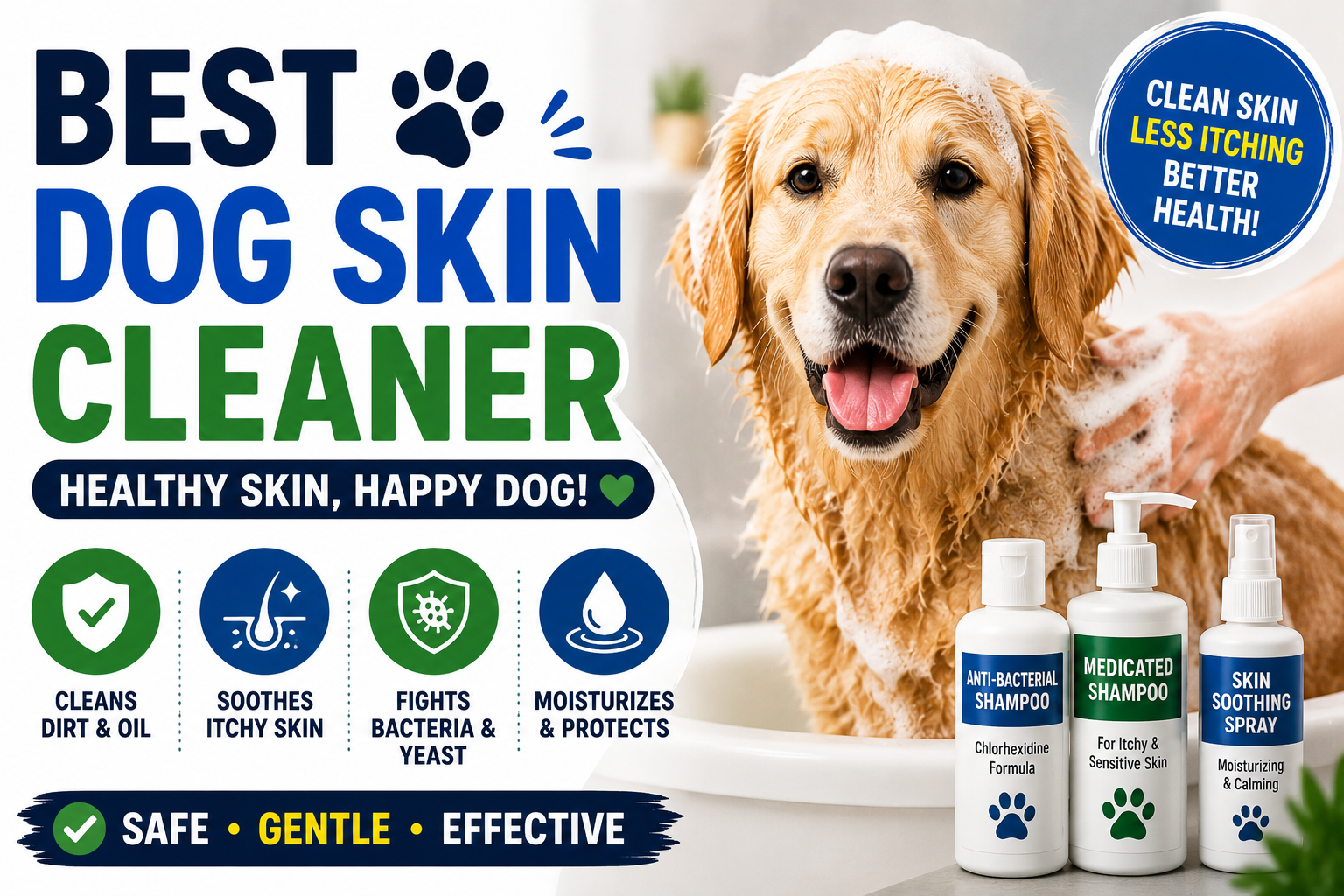
Keeping your dog’s skin clean is an important part of regular grooming and overall pet care. Dirt, allergens, excess oil, bacteria, and yeast can build up on the skin and contribute to itching, odor, irritation, and other skin problems. Choosing the best dog skin cleaner depends on whether you simply want to remove dirt or your dog has a specific skin condition.
For routine grooming, a gentle dog shampoo may be enough. Dogs with recurrent bacterial or yeast-related skin problems may need a veterinary-recommended medicated cleanser containing ingredients such as chlorhexidine or antifungal agents. Veterinary sources note that topical treatments are an important part of managing several canine skin conditions, but the underlying cause should also be identified.
This guide covers 7 types of dog skin cleaners, the ingredients to look for, how to use them safely, and mistakes to avoid.
What Is a Dog Skin Cleaner?
A dog skin cleaner is a product designed to remove dirt, excess oil, allergens, debris, and microorganisms from a dog’s skin and coat.
Dog skin cleaners can come in different forms, including:
- Dog shampoos
- Medicated shampoos
- Antimicrobial wipes
- Skin sprays
- Cleansing mousses
- Veterinary antiseptic solutions
- Paw and skin cleansing products
The right product depends on your dog’s skin condition and grooming needs.
For a healthy dog without a skin disease, a gentle cleansing shampoo may be sufficient. If your dog has redness, odor, scaling, pustules, or persistent itching, a veterinarian should determine whether a medicated product is appropriate.
1. Gentle Hypoallergenic Dog Shampoo
A gentle hypoallergenic dog shampoo is one of the best choices for routine skin cleaning.
These shampoos are designed to clean the coat without unnecessarily irritating the skin. They can be particularly useful for dogs with sensitive skin or dogs that need regular bathing.
Look for formulas that are:
- Designed specifically for dogs
- Gentle and moisturizing
- Free from unnecessary harsh ingredients
- Appropriate for sensitive skin
- Easy to rinse
Avoid assuming that a human shampoo is suitable for your dog. Veterinary guidance specifically recommends choosing products formulated for dogs and following veterinary advice when treating skin disease.
Best for:
- Routine grooming
- Dirty coats
- Mild odor
- Sensitive skin
- Regular bathing
2. Chlorhexidine Dog Skin Cleaner
Chlorhexidine is one of the most commonly used antimicrobial ingredients in veterinary dermatology.
It can be found in shampoos, wipes, sprays, and other topical products. Veterinary sources describe chlorhexidine as useful against many bacteria and as part of treatments for certain superficial bacterial and fungal/yeast-related skin problems.
Some veterinary antimicrobial shampoos contain approximately 2–4% chlorhexidine, depending on the product and intended use.
What can chlorhexidine help with?
Veterinarians may recommend chlorhexidine products for conditions involving:
- Bacterial overgrowth
- Superficial skin infections
- Yeast overgrowth
- Odor associated with microbial overgrowth
- Certain paw infections
However, chlorhexidine should not automatically be used for every itchy dog. The correct concentration, formulation, frequency, and treatment duration depend on the individual dog.
Important safety tip
Keep chlorhexidine products away from the eyes and mucous membranes. It should also not be used to clean the ears or applied to the eyes unless a veterinarian specifically provides an appropriate veterinary formulation and instructions.
3. Chlorhexidine + Antifungal Cleaner
If a veterinarian suspects both bacterial and yeast involvement, a combination product containing chlorhexidine plus an antifungal ingredient such as miconazole or ketoconazole may be recommended.
Merck Veterinary Manual identifies chlorhexidine combined with miconazole, ketoconazole, or climbazole among useful antimicrobial shampoo combinations.
These products can be available as:
- Shampoos
- Wipes
- Sprays
- Mousses
When might this type of cleaner be useful?
It may be considered when a dog has:
- Greasy skin
- Strong skin odor
- Redness
- Recurrent yeast problems
- Superficial bacterial infection
- Itchy, inflamed skin associated with microbial overgrowth
A veterinarian should determine whether an infection is actually present before you start long-term medicated treatment.
4. Antimicrobial Dog Wipes
Dog skin wipes can be convenient when you don’t want to bathe the entire dog.
They can be particularly useful for localized areas, such as:
- Paws
- Between toes
- Skin folds
- Small irritated areas
- Areas that become dirty after outdoor activities
Veterinary guidance notes that wipes or creams may be more practical for focal lesions, while shampoos or sprays can be better for widespread skin problems.
If using medicated wipes, follow the product instructions carefully.
Don’t use household disinfectant wipes on your dog. Products designed for cleaning countertops or other surfaces can be dangerous when applied to animal skin.
5. Benzoyl Peroxide Dog Shampoo
Benzoyl peroxide is another ingredient found in some veterinary dermatology shampoos.
It has antibacterial and degreasing properties and can be useful for certain superficial skin conditions. However, because it can be drying, it is not necessarily the best choice for every dog.
Veterinary sources describe benzoyl peroxide shampoos around 2.5–3% for certain canine skin conditions.
Benzoyl peroxide may be considered for:
- Oily skin
- Certain superficial infections
- Follicular problems
- Dogs requiring degreasing
Because it can dry the skin, avoid using it routinely on a dog with already dry or sensitive skin unless recommended by your veterinarian.
6. Moisturizing Dog Skin Cleanser
Not every dog needs an antimicrobial cleaner.
If your dog’s skin is healthy but becomes dry after bathing, a moisturizing dog shampoo may be a better choice.
Look for products designed to support the skin barrier and containing moisturizing or conditioning ingredients.
Some veterinary dermatology products combine antimicrobial ingredients with skin-supportive ingredients. For example, certain veterinary shampoos combine chlorhexidine with barrier-supportive ingredients such as ceramides.
Best for:
- Dry skin
- Routine bathing
- Dogs that become dry after washing
- Maintaining the coat and skin barrier
7. Veterinary Skin Cleansing Mousse or Spray
Some dogs do not tolerate frequent baths well. A veterinary cleansing mousse or spray can provide an alternative for localized or maintenance care.
These products can be especially convenient for:
- Paws
- Belly
- Skin folds
- Small affected areas
- Dogs that dislike bathing
The specific product should be chosen according to the dog’s skin condition.
For dogs with confirmed infections, a veterinarian may recommend a medicated spray or mousse as part of a broader treatment plan.
How to Choose the Best Dog Skin Cleaner
Choosing a dog skin cleaner should depend on the condition you are trying to manage.
| Dog Skin Concern | Product Type to Discuss |
|---|---|
| Normal, dirty skin | Gentle dog shampoo |
| Sensitive skin | Mild moisturizing shampoo |
| Bacterial skin problems | Chlorhexidine product |
| Yeast + bacterial problems | Chlorhexidine + antifungal |
| Localized paw problems | Veterinary wipes or mousse |
| Oily skin | Appropriate degreasing shampoo |
| Dry skin | Moisturizing dog shampoo |
This does not mean every dog with these symptoms needs the listed ingredient. A veterinarian can determine the appropriate treatment.
How Often Should You Clean Your Dog’s Skin?
There is no single bathing schedule for every dog.
Bathing frequency depends on:
- Breed
- Coat type
- Activity level
- Skin condition
- Allergies
- Environment
- Veterinary treatment plan
For dogs with certain skin diseases, medicated bathing may be recommended several times per week. Merck Veterinary Manual notes that medicated bathing schedules and contact times vary according to the condition and product.
For a healthy dog, excessive bathing may unnecessarily dry the skin.
Follow the instructions on your chosen product rather than assuming that more frequent cleaning is better.
How to Properly Use a Dog Skin Cleaner
Using the right product incorrectly can reduce its effectiveness or irritate the skin.
Step 1: Brush the Coat
Brush out loose hair, mats, and debris before bathing when appropriate.
Veterinary dermatology guidance recommends thorough grooming before topical treatment because it helps the product reach the skin more effectively.
Step 2: Wet the Dog Thoroughly
Use lukewarm water and make sure the coat is thoroughly wet.
Avoid getting water or shampoo into the eyes and ears.
Step 3: Apply the Product
Use the amount recommended on the label or by your veterinarian.
Massage the product gently into the coat so that it reaches the skin.
Step 4: Follow the Contact Time
Some medicated shampoos need to remain on the skin for several minutes.
For certain conditions, veterinary sources recommend around 10–15 minutes, but the exact contact time depends on the product and diagnosis.
Step 5: Rinse Thoroughly
Shampoo residue can irritate the skin, so rinse very carefully.
Veterinary guidance emphasizes thorough rinsing after medicated shampoo use.
Step 6: Dry Properly
Dry your dog with a clean towel.
Pay particular attention to skin folds and areas where moisture can remain trapped.
What to Avoid When Cleaning Your Dog’s Skin
Human Shampoo
Human shampoos are not automatically appropriate for dogs.
Use products specifically formulated for canine skin unless your veterinarian recommends otherwise.
Household Cleaning Products
Never use household disinfectants, bleach, bathroom cleaners, or surface wipes on your dog’s skin.
Essential Oils
Concentrated essential oils can irritate the skin and may be harmful if ingested.
Avoid DIY essential-oil skin treatments unless a veterinary professional specifically recommends an appropriate product.
Excessive Scrubbing
Scrubbing irritated skin aggressively can make inflammation worse.
Always massage gently.
Too Many Medicated Products
Using several medicated products simultaneously can increase irritation and make it difficult to identify what is helping or causing a reaction.
Products Near the Eyes
Take special care around the face. Many antiseptic ingredients can cause serious eye irritation.
Signs Your Dog May Need Veterinary Treatment
A skin cleaner may help with hygiene, but it cannot solve every skin problem.
Contact your veterinarian if your dog has:
- Severe itching
- Persistent redness
- Pus-filled bumps
- Open sores
- Hair loss
- Strong persistent odor
- Bleeding
- Swelling
- Thickened skin
- Recurrent infections
- Widespread lesions
- Severe paw licking
Skin infections can occur alongside allergies or other underlying conditions. Veterinary sources emphasize that successful treatment requires identifying and addressing the underlying cause.
Can Dog Skin Cleaners Treat Yeast Infections?
Some medicated products can help control yeast overgrowth, particularly formulations containing appropriate antifungal ingredients.
For example, chlorhexidine combined with miconazole or ketoconazole is commonly used in veterinary dermatology for certain superficial bacterial and fungal/yeast skin conditions.
However, recurrent yeast infections often have an underlying trigger, such as allergies.
Treating only the surface infection may not prevent it from returning.
Can Dog Skin Cleaners Treat Bacterial Infections?
Certain antimicrobial cleansers can help with superficial bacterial skin infections.
Chlorhexidine is one of the commonly used topical antimicrobial ingredients in veterinary medicine.
However, deeper or complicated infections may require additional veterinary treatment.
Do not assume that a medicated shampoo alone is enough for every infection.
Frequently Asked Questions
What is the best skin cleaner for dogs?
For routine grooming, a gentle dog-specific shampoo is usually appropriate. For bacterial or yeast-related skin disease, a veterinarian may recommend a medicated product containing chlorhexidine or an antifungal combination.
Is chlorhexidine safe for dogs?
Chlorhexidine is widely used topically in dogs, but the correct formulation and concentration matter. It should be used according to veterinary or product instructions and kept away from the eyes and other sensitive areas.
Can I use human body wash on my dog?
It is better to use a product formulated specifically for dogs. If your dog has a skin condition, ask your veterinarian which cleanser is appropriate.
How often should I bathe a dog with skin problems?
The frequency depends on the diagnosis and product. Some medicated bathing protocols involve several baths per week, while routine grooming may require much less frequent bathing. Follow your veterinarian’s instructions.
What is the best cleaner for itchy dog skin?
The best cleaner depends on why the dog is itchy. Allergies, parasites, bacterial infections, yeast, and other conditions can all cause itching, so diagnosis is more important than simply choosing a stronger cleanser.
Can I use baby shampoo on my dog?
Do not assume baby shampoo is suitable for dogs. A dog-specific cleanser is generally a better choice.
Final Thoughts
The best dog skin cleaner depends on your dog’s specific needs. For normal grooming, choose a gentle dog shampoo that cleans without unnecessarily drying the skin. If your dog has bacterial or yeast-related skin problems, veterinary products containing chlorhexidine, miconazole, or ketoconazole may be appropriate under veterinary guidance.
Remember that cleaning the skin is only one part of canine skin care. Persistent itching, odor, redness, hair loss, sores, or recurrent infections can indicate an underlying problem that needs professional diagnosis.
Use dog-specific products, follow label directions, rinse thoroughly, and avoid household cleaners or unapproved human products. With the right cleanser and appropriate veterinary care when needed, you can help keep your dog’s skin clean, comfortable, and healthy.