Introduction
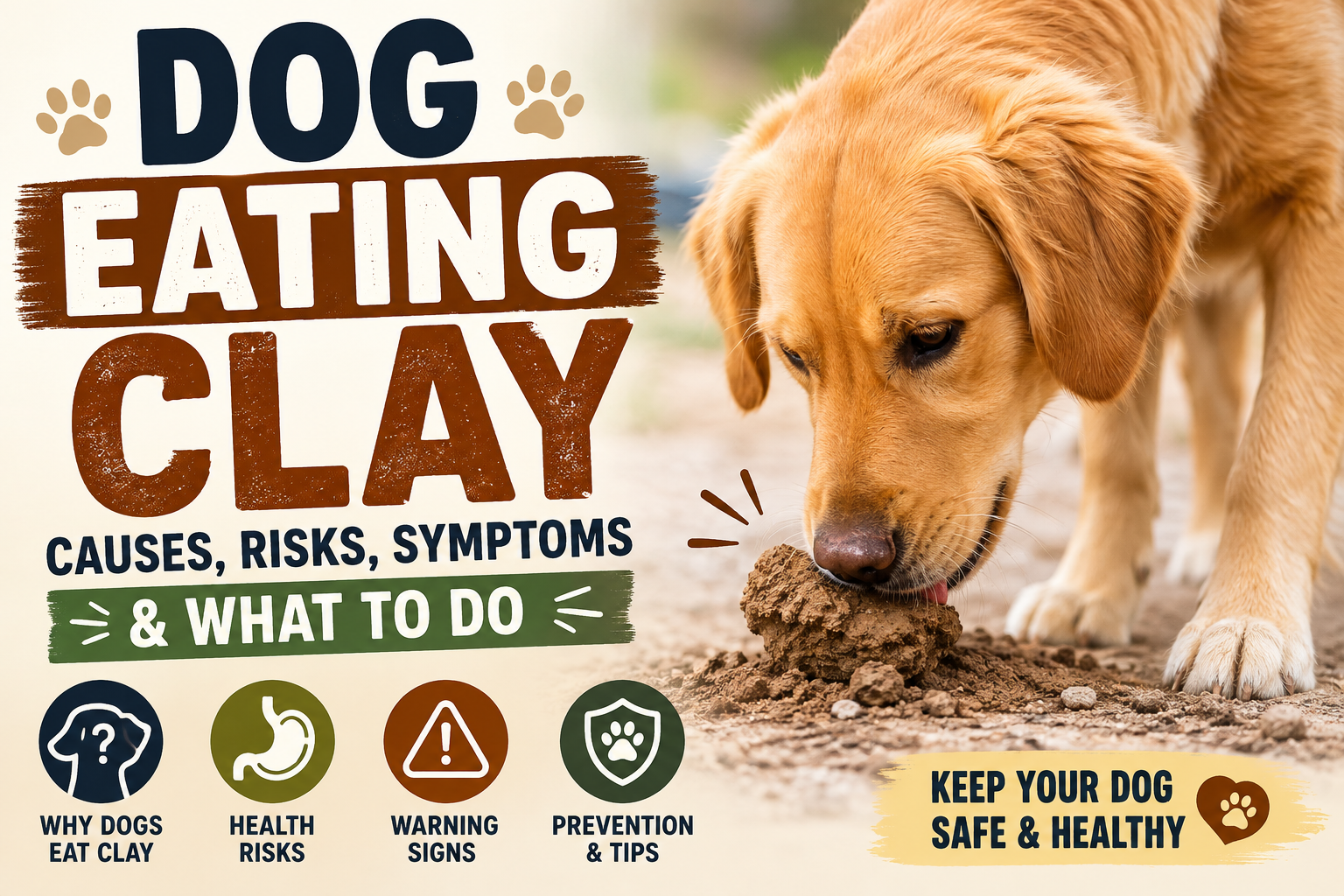
If you notice your dog eating clay, dirt, soil, or mud, you may wonder whether it is normal behavior or a sign of a health problem. Some dogs occasionally eat small amounts of soil out of curiosity, while others repeatedly seek out clay, dirt, or other non-food materials.
Repeatedly eating non-food substances is known as pica. When a dog specifically eats soil or clay, the behavior may also be described as geophagia. It can have behavioral causes, nutritional causes, or medical causes.
Although a small amount of clean soil may not always cause a serious problem, eating clay regularly can expose your dog to parasites, bacteria, chemicals, sharp objects, or other contaminants. Large amounts may also contribute to digestive problems or intestinal blockage.
This guide explains why dogs eat clay, possible health risks, warning signs, and safe steps you can take to help your dog stop eating it.
Why Is My Dog Eating Clay?
There is no single reason why a dog may eat clay. The behavior can result from several different factors.
1. Curiosity
Puppies and young dogs often investigate their surroundings with their mouths. A puppy may taste soil, clay, grass, stones, or other objects simply because it is exploring.
Occasional tasting may decrease as the puppy becomes older and learns what is appropriate to eat.
However, frequent or excessive clay eating should not be ignored.
2. Boredom
A dog that does not receive enough exercise, play, training, or mental stimulation may develop unusual behaviors.
Digging and eating soil can become an activity that keeps a bored dog occupied.
Providing daily walks, interactive toys, training sessions, and supervised play can help reduce boredom-related behaviors.
3. Anxiety or Stress
Some dogs eat non-food objects when they are stressed or anxious.
Changes in the household, separation from an owner, moving to a new home, loud noises, or changes in routine may contribute to repetitive behaviors.
If your dog suddenly begins eating clay after a major change, consider whether stress could be playing a role.
4. Nutritional Imbalance
Some people believe that dogs eat clay because they automatically know they have a mineral deficiency. However, this should not be assumed.
Nutritional deficiencies can sometimes contribute to abnormal eating behavior, but eating clay does not prove that your dog needs more minerals.
If your dog eats clay frequently, a veterinarian can evaluate the dog’s overall health and diet rather than relying on supplements without a diagnosis.
5. Gastrointestinal Problems
Digestive problems may sometimes be associated with unusual eating behaviors.
A dog experiencing gastrointestinal discomfort may begin eating unusual substances, although clay eating itself does not tell you exactly what is wrong.
If clay eating occurs along with vomiting, diarrhea, poor appetite, weight loss, or abdominal discomfort, veterinary evaluation is important.
6. Learned Behavior
Dogs can develop habits.
If eating clay becomes rewarding or interesting to a dog, the behavior may continue even after the original trigger disappears.
For example, a dog may enjoy digging in a particular area and then begin eating the soil found there.
Is Clay Safe for Dogs?
Clay should not be considered a safe food for dogs.
The biggest concern is that you usually cannot know exactly what is mixed into soil or clay.
Outdoor soil may contain:
- Parasite eggs or larvae
- Bacteria
- Animal feces
- Fertilizers
- Pesticides
- Herbicides
- Chemicals
- Rocks
- Plastic pieces
- Sharp objects
- Other contaminants
Clay from construction areas, gardens, roadsides, or treated lawns can be particularly concerning.
Even if the clay itself does not contain a toxic substance, consuming large quantities can cause digestive problems.
Can Eating Clay Cause Intestinal Blockage?
Yes, consuming large amounts of clay, soil, rocks, or other non-food materials can potentially contribute to an intestinal obstruction.
The risk depends on what the dog swallowed, how much was consumed, and the dog’s size.
An intestinal blockage can become an emergency because food and fluids may be unable to pass normally through the digestive tract.
Possible signs include:
- Repeated vomiting
- Loss of appetite
- Abdominal pain
- Weakness or unusual tiredness
- Difficulty passing stool
- Straining to defecate
- Abdominal swelling
- Restlessness
- Dehydration
If your dog has eaten a large amount of clay and develops these symptoms, contact a veterinarian promptly.
Can Clay Cause Parasites in Dogs?
Contaminated soil can expose dogs to parasites and their eggs or larvae.
Dogs that frequently eat dirt or clay may have increased exposure to contaminated environments, especially areas where other animals defecate.
Some intestinal parasites can cause symptoms such as:
- Diarrhea
- Weight loss
- Poor coat condition
- Reduced energy
- Vomiting
- Poor growth in puppies
Regular veterinary checkups and appropriate parasite prevention can help protect your dog.
Clay Eating and Pica in Dogs
When a dog repeatedly consumes substances that are not normally considered food, veterinarians may describe the behavior as pica.
Examples can include eating:
- Soil
- Clay
- Rocks
- Plastic
- Fabric
- Paper
- Wood
- Other non-food materials
Pica may have behavioral or medical causes. Because some causes require treatment, repeated pica should not simply be treated as a bad habit.
If your dog repeatedly eats clay, schedule a veterinary examination to determine whether an underlying problem may be contributing to the behavior.
Signs That Your Dog Needs a Vet
Occasional interest in soil is different from persistent clay eating.
You should consider contacting your veterinarian if your dog:
- Eats clay frequently
- Eats large amounts of soil
- Swallows rocks or other objects
- Has repeated vomiting
- Develops diarrhea
- Loses weight
- Has a reduced appetite
- Becomes unusually tired
- Shows abdominal discomfort
- Has pale gums
- Has blood in the stool
- Has difficulty passing stool
- Suddenly develops pica as an adult
Puppies, senior dogs, and dogs with existing medical problems may require particularly careful evaluation.
What Should I Do If My Dog Eats Clay?
If you catch your dog eating a small amount of clay, calmly prevent further access.
Step 1: Remove Access
Move your dog away from the area where the clay or soil is located.
Do not allow the dog to continue eating it.
Step 2: Check What Was Consumed
Try to determine how much your dog ate and whether the area contained fertilizers, pesticides, chemicals, rocks, or other objects.
This information can be useful if you need to speak with a veterinarian.
Step 3: Monitor Your Dog
Watch for vomiting, diarrhea, abdominal discomfort, unusual tiredness, appetite changes, or difficulty passing stool.
Do not wait for severe symptoms if you know your dog swallowed a large quantity or potentially toxic material.
Step 4: Contact Your Veterinarian When Necessary
Repeated clay eating should be discussed with a veterinarian.
Your veterinarian may review your dog’s diet, behavior, medical history, parasite prevention, and physical condition. Depending on the situation, additional testing may be recommended.
How to Stop a Dog From Eating Clay
The best approach depends on why the behavior is happening.
Keep the Yard Safe
If your dog spends time outdoors, inspect the yard for areas where the dog can dig and eat soil.
Keep fertilizers, pesticides, chemicals, compost, and other potentially harmful substances away from your pet.
Increase Exercise
Dogs need regular physical activity.
Daily walks, age-appropriate exercise, and supervised outdoor play can help reduce boredom and provide healthier activities.
Provide Mental Stimulation
Mental enrichment can be just as important as physical exercise.
Try:
- Puzzle feeders
- Training games
- Sniffing activities
- Interactive toys
- Food-dispensing toys
- Hide-and-seek games
These activities can give your dog something safe to focus on.
Teach a “Leave It” Command
Training your dog to respond to a reliable “leave it” cue can be very helpful.
Start in a controlled environment using a safe object or treat. Reward your dog when it moves away from the item and focuses on you.
Once the behavior improves, practice in increasingly distracting environments.
Avoid Punishment
Punishing your dog for eating clay may increase anxiety and does not necessarily address the underlying reason for the behavior.
Instead, calmly interrupt the behavior, redirect your dog, and reward appropriate choices.
Should You Give Your Dog Mineral Supplements?
Do not automatically give mineral or iron supplements simply because your dog eats clay.
Excessive supplementation can be harmful, and clay eating does not prove that a particular deficiency exists.
If a nutritional problem is suspected, your veterinarian can determine whether dietary changes or testing are appropriate.
Your dog’s main diet should be complete and balanced for its life stage.
Dog Eating Clay During Pregnancy
Pregnant dogs may experience changes in appetite and behavior, but repeated eating of clay should not be considered normal simply because a dog is pregnant.
Pregnant dogs have increased nutritional requirements, and their diet should be carefully managed.
If a pregnant dog begins eating clay, dirt, rocks, or other non-food materials, contact a veterinarian for advice rather than giving supplements on your own.
Is Eating Garden Soil Dangerous?
Garden soil can be particularly risky if it has been treated with fertilizers, pesticides, herbicides, or other garden products.
Soil can also contain animal feces, parasites, mold, or decomposing material.
If your dog repeatedly digs and eats garden soil, restrict access to treated areas and provide a safer supervised outdoor environment.
Always follow product safety instructions for lawn and garden chemicals and keep dogs away from treated areas as recommended by the product label or veterinarian.
When Is Clay Eating an Emergency?
Seek urgent veterinary help if your dog has eaten a potentially toxic substance mixed with clay or soil, swallowed a large amount of material, or shows signs that could indicate poisoning or intestinal obstruction.
Emergency warning signs can include:
- Persistent vomiting
- Severe abdominal pain
- Extreme weakness
- Collapse
- Difficulty breathing
- Severe abdominal swelling
- Repeated unsuccessful attempts to vomit or defecate
- Blood in vomit or stool
- Significant changes in consciousness
Do not induce vomiting unless a veterinarian specifically tells you to do so.
Frequently Asked Questions
Why does my dog eat clay?
Dogs may eat clay because of curiosity, boredom, stress, learned behavior, or an underlying medical or nutritional issue. Repeated eating can be associated with pica and deserves veterinary attention.
Can dogs eat a little bit of clay?
A small accidental amount may not cause a serious problem in every dog, but clay is not considered a suitable food. Monitor your dog and prevent further consumption.
Does eating clay mean my dog has a vitamin deficiency?
Not necessarily. Clay eating does not prove that your dog has a vitamin or mineral deficiency. A veterinarian should evaluate the dog before supplements are given.
Can clay make dogs sick?
Yes. Contaminated soil or clay can expose dogs to parasites, bacteria, chemicals, or other harmful materials. Large amounts can also contribute to digestive problems or obstruction.
How can I stop my dog from eating dirt and clay?
Limit access to the area, provide exercise and mental enrichment, supervise outdoor time, teach “leave it,” and investigate possible medical or behavioral causes if the behavior continues.
Should I give my dog medicine after eating clay?
Do not give medication or supplements without veterinary advice. The appropriate response depends on what was eaten, how much was consumed, and whether symptoms are present.
Final Thoughts
Dog eating clay can be caused by something as simple as curiosity or boredom, but repeated clay eating may indicate pica, stress, nutritional problems, or an underlying health issue.
Although a tiny amount of clean soil may not always cause harm, clay and outdoor soil can contain parasites, bacteria, pesticides, fertilizers, rocks, and other contaminants. Large amounts may also create a risk of digestive complications or intestinal blockage.
The safest approach is to prevent access, supervise your dog outdoors, provide enough physical and mental stimulation, and avoid giving supplements without professional advice. If your dog repeatedly eats clay or develops symptoms such as vomiting, diarrhea, abdominal pain, appetite loss, weakness, or difficulty passing stool, contact your veterinarian.
A healthy, complete diet and regular veterinary care can help address potential nutritional or medical causes while positive training and environmental management can help reduce the behavior.