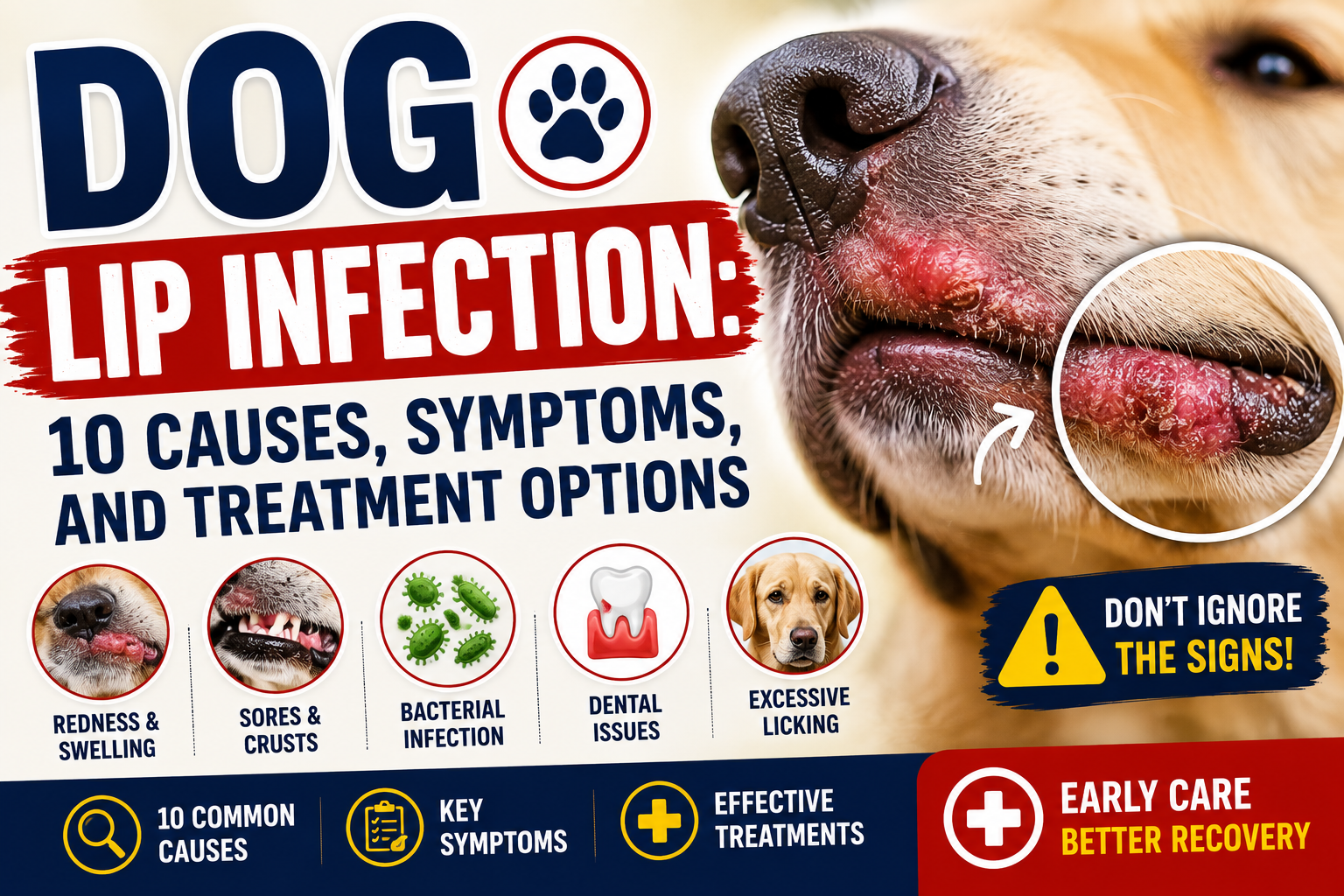
Dog Lip Infection 10 Causes, Symptoms, and Treatment Options
Introduction
A dog’s lips may seem like a small part of the body, but problems in this area can become uncomfortable and sometimes painful. If you notice redness, swelling, sores, crusting, discharge, bad odor, or excessive licking around your dog’s lips, an infection or inflammation could be responsible.
A dog lip infection can have several causes. Moisture trapped inside lip folds, bacterial or yeast overgrowth, dental disease, allergies, trauma, foreign objects, parasites, and other skin or oral conditions can all contribute to inflammation around the lips. Veterinary references also note that lip inflammation, known as cheilitis, can occur when infection spreads from the mouth or another affected area.
The right treatment depends on the underlying cause. A mild irritated lip may need simple cleaning and drying, while a deeper infection, foreign body, dental problem, or underlying skin disease may require veterinary treatment.
This guide covers 10 common causes of dog lip infections, the symptoms to watch for, treatment options, home-care precautions, and when the condition needs urgent veterinary attention.
What Is a Dog Lip Infection?
A dog lip infection occurs when the skin or tissues around the lips become inflamed and infected. The condition may affect the outer lip, the lip margins, or the folds where the lips meet.
Veterinarians may use terms such as cheilitis for inflammation of the lips and lip fold dermatitis when inflammation occurs within moist lip folds. Dogs with deep or pendulous lip folds can be particularly prone to this problem because saliva and moisture remain trapped against the skin.
Bacteria commonly contribute to skin infections, while yeast can also become involved, particularly when an underlying skin problem creates a warm and moist environment.
10 Common Causes of Dog Lip Infection
1. Lip Fold Dermatitis
Lip fold dermatitis is one of the most common reasons for irritation and infection around a dog’s lips.
Deep lip folds can trap saliva, food particles, moisture, and bacteria. Over time, the skin can become red, irritated, swollen, and uncomfortable.
Dogs with prominent facial or lip folds may be more susceptible. Chronic cases may produce a noticeable unpleasant smell and thick discharge.
Regular veterinary-recommended cleaning and keeping the area dry can help reduce recurrence.
2. Bacterial Infection
Bacteria naturally live on a dog’s skin, but excessive moisture, skin damage, allergies, or other problems can allow bacteria to multiply excessively.
Bacterial skin infections can cause:
- Redness
- Swelling
- Pustules
- Crusting
- Discharge
- Odor
- Tenderness
Lip folds are particularly vulnerable because they are warm and moist.
If bacterial infection is suspected, your veterinarian may examine the area and perform cytology or other testing to determine the appropriate treatment.
3. Yeast Overgrowth
Yeast can contribute to skin inflammation, particularly in dogs with allergies or chronic moisture problems.
A yeast-associated problem may cause redness, itching, greasy skin, discoloration, and an unpleasant odor.
Because bacterial and yeast infections can look similar, it is not always possible to determine the cause simply by looking at the lip.
Veterinary testing can help identify whether bacteria, yeast, or another condition is involved.
4. Dental Disease
Dental and oral problems can sometimes contribute to inflammation around the lips.
Severe periodontal disease or inflammation inside the mouth can extend to nearby tissues and cause lip inflammation.
Watch for additional signs such as:
- Bad breath
- Difficulty chewing
- Dropping food
- Excessive drooling
- Red or bleeding gums
- Reduced appetite
- Pawing at the mouth
If your dog’s lip problem occurs alongside dental symptoms, an oral examination is especially important.
5. Allergies
Allergies can cause itching and inflammation of the skin, and secondary bacterial or yeast infections may develop when the skin barrier becomes damaged.
Dogs with allergies may lick, scratch, or rub their face repeatedly, which can further irritate the lips. Secondary infections are common in dogs with allergic skin disease.
Potential triggers include environmental allergens, food-related allergies, and flea-related allergic reactions.
Treating only the infection may not prevent the problem from returning if the underlying allergy remains uncontrolled.
6. Cuts, Bites, or Other Injuries
Dogs can injure their lips while playing, fighting, chewing objects, or exploring outdoors.
Sharp sticks, thorns, grass awns, plant burrs, and other foreign materials can become embedded in or around the lips. These injuries can cause significant irritation and may become infected.
Check for obvious wounds, but do not attempt to dig deeply into the tissue to remove a foreign object.
A veterinarian should examine deep, painful, or contaminated wounds.
7. Foreign Objects
A small piece of plant material, stick, bone fragment, or another object can become lodged around a dog’s mouth.
The dog may repeatedly paw at its mouth, drool excessively, lick the area, or resist eating.
Foreign bodies can cause inflammation and secondary infection if they remain embedded.
If you suspect something is stuck inside your dog’s lip or mouth, veterinary examination is safer than trying to remove a deeply embedded object yourself.
8. Parasites
Certain parasites can cause skin irritation and inflammation.
Parasites are among the conditions veterinarians consider when evaluating itchy or inflamed skin.
If your dog also has widespread itching, hair loss, scabs, or skin lesions elsewhere on the body, the lip problem may be part of a larger dermatological condition.
Your veterinarian may recommend skin testing or other diagnostic procedures depending on the symptoms.
9. Autoimmune or Other Skin Diseases
Not every red or crusty lip is caused by an infection.
Some autoimmune skin disorders and other inflammatory diseases can affect the lips and surrounding tissues. Tumors can also occur in or around the mouth.
This is particularly important when a lesion:
- Does not heal
- Keeps returning
- Becomes progressively larger
- Bleeds easily
- Appears unusual
- Does not respond to appropriate treatment
Persistent lesions should be examined rather than repeatedly treated at home.
10. Excessive Moisture and Drooling
Dogs that drool heavily can develop moist skin around the mouth.
Constant moisture creates an environment where bacteria can multiply more easily and may contribute to irritation and dermatitis.
Some dogs naturally have heavier drooling because of their anatomy, while excessive drooling can also result from dental disease, mouth irritation, foreign objects, nausea, or other medical problems.
If drooling suddenly increases, investigate the cause rather than simply wiping the lips repeatedly.
Symptoms of Dog Lip Infection
The appearance of an infected lip can vary depending on the cause.
Common signs include:
- Red or irritated skin
- Swollen lips
- Crusting
- Small sores
- Pus or yellowish discharge
- Brown or reddish discoloration
- Moist or matted hair
- Bad smell
- Excessive licking
- Pawing at the mouth
- Rubbing the face
- Excessive drooling
- Difficulty eating
- Reduced appetite
Chronic lip fold infections can cause moist, discolored hair and foul-smelling discharge over inflamed or ulcerated skin.
How Is a Dog Lip Infection Diagnosed?
Your veterinarian will usually begin with a physical examination and medical history.
Depending on the appearance of the lesion, diagnostic tests may include:
- Skin cytology
- Bacterial or fungal testing
- Skin scrapings
- Oral examination
- Dental examination
- Biopsy
- Allergy investigation
- Blood tests when indicated
Testing is important because several different conditions can look similar.
For example, a dog may have bacterial infection secondary to allergies, or lip inflammation may actually be associated with dental disease or a foreign object.
Dog Lip Infection Treatment Options
1. Gentle Cleaning
For mild surface irritation, your veterinarian may recommend gently cleaning the affected area with an appropriate veterinary cleanser.
The area should then be dried carefully.
Avoid vigorous scrubbing because irritated tissue can be easily damaged.
2. Antimicrobial Treatment
If bacterial infection is confirmed or strongly suspected, a veterinarian may prescribe an appropriate antimicrobial treatment.
Treatment can be topical, oral, or both depending on the severity and location of the infection.
Antibiotics should not be used casually or left over from another illness. The correct medication depends on the infection and the individual dog.
3. Antifungal Treatment
If yeast is contributing to the problem, your veterinarian may recommend an appropriate antifungal treatment.
Because yeast overgrowth often occurs secondary to allergies or another skin problem, identifying and controlling the underlying trigger is important.
4. Treating Dental Disease
If periodontal disease or another oral condition is contributing to the lip inflammation, dental treatment may be necessary.
Treating the mouth problem can help reduce repeated inflammation around the lips.
5. Removing Foreign Material
If a thorn, plant awn, splinter, or another foreign body is responsible, it may need to be removed by a veterinarian.
Deeply embedded material should not be forcefully pulled out at home.
6. Managing Allergies
When allergies are the underlying trigger, treatment may include strategies designed to reduce itching and control secondary infections.
The specific plan depends on the type of allergy and your dog’s overall health.
7. Correcting Deep Lip Folds
In severe recurrent cases caused by anatomy, medical treatment may not provide a permanent solution.
Veterinary references note that surgical correction of very deep lip folds can be considered in selected dogs when recurrent dermatitis is difficult to control.
Can You Treat a Dog Lip Infection at Home?
Home care can be helpful for mild irritation, but it should not replace veterinary diagnosis when infection is significant or persistent.
You can:
- Keep the area clean as directed by your veterinarian.
- Gently dry the lip folds after drinking or eating when appropriate.
- Keep food and debris from accumulating around the mouth.
- Prevent excessive rubbing or scratching.
- Follow prescribed medications exactly.
Do not apply human antibiotic creams, steroid creams, essential oils, alcohol, hydrogen peroxide, or other household products to your dog’s lips unless your veterinarian specifically recommends them.
Dogs can lick topical products, and some ingredients may be irritating or unsafe when swallowed.
When to See a Veterinarian
Arrange a veterinary examination if your dog has persistent lip redness, swelling, discharge, sores, odor, or pain.
Seek prompt veterinary attention if your dog:
- Cannot eat or drink normally
- Has severe facial swelling
- Has difficulty breathing
- Has heavy bleeding
- Has a rapidly worsening infection
- Appears extremely painful
- Has severe drooling
- Has a deep wound
- Has a suspected embedded foreign object
- Becomes weak or unusually lethargic
Sudden severe swelling around the face or mouth can sometimes be associated with an allergic reaction and may require urgent treatment.
How to Prevent Dog Lip Infections
Prevention depends on the underlying cause, but several habits can help.
Keep Lip Folds Clean and Dry
If your dog has deep folds, follow your veterinarian’s cleaning recommendations.
Maintain Dental Hygiene
Regular dental care can help reduce oral disease and associated problems.
Check the Mouth Regularly
Look for swelling, sores, foreign objects, unusual odors, or changes in the gums.
Manage Allergies
If your dog has recurrent itching or skin infections, work with your veterinarian to identify the underlying trigger.
Avoid Unsafe Chewing Objects
Do not allow dogs to chew sharp or easily splintered objects that can injure the lips or mouth.
Final Thoughts
A dog lip infection can result from many different problems, including lip fold dermatitis, bacterial or yeast overgrowth, dental disease, allergies, injuries, foreign bodies, parasites, and other skin or oral conditions.
Redness, swelling, odor, discharge, crusting, excessive licking, drooling, and difficulty eating are important signs to watch for.
The most effective treatment depends on identifying the underlying cause. Mild cases may improve with appropriate cleaning and moisture control, while bacterial or yeast infections, dental disease, allergies, foreign bodies, or recurrent lip-fold problems may require specific veterinary treatment.
If your dog’s lip problem is severe, painful, persistent, or getting worse, do not rely on home remedies alone. A veterinarian can determine whether the problem is truly an infection and recommend the safest treatment.
Frequently Asked Questions
What does an infected dog’s lip look like?
An infected lip may appear red, swollen, moist, crusty, irritated, or discolored. There may also be discharge, odor, sores, or matted hair around the affected area.
What causes infections in dog lip folds?
Moisture, saliva, bacteria, poor oral hygiene, skin allergies, and the natural anatomy of deep lip folds can contribute to inflammation and infection.
Can I put antibiotic cream on my dog’s lip?
Do not use human medications on your dog’s lip unless your veterinarian recommends a specific product. Dogs may lick topical medications, and some ingredients can cause irritation or other problems.
How do I clean my dog’s infected lip?
Use only a cleanser recommended by your veterinarian, gently clean the affected area, and keep it dry. Avoid harsh household products.
Can allergies cause dog lip infections?
Yes. Allergies can damage the skin barrier and lead to secondary bacterial or yeast infections. Treating the underlying allergy can be important for preventing recurrence.
When is a dog lip infection an emergency?
Seek urgent veterinary care if your dog has severe facial swelling, difficulty breathing, heavy bleeding, severe pain, inability to eat or drink, or rapidly worsening symptoms.