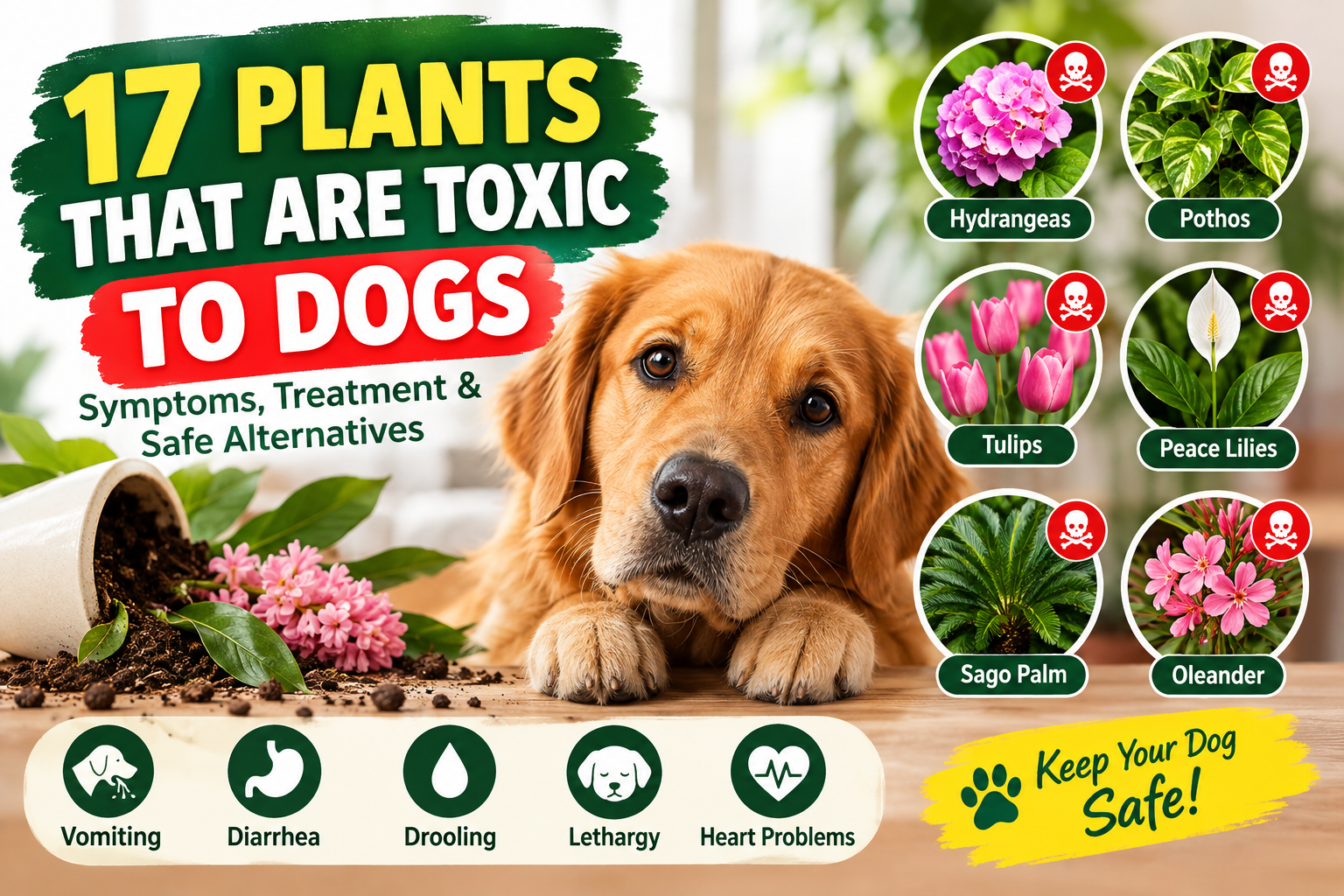
17 Plants That Are Toxic to Dogs: Symptoms, Treatment, and Safe Alternatives
Introduction
Many dog owners enjoy decorating their homes and gardens with beautiful plants and flowers. However, some common plants can be dangerous to dogs if they chew or swallow their leaves, flowers, stems, or roots. Certain plants may cause mild digestive problems, while others can lead to serious poisoning, organ damage, or even death.
Knowing which plants are toxic to dogs can help you create a safer environment for your pet. Popular houseplants such as pothos, peace lilies, snake plants, and philodendrons may look harmless, but they can cause unpleasant or dangerous reactions in dogs. Outdoor plants, including azaleas, oleander, tulips, and sago palms, can also pose significant risks.
This guide explains 17 plants that are poisonous to dogs, the symptoms to watch for, what to do if your dog eats a toxic plant, and which dog-friendly plants you can consider instead.
Key Takeaways
- Several popular indoor and outdoor plants are toxic to dogs, including sago palms, oleander, azaleas, tulips, and pothos.
- Symptoms of plant poisoning may include vomiting, diarrhea, drooling, weakness, mouth irritation, and changes in heart rhythm.
- Some plants can cause life-threatening complications even when a dog eats a relatively small amount.
- If your dog eats a potentially poisonous plant, contact a veterinarian immediately rather than waiting for symptoms.
- Choosing pet-friendly plants and keeping toxic varieties out of reach can help protect your dog’s health.
17 Common Plants That Are Toxic to Dogs
1. Hydrangeas
Hydrangeas are popular flowering shrubs known for their large clusters of colorful flowers. Although they can make a garden look beautiful, they contain compounds that can be harmful to dogs when ingested.
Dogs that chew hydrangea leaves or flowers may develop digestive problems, particularly after eating larger quantities.
Possible symptoms include:
- Vomiting
- Diarrhea
- Reduced energy
- Loss of appetite
Keep hydrangeas away from areas where your dog regularly plays or explores.
Youtube Video
2. Lily of the Valley
Lily of the valley is a flowering plant with small, bell-shaped white flowers. Despite its delicate appearance, it is highly toxic to dogs because it contains cardiac glycosides that can interfere with normal heart function.
Ingestion may lead to serious complications that require immediate veterinary attention.
Possible symptoms include:
- Vomiting and diarrhea
- An unusually slow heartbeat
- Irregular heart rhythms
- Weakness
- Seizures or collapse in severe cases
If you suspect your dog has eaten lily of the valley, seek emergency veterinary care immediately.
3. Pothos
Pothos is a widely grown houseplant valued for its trailing vines and easy maintenance. However, it contains insoluble calcium oxalate crystals that can irritate a dog’s mouth and digestive tract when the plant is chewed.
Possible symptoms include:
- Pain or burning in the mouth
- Excessive drooling
- Pawing at the mouth
- Vomiting
- Difficulty swallowing
- Reduced appetite
Place pothos plants somewhere your dog cannot reach, including areas where fallen leaves might collect.
4. Peonies
Peonies are attractive flowering plants often used in gardens and decorative bouquets. They contain compounds that can upset a dog’s digestive system if eaten.
Possible symptoms include:
- Vomiting
- Diarrhea
- Depression or reduced activity
Keep flower arrangements away from your dog and remove fallen petals or leaves promptly.
5. Snake Plants
Snake plants are popular indoor plants because they tolerate a variety of growing conditions and require relatively little maintenance. Unfortunately, they contain saponins that can cause gastrointestinal irritation in dogs.
Possible symptoms include:
- Nausea
- Vomiting
- Diarrhea
- Reduced appetite
- Unusual tiredness
If your dog chews a snake plant, contact your veterinarian for advice, especially if symptoms develop or the amount consumed is unknown.
6. Tulips
Tulips are common spring flowers, but they can be dangerous to dogs. The bulbs contain particularly high concentrations of toxic compounds, making digging dogs especially vulnerable.
Possible symptoms include:
- Vomiting
- Diarrhea
- Excessive drooling
- Increased heart rate
- Rapid breathing
- Difficulty breathing in severe cases
Prevent your dog from digging in flower beds containing tulip bulbs. Contact a veterinarian if you suspect your pet has swallowed any part of the plant.
7. Aloe Vera
Aloe vera is frequently grown indoors and used in skincare products. However, the living plant contains substances, including saponins and anthraquinone compounds, that can cause poisoning in dogs.
Possible symptoms include:
- Vomiting
- Diarrhea
- Lethargy
- Reduced appetite
- Changes in urine color
Keep aloe plants away from pets. Also, do not assume that a product containing aloe is safe for dogs simply because it is intended for human skin.
8. Peace Lilies
Peace lilies are popular houseplants because of their glossy leaves and white flowers. They contain insoluble calcium oxalate crystals, which can cause immediate irritation when a dog bites or chews the plant.
Possible symptoms include:
- Burning or pain in the mouth
- Swelling of the lips or tongue
- Excessive drooling
- Vomiting
- Difficulty swallowing
Peace lilies are generally less dangerous than true lilies that cause kidney failure in cats, but they can still cause significant discomfort and may require veterinary care.
9. Rhododendrons
Rhododendrons are flowering shrubs commonly planted in gardens. They contain grayanotoxins, which can interfere with normal nerve and muscle function, including the cardiovascular system.
Even relatively small amounts may cause serious poisoning.
Possible symptoms include:
- Vomiting
- Diarrhea
- Excessive drooling
- Weakness
- Low blood pressure
- Tremors
- Abnormal heart rhythms
- Collapse or coma in severe cases
Avoid planting rhododendrons where dogs can access them. Seek immediate veterinary attention if your dog eats any part of this plant.
10. Holly
Holly plants are often used in holiday decorations because of their glossy leaves and bright berries. However, several varieties contain irritating compounds, and their leaves may also cause physical irritation because of their sharp edges.
Possible symptoms include:
- Vomiting
- Diarrhea
- Excessive drooling
- Lip-smacking
- Head-shaking
- Mouth or digestive discomfort
Keep holly branches, berries, and decorative arrangements out of your dog’s reach, particularly during the holiday season.
11. Ivy
Some ivy varieties are toxic to dogs, including English ivy. The leaves and berries contain substances that can irritate the digestive system.
Possible symptoms include:
- Vomiting
- Diarrhea
- Abdominal pain
- Excessive salivation
- Reduced appetite
Check your garden and outdoor walls for climbing ivy, especially if your dog likes to chew vegetation during walks or playtime.
12. Monstera Deliciosa
Monstera deliciosa, sometimes called the Swiss cheese plant, is a popular indoor plant recognized by its large, split leaves. Like pothos and philodendrons, it contains insoluble calcium oxalate crystals.
Chewing the plant can cause painful irritation of the mouth and throat.
Possible symptoms include:
- Mouth pain
- Pawing at the face
- Excessive drooling
- Swelling of the mouth
- Difficulty swallowing
- Reduced appetite
Keep monstera plants in inaccessible locations and clean up fallen leaves immediately.
13. Oleander
Oleander is an ornamental shrub commonly grown outdoors in warm climates. It is extremely toxic to dogs because it contains cardiac glycosides that affect the heart.
Every part of the plant can be dangerous, including its leaves, flowers, stems, and water from a vase containing cut oleander.
Possible symptoms include:
- Vomiting
- Excessive drooling
- Weakness
- Abnormal heart rhythms
- Tremors
- Seizures
- Collapse
Oleander poisoning can be fatal. If your dog may have eaten any part of this plant, seek emergency veterinary treatment immediately.
14. Sago Palm
Sago palm is an especially dangerous plant for dogs. It contains cycasin and other toxic compounds that can cause severe liver damage. Seeds are particularly hazardous, but other parts of the plant can also be poisonous.
Possible symptoms include:
- Sudden vomiting
- Bloody diarrhea
- Abdominal pain
- Increased thirst
- Bruising or abnormal bleeding
- Liver damage or liver failure
- Seizures
Do not wait for symptoms to appear if your dog eats sago palm. Early veterinary treatment is essential because serious complications may develop even if the dog initially appears normal.
15. Azaleas
Azaleas are flowering shrubs related to rhododendrons. They contain grayanotoxins that can interfere with nerve signals and heart function.
Possible symptoms include:
- Vomiting
- Diarrhea
- Weakness
- Excessive drooling
- Low blood pressure
- Abnormal heart rhythms
- Collapse in severe cases
Avoid growing azaleas in dog-accessible gardens. Contact a veterinarian immediately if you suspect ingestion.
16. Philodendrons
Philodendrons are common indoor plants with attractive green foliage. However, their insoluble calcium oxalate crystals can cause intense irritation when a dog chews the leaves or stems.
Possible symptoms include:
- Mouth pain
- Pawing at the mouth
- Excessive drooling
- Swelling
- Vomiting
- Difficulty swallowing
- Reduced appetite
Move philodendrons out of reach and make sure that fallen plant material is not accessible to curious pets.
17. Autumn Crocus
Autumn crocus is an ornamental flowering plant that can be extremely poisonous to dogs. It contains colchicine and related toxic compounds that can affect multiple organs and damage the digestive system.
Possible symptoms include:
- Vomiting
- Bloody diarrhea
- Abdominal pain
- Excessive drooling
- Organ damage
- Respiratory complications
- Seizures in severe cases
Autumn crocus poisoning can be life-threatening and may cause delayed complications. Seek emergency veterinary assistance if your dog may have consumed any part of this plant.
What Are the Common Signs of Plant Poisoning in Dogs?
The symptoms of plant poisoning vary depending on the plant, the amount eaten, and your dog’s size and health. Some plants cause immediate mouth irritation, while others can damage the heart, liver, kidneys, or nervous system.
Watch for these warning signs:
- Repeated vomiting
- Diarrhea or bloody stools
- Excessive drooling
- Swelling of the lips, tongue, or mouth
- Difficulty swallowing
- Loss of appetite
- Unusual tiredness or weakness
- Tremors or seizures
- Changes in breathing or heartbeat
- Collapse or loss of consciousness
Important: Severe poisoning may not cause immediate symptoms. Never assume your dog is safe simply because it appears normal after eating a potentially toxic plant.
What to Do If Your Dog Eats a Poisonous Plant
Taking the right steps quickly can help reduce the risk of serious complications.
1. Remove Your Dog From the Plant
Move your dog away from the plant to prevent further chewing. If you can do so safely, remove any visible plant material from the mouth without pushing it farther into the throat.
2. Identify the Plant
Take a clear photograph of the plant, including its leaves, flowers, stems, and berries if present. Save a sample in a secure container if it is safe to handle.
Accurate identification can help your veterinarian determine the likely toxin and appropriate treatment.
3. Contact a Veterinarian Immediately
Call your veterinarian or an emergency veterinary hospital as soon as possible. Tell them the plant’s name, approximately how much your dog ate, and when the incident happened.
Do not wait for symptoms if the plant may be highly toxic.
4. Avoid Unproven Home Remedies
Do not induce vomiting or give milk, oil, salt, human medicines, or activated charcoal unless a veterinarian specifically instructs you to do so. Some remedies can make the situation worse.
5. Contact a Pet Poison Helpline
In the United States, pet owners can also contact these poison-control services:
- Pet Poison Helpline: 1-855-764-7661
- ASPCA Animal Poison Control Center: 1-888-426-4435
Fees may apply. If your dog has severe symptoms, such as seizures, difficulty breathing, or collapse, go directly to an emergency veterinary hospital while arranging professional guidance.
Which Plants Are Safe for Dogs?
You do not need to avoid all greenery to keep your dog safe. Several popular ornamental plants are generally considered non-toxic to dogs when used as intended.
Examples include:
- Spider plant
- Boston fern
- Bamboo palm
- Cast iron plant
- Christmas cactus
- African violet
- Marigolds
- Petunias
- Sunflowers
- Roses
- Gerbera daisies
- Snapdragons
- Zinnias
- Hens and chicks
- Impatiens
However, a plant’s safety can depend on the exact species and how it is grown. Pesticides, fertilizers, plant treatments, and decorative additives can create additional risks. Eating large amounts of even a non-toxic plant may upset a dog’s stomach.
Before bringing a new plant into your home, verify its scientific name and check a reliable veterinary toxicology resource.
How to Keep Your Dog Safe Around Plants
A few simple precautions can reduce the risk of accidental poisoning.
Research before buying: Check whether a plant is toxic to dogs before bringing it into your home or garden.
Place plants strategically: Use locations that your dog cannot reach, while remembering that shelves and hanging pots may not prevent access for determined pets.
Supervise outdoor activities: Watch your dog in gardens, parks, and unfamiliar outdoor areas where toxic plants may grow.
Remove fallen leaves and flowers: Fallen plant parts, bulbs, and berries may be easier for dogs to reach than the living plant.
Teach a leave-it command: Training your dog not to chew plants can provide an additional layer of protection.
Check holiday decorations: Seasonal plants and floral arrangements may contain toxic varieties. Keep unfamiliar greenery out of your dog’s reach until you verify its safety.
Know your dog’s habits: Puppies and dogs that regularly chew non-food objects may need closer supervision around plants.
Frequently Asked Questions
1. What is the most poisonous plant to dogs?
Several plants are extremely dangerous to dogs, including sago palm, oleander, lily of the valley, autumn crocus, and rhododendron. Sago palm can cause severe liver failure, while oleander and lily of the valley can affect the heart. The danger depends on the plant, amount consumed, and the dog’s condition.
2. What are the first signs of plant poisoning in dogs?
Early signs may include vomiting, diarrhea, drooling, mouth irritation, pawing at the mouth, and reduced energy. Some toxins cause more serious problems, such as abnormal heart rhythms or liver damage, and symptoms may be delayed.
3. Are indoor plants dangerous for dogs?
Yes. Some popular indoor plants, including pothos, philodendrons, monstera, peace lilies, aloe vera, and snake plants, can cause poisoning or irritation. Choose verified pet-safe varieties and keep toxic plants inaccessible.
4. Can a dog recover after eating a poisonous plant?
Many dogs can recover, particularly when they receive prompt veterinary treatment. However, the outcome depends on the plant, the quantity eaten, the time before treatment, and the severity of poisoning. Some toxic plants can cause permanent organ damage or death.
5. Should I make my dog vomit after eating a toxic plant?
No. Do not induce vomiting unless a veterinarian specifically instructs you to do so. Vomiting can be dangerous with certain toxins or when a dog has difficulty swallowing, seizures, or reduced consciousness.
6. Are roses safe for dogs?
True roses are generally considered non-toxic to dogs. However, thorns can cause injuries, and pesticides or other chemicals used on the plants may be harmful. Eating large quantities of plant material can also cause stomach upset.
7. How can I identify whether a plant is toxic to my dog?
Identify the plant using its scientific name, then check a trusted veterinary poison-control resource. Photographs of the leaves, flowers, and overall plant can help with identification, but do not rely on appearance alone.
Conclusion
Plants can make homes and gardens more attractive, but some common varieties pose serious risks to dogs. Hydrangeas, pothos, tulips, peace lilies, azaleas, philodendrons, oleander, and sago palms are among the plants pet owners should recognize and manage carefully.
Symptoms of plant poisoning can range from mild digestive upset to dangerous heart problems, liver damage, and seizures. The safest approach is to prevent access to toxic plants, choose dog-friendly alternatives, and contact a veterinarian immediately if your dog eats a potentially poisonous plant.
By learning which plants are dangerous and taking a few practical precautions, you can create a greener home while helping protect your dog’s health.