Key Takeaways
- Dogs can sweat, but they do not rely on sweating as their primary method of cooling down.
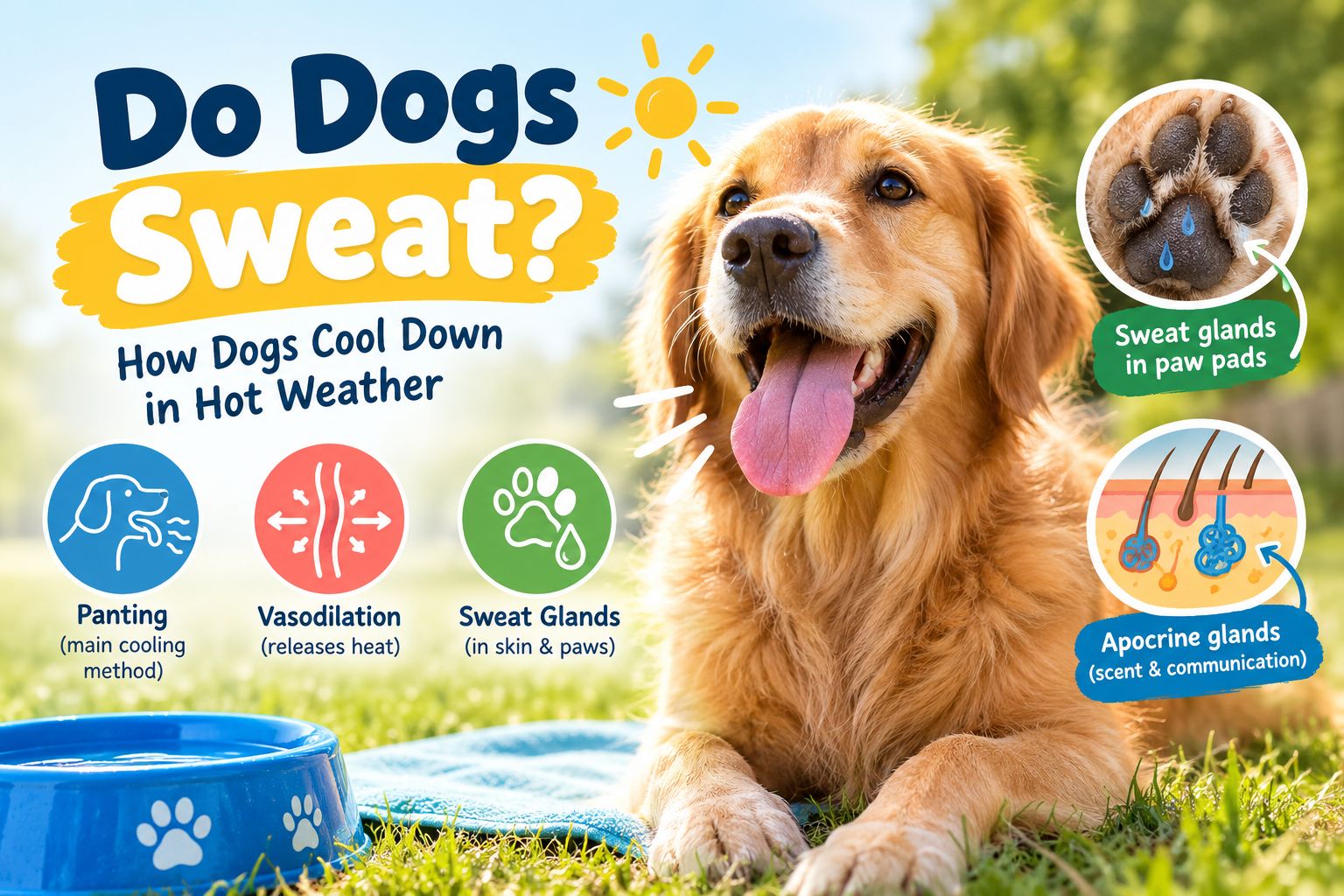
- Dogs have apocrine sweat glands across much of their skin, which are mainly associated with scent and communication.
- Eccrine sweat glands are located primarily in dogs’ paw pads and release moisture that may help with cooling.
- Panting is the main way dogs regulate their body temperature, while widening blood vessels also helps release heat.
- Fresh water, shade, cooler walking times, and appropriate cooling methods can help prevent overheating in dogs.
Introduction
Have you ever noticed your dog panting heavily after playing outside or taking a long walk? Unlike humans, who rely heavily on sweating to regulate body temperature, dogs use a different cooling system. Their bodies are designed to release heat primarily through panting, supported by changes in blood circulation.
Although dogs have sweat glands, these glands serve somewhat different purposes from human sweat glands. Some contribute to scent-related communication, while others are found in the paw pads and may provide limited cooling.
Understanding how dogs sweat and regulate body temperature can help pet owners recognize signs of overheating and take appropriate steps to protect their companions during warm weather.
In this guide, we explain whether dogs sweat, where their sweat glands are located, how panting works, and what you can do to help your dog stay comfortable and safe.
Do Dogs Sweat Like Humans?
No. Dogs do not sweat in the same way humans do. People have sweat glands distributed across much of their skin, and the evaporation of sweat helps remove excess body heat.
Dogs have sweat glands too, but sweating plays a much smaller role in their temperature regulation. Their fur-covered bodies make widespread evaporative cooling less effective, so they depend primarily on panting.
Dogs also use changes in blood flow to help release heat. When temperatures rise, blood vessels near certain body surfaces widen, allowing more heat to escape into the surrounding environment.
Although sweating is not a dog’s main cooling mechanism, it is incorrect to say that dogs never sweat. Their sweat glands have important functions, including producing substances associated with scent communication.
What Types of Sweat Glands Do Dogs Have?
Dogs have two main types of sweat glands: apocrine glands and eccrine glands. These glands differ in location and function.
Youtube Video
1. Apocrine Sweat Glands
Apocrine glands, also called epitrichial glands, are distributed across much of a dog’s skin and are associated with hair follicles.
Unlike the widespread cooling-related sweating seen in humans, these glands primarily produce secretions that contribute to the skin’s natural scent. These odors can carry chemical information that may help dogs recognize or communicate with other animals.
Apocrine secretions are not considered a major mechanism for regulating body temperature. This is one reason dogs cannot depend on ordinary skin sweating to cool themselves effectively on hot days.
2. Eccrine Sweat Glands
Eccrine glands, also known as merocrine glands, are primarily found in the skin of a dog’s paw pads.
These glands release a watery secretion. Some moisture can evaporate from the paw pads, potentially contributing to heat loss, although the overall cooling effect is limited compared with panting.
You might notice damp paw prints on a floor after your dog becomes excited or anxious. Moisture from the paw pads can sometimes explain these marks.
However, wet paw prints do not necessarily mean that your dog is overheating. Excitement, stress, and other factors can also influence paw-pad moisture.
Where Do Dogs Sweat?
Dogs have sweat glands in different areas of their bodies, but the paw pads are the most familiar location associated with visible moisture.
Paw Pads
Dogs have eccrine glands in their paw pads. The fluid they produce is mostly water, and some of this moisture can evaporate.
Because the paw pads cover a relatively small area, this type of sweating provides only limited cooling. It is not enough to protect a dog from dangerous heat on its own.
Skin Beneath the Fur
Apocrine glands are present across much of the dog’s skin. Their secretions mainly contribute to scent rather than meaningful temperature control.
Consequently, a dog with thick fur cannot cool down by sweating through its coat in the same way that a human cools down through exposed skin.
Nose
A dog’s nose may appear wet, but that moisture should not automatically be interpreted as sweat. Nasal moisture can come from glandular secretions and other normal processes.
The wetness of a dog’s nose is not a reliable indicator of whether the animal is too hot, too cold, or healthy. Behavior, breathing, activity level, and other symptoms provide more useful information.
How Do Dogs Cool Themselves Down?
Dogs rely mainly on panting and changes in blood circulation to release excess heat. Both mechanisms help maintain a relatively stable internal body temperature.
1. Panting
Panting is the primary way dogs cool themselves.
When a dog pants, it breathes rapidly with its mouth open. Air moves across moist surfaces in the mouth and respiratory tract, allowing water to evaporate. This evaporation removes heat from the body.
Unlike human sweating, which cools much of the skin’s surface, panting focuses on evaporative heat loss through the respiratory system.
Dogs often pant after exercise, during warm weather, or when they become excited. Panting can also occur because of stress, pain, or certain medical conditions.
Normal panting generally decreases when a dog rests in a comfortable environment. However, persistent or unusually heavy panting may signal overheating or another health problem.
Dogs with short, flat faces, including Bulldogs and Pugs, may have more difficulty cooling themselves efficiently because of their airway structure. These dogs require extra care in hot and humid conditions.
2. Vasodilation
Vasodilation is the widening of blood vessels. When a dog becomes warm, blood vessels near certain body surfaces widen, increasing blood flow to those areas.
This allows more heat to move from the blood into the surrounding environment.
However, vasodilation does not always provide enough cooling to prevent overheating. Its effectiveness depends on environmental conditions and how much heat the dog is producing.
When outdoor temperatures are extremely high, the body may struggle to release heat effectively. This is why shade, fresh water, rest, and access to a cooler environment are essential.
Why Do Dogs Pant Even When They Are Not Hot?
Panting is often associated with heat, but temperature is not the only reason dogs pant.
Exercise and Physical Activity
Running, walking, and playing increase muscle activity and heat production. Dogs commonly pant after exercise as their bodies work to return to a comfortable temperature.
Excitement
Some dogs pant when greeting their owners, meeting other dogs, or anticipating a favorite activity. Excitement can increase breathing rate even when the weather is cool.
Anxiety and Stress
Travel, thunderstorms, unfamiliar environments, and separation from familiar people may cause stress-related panting.
If panting occurs alongside trembling, pacing, hiding, or repeated lip licking, anxiety may be contributing to the behavior.
Pain or Illness
Dogs may pant because of pain, fever, breathing problems, or other medical conditions. Unexplained panting at rest, especially when accompanied by weakness, coughing, or changes in behavior, deserves veterinary attention.
Do not assume that every episode of heavy panting is caused by warm weather.
How to Help Your Dog Stay Cool in Hot Weather
Dogs sometimes need assistance regulating their temperature, particularly during summer. A few practical precautions can reduce the risk of overheating.
Provide Fresh Drinking Water
Keep clean, fresh water available throughout the day. Bring water and a portable bowl when walking your dog or spending time outdoors.
Encourage your dog to drink, but do not force water into its mouth if it is distressed or struggling to breathe.
Walk During Cooler Hours
Plan walks for early morning or later in the evening when temperatures are lower. Avoid strenuous exercise during the hottest part of the day.
Remember that humidity, direct sunlight, and the dog’s breed and health can influence heat risk even when the air temperature seems manageable.
Choose Shady Areas
Whenever possible, walk your dog on shaded routes and provide a cool resting place outdoors.
Never leave a dog unattended in a parked vehicle. Temperatures inside vehicles can rise dangerously quickly, even when the windows are slightly open or the weather outside does not feel extremely hot.
Protect Your Dog’s Paw Pads
Pavement, asphalt, and other exposed surfaces can become much hotter than the surrounding air.
Test the walking surface carefully and choose grass or shaded paths when possible. If the ground is too hot for your hand to rest on comfortably, choose another route.
If your dog develops painful, blistered, or damaged paw pads, contact a veterinarian.
Use Cooling Mats or Damp Towels
A pet-safe cooling mat or a cool, damp towel may help your dog feel more comfortable.
Supervise your dog when using cooling products and follow the manufacturer’s instructions. Avoid methods that cause excessive chilling or prevent the dog from moving away when uncomfortable.
Offer Supervised Water Play
Some dogs enjoy playing in a shallow pool or gently spraying water with a hose. Always supervise water activities, use a safe depth, and provide an easy way to exit the pool.
Water play can help a dog feel cooler, but it should not replace appropriate rest and access to shade.
Groom Your Dog Appropriately
Regular brushing can remove loose hair, reduce tangles, and help maintain healthy skin and coat condition.
However, shaving a double-coated dog is not automatically the best way to prevent overheating. A dog’s coat can also provide insulation and protect the skin from sunlight. Ask a veterinarian or qualified groomer about suitable coat care for your dog’s breed.
Make Safe Frozen Treats
Frozen treats made from dog-safe ingredients can provide enrichment and help your pet feel refreshed.
You can freeze a small amount of plain, unsalted broth or dog-safe vegetables with water. Avoid ingredients that are toxic to dogs, including onion, garlic, grapes, raisins, chocolate, and products containing xylitol.
Treats should be offered in appropriate portions and should not replace regular meals or fresh drinking water.
Signs Your Dog May Be Overheating
Overheating can become a serious medical emergency. Recognizing warning signs early is important because dogs may not be able to cool themselves effectively under extreme conditions.
Watch for the following symptoms:
- Excessive or persistent panting
- Thick or unusually heavy drooling
- Bright red, pale, or abnormal-looking gums
- Weakness or difficulty walking
- Vomiting or diarrhea
- Confusion, unusual behavior, or loss of coordination
- Collapse or seizures
Not every dog displays every symptom, and heatstroke can progress rapidly.
What Should You Do if Your Dog Is Overheating?
Move your dog to a cooler, shaded or air-conditioned area immediately. Begin cooling the body with cool or tepid water and use a fan if available.
Avoid ice baths or placing ice directly over large areas of the body. Do not force your dog to drink if it is weak, confused, vomiting, or having difficulty swallowing.
Contact a veterinarian urgently and arrange immediate veterinary assessment if heatstroke is suspected. Do not delay professional care just because your dog appears to improve.
Frequently Asked Questions
Do Dogs Sweat Through Their Fur?
Dogs have sweat glands in their skin, but they do not rely on sweating through their fur to cool down. Apocrine glands mainly contribute to scent-related functions, while eccrine glands are found primarily in the paw pads. Panting is their main cooling mechanism.
Can You Smell Dog Sweat?
The scent associated with dogs can come from skin secretions, natural skin oils, bacteria, and other sources. Apocrine secretions contribute to a dog’s natural scent, but the smell of a dog is not necessarily caused by sweat alone.
A sudden, strong, or unpleasant odor may indicate a skin, ear, dental, or other health problem. If the smell persists or comes with itching, redness, discharge, or discomfort, seek veterinary advice.
What Do Dogs Do Instead of Sweating?
Dogs primarily cool themselves through panting. Evaporation from moist surfaces in the mouth and respiratory tract helps release heat. Vasodilation also allows more blood to flow near certain body surfaces, helping heat escape.
Do Dogs Sweat Through Their Paws?
Yes, dogs have eccrine sweat glands in their paw pads. These glands release moisture that may contribute to limited cooling. Damp paw prints can sometimes be a sign of paw-pad sweating, although excitement or anxiety may also contribute.
Do Dogs Pant When They Are Hot?
Yes. Panting is a dog’s primary cooling mechanism and commonly increases during hot weather or after exercise. However, excessive panting can also be caused by anxiety, pain, or illness, so context and other symptoms matter.
Which Dogs Are More Likely to Overheat?
Dogs with short, flat faces, thick coats, excess body weight, or certain health conditions may have a higher risk of heat-related problems. Puppies, senior dogs, and dogs that are not accustomed to exercise in warm weather may also need additional precautions.
Can Dogs Overheat Even If They Have Water?
Yes. Access to water is essential, but drinking water alone cannot always prevent overheating. High humidity, intense exercise, hot pavement, and extreme temperatures can overwhelm a dog’s ability to release heat. Shade, rest, suitable exercise times, and a cool environment are also important.
Conclusion
Dogs do have sweat glands, but they do not cool themselves in the same way humans do. Their apocrine glands mainly contribute to scent-related communication, while eccrine glands in the paw pads release small amounts of moisture. Panting remains the primary way dogs regulate their body temperature, with changes in blood circulation providing additional assistance.
As a responsible pet owner, you can help your dog stay comfortable by providing fresh water, avoiding strenuous activity in extreme heat, choosing cooler walking times, and offering access to shade or air conditioning.
Most importantly, learn to recognize the warning signs of overheating. Persistent heavy panting, weakness, vomiting, confusion, or collapse should never be ignored. Taking prompt action and seeking veterinary care when needed can help protect your dog from dangerous heat-related illness.
Disclaimer: This article is for educational purposes only and does not replace professional veterinary advice, diagnosis, or treatment.