30 Foods Dogs Should Never Eat: Toxic Foods, Warning Signs, and Safety Tips
Introduction
Dogs love exploring the world with their noses and mouths. Whether they are sniffing around the kitchen, begging for a bite at dinner, or investigating an open trash can, they often encounter foods that are not safe for them.
Sharing small amounts of human food with your dog may seem harmless, but some everyday ingredients can cause serious health problems. Certain foods can damage a dog’s kidneys, affect the nervous system, destroy red blood cells, or lead to dangerous digestive complications.
Knowing which foods dogs should never eat can help you protect your pet from accidental poisoning. Although some human foods are safe for dogs in moderation, others should be avoided completely.
In this guide, we explain 30 potentially dangerous foods for dogs, common signs of food poisoning, safer snack alternatives, and what to do if your dog eats something toxic.
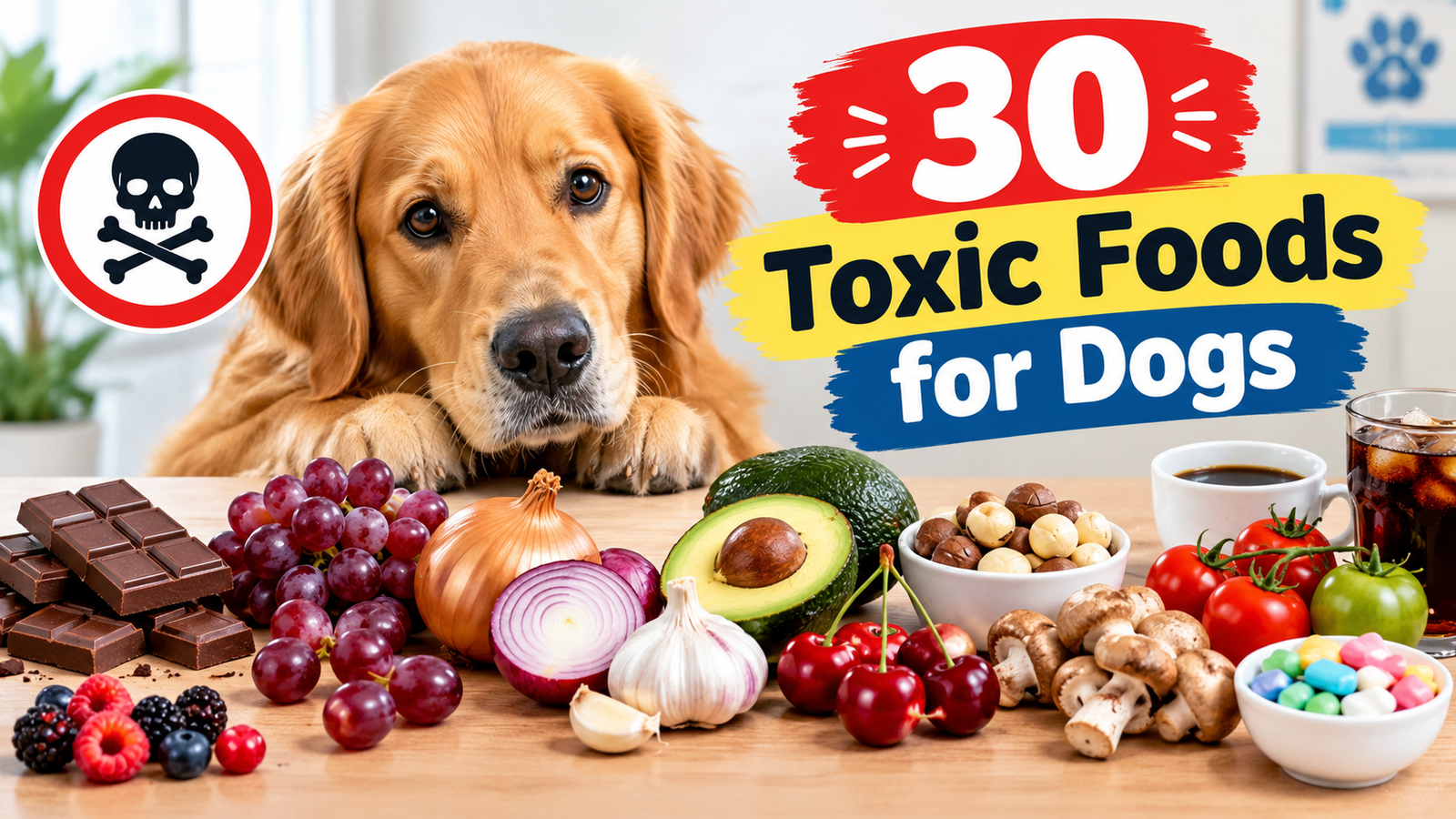
30 Foods Dogs Should Never Eat
1. Avocados
Avocados contain persin, a natural compound that can cause digestive problems in some animals. The high fat content of avocado flesh may also contribute to pancreatitis in susceptible dogs.
The large pit presents an additional danger because it can cause choking or an intestinal blockage if swallowed.
Although small amounts of avocado flesh may be tolerated by some dogs, it is safer to choose a dog-friendly snack instead of deliberately feeding avocado.
2. Cherries
Cherry stems, leaves, and pits contain compounds that can release cyanide when chewed or damaged. Cyanide interferes with the body’s ability to use oxygen.
Cherry pits can also cause choking or digestive tract obstructions.
Keep cherries away from your dog, particularly whole cherries that still contain their stems and pits.
3. Grapes and Raisins
Grapes and raisins are among the most concerning foods for dogs because they can cause acute kidney injury. The exact toxic dose is unpredictable, and some dogs become seriously ill after eating relatively small quantities.
Do not assume that a single grape or raisin is harmless.
Keep fresh grapes, raisins, grape juice, and foods containing these ingredients out of your dog’s reach. Contact a veterinarian immediately if your dog eats any grapes or raisins.
4. Tomatoes
Fully ripe, red tomatoes are generally considered safe for dogs in small quantities when prepared without harmful seasonings.
However, green tomatoes and the green parts of tomato plants contain higher levels of solanine and related compounds that may be toxic.
Avoid giving your dog unripe tomatoes, leaves, stems, or other green plant material.
5. Wild Mushrooms
Not all mushrooms are poisonous, but certain wild varieties contain toxins that can cause severe illness or death in dogs.
Identifying wild mushrooms can be difficult, even for experienced people. Therefore, never allow your dog to eat unidentified mushrooms growing in your garden, yard, or on a walking trail.
If your dog eats a wild mushroom, contact a veterinarian immediately. If possible, take a photograph of the mushroom to help with identification.
Youtube Video
6. Onions
Onions contain compounds that can damage a dog’s red blood cells and lead to hemolytic anemia.
Raw, cooked, dried, and powdered onions can all be harmful. Onion powder is particularly easy to overlook because it appears in many prepared foods and seasonings.
Check ingredient labels carefully and avoid feeding your dog table scraps containing onions.
7. Garlic
Garlic belongs to the same plant family as onions and can damage red blood cells.
Garlic may appear in sauces, marinades, meat dishes, seasonings, and supplements. Even when a dish seems harmless, its ingredients may not be suitable for dogs.
Avoid deliberately giving your dog garlic or foods prepared with concentrated garlic products.
8. Wild Berries
Some wild berries are harmless, while others can be toxic to dogs. Their appearance can make identification difficult.
Prevent your dog from eating unfamiliar berries during walks or while exploring your garden. If your pet consumes an unknown plant or berry, contact your veterinarian for guidance.
9. Rhubarb
Rhubarb leaves contain high concentrations of soluble oxalates, which can interfere with normal calcium balance and potentially damage the kidneys.
Keep rhubarb leaves and garden waste away from your dog. If you suspect your pet has eaten rhubarb plant material, seek veterinary advice.
10. Sugar-Free Candy and Gum
Some sugar-free products contain xylitol, a sweetener that is highly toxic to dogs.
Xylitol can cause a rapid drop in blood sugar and, in serious cases, liver injury or liver failure.
Check labels on chewing gum, mints, candies, and sugar-free baked goods. If your dog eats a product containing xylitol, contact a veterinarian immediately, even if your pet appears normal.
11. Certain Peanut Butters and Nut Butters
Plain peanut butter without xylitol can sometimes be offered to dogs in small amounts.
However, some peanut butters and other nut spreads contain xylitol or excessive amounts of added sugar and fat.
Always check the ingredient list before sharing these products. Choose an unsweetened, xylitol-free option and offer only a small portion.
12. Flavored Water
Flavored water products may contain artificial sweeteners, added sugars, caffeine, or other ingredients unsuitable for dogs.
Some formulations contain xylitol, which can be life-threatening.
Fresh, clean water is the best everyday drink for your dog. Avoid sharing flavored beverages unless a veterinarian confirms that the specific product is safe.
13. Ice Cream
Ice cream is not an ideal treat for dogs because many dogs have difficulty digesting lactose.
Eating dairy products may cause gas, abdominal discomfort, vomiting, or diarrhea. The high fat and sugar content can also contribute to weight gain and digestive problems.
Some ice creams contain chocolate, coffee, or xylitol, creating additional risks.
If you want to offer a cold snack, consider a small amount of plain, dog-safe frozen food instead.
14. Chocolate
Chocolate contains theobromine and caffeine, substances that can be toxic to dogs.
Dark chocolate and baking chocolate generally contain more theobromine than milk chocolate, making them particularly dangerous.
Possible symptoms include vomiting, restlessness, rapid heartbeat, tremors, and seizures.
Never intentionally feed chocolate to your dog. If your pet eats chocolate, contact a veterinarian and provide details about the type, amount, and time of ingestion.
15. Pudding Snacks
Pudding cups and packaged dessert snacks may contain chocolate, caffeine-related ingredients, or xylitol.
They can also contain high levels of sugar and fat that offer little nutritional benefit to dogs.
Keep dessert products out of reach and check ingredient labels before sharing any packaged food with your pet.
16. Coffee
Coffee contains caffeine, which stimulates the nervous system and can affect a dog’s heart.
Coffee beans, grounds, brewed coffee, and coffee-flavored products can all present risks, depending on their ingredients and the amount consumed.
Possible signs of caffeine poisoning include agitation, vomiting, tremors, an unusually fast heartbeat, and seizures.
Store coffee products securely and dispose of used grounds where your dog cannot reach them.
17. Sports and Energy Drinks
Sports drinks and energy drinks may contain caffeine, excessive sugar, or artificial sweeteners.
Caffeine can cause serious neurological and cardiovascular symptoms in dogs. Some sugar-free formulations may also contain xylitol.
Do not use energy drinks or sports beverages to hydrate your pet. Provide fresh water instead.
18. Tea and Tea Bags
Many teas contain caffeine, which can be toxic to dogs in sufficient amounts.
Used tea bags can remain attractive to curious pets, and swallowing the bag may create an additional digestive obstruction risk.
Keep tea bags, loose tea leaves, and brewed tea away from your dog.
19. Soda
Some soft drinks contain caffeine, while sugar-free varieties may contain artificial sweeteners.
Regular soda also provides unnecessary sugar, which can contribute to excess calorie intake.
Avoid sharing soda with your dog. If your pet consumes a sugar-free beverage, check the label and contact your veterinarian if it contains xylitol or another potentially harmful ingredient.
20. Baked Goods
Cookies, cakes, brownies, muffins, and other baked goods may contain several ingredients that are unsafe for dogs.
These can include:
- Chocolate or cocoa powder
- Xylitol
- Coffee or caffeine
- Raisins or grapes
- Macadamia nuts
- Alcohol-containing fillings
Homemade baked goods are not automatically safe. Always consider the complete ingredient list before allowing your dog near desserts.
21. Alcohol
Alcoholic beverages and foods containing alcohol should never be given to dogs.
Alcohol affects the central nervous system and may cause vomiting, drooling, poor coordination, weakness, difficulty breathing, tremors, collapse, or coma.
Even relatively small amounts can be dangerous for smaller dogs.
Keep alcoholic drinks, alcohol-containing desserts, and unattended glasses away from pets.
22. Macadamia Nuts
Macadamia nuts are toxic to dogs, although the exact mechanism of toxicity is not fully understood.
Affected dogs may develop weakness, vomiting, tremors, depression, or an elevated body temperature.
Macadamia nuts may also appear in cookies, chocolates, and mixed-nut products. Avoid giving these foods to your pet.
23. Raw or Undercooked Meat and Eggs
Raw meat and eggs can contain harmful bacteria, including Salmonella and E. coli. These organisms can cause illness in dogs and may also spread to people handling contaminated food.
Raw animal products can be especially concerning for puppies, older dogs, and animals with weakened immune systems.
Cook meat and eggs thoroughly, avoid harmful seasonings, and follow appropriate food-handling practices.
24. Uncooked Yeast Dough
Raw yeast dough can expand inside a dog’s stomach, potentially causing painful bloating and a life-threatening emergency.
As the yeast ferments, it can also produce alcohol, creating a risk of alcohol poisoning.
Keep rising bread dough away from pets. If your dog swallows raw yeast dough, seek urgent veterinary advice rather than waiting for symptoms.
25. Bones
Bones can cause injuries even when they seem like a natural chew toy.
Cooked bones can splinter, while raw bones may carry bacteria and can still damage teeth or cause digestive problems.
Possible complications include:
- Choking
- Broken teeth
- Mouth injuries
- Intestinal blockages
- Injuries to the stomach or intestines
- Constipation or painful bowel movements
Ask your veterinarian to recommend an appropriate chew toy or dental chew for your dog’s size and chewing habits.
26. Moldy Food
Moldy food found in garbage, compost piles, or forgotten leftovers may contain toxins that seriously affect a dog’s nervous system.
Certain molds produce mycotoxins that can cause vomiting, tremors, seizures, abnormal coordination, and other severe symptoms.
Keep trash cans securely covered and prevent your dog from exploring compost piles or spoiled food.
27. Milk
Milk is not generally considered poisonous to dogs, but many adult dogs cannot digest lactose efficiently.
Drinking milk may lead to gas, diarrhea, or abdominal discomfort.
Dogs do not need cow’s milk as part of a balanced adult diet. Fresh water is a better everyday choice.
28. Salt and Salty Foods
Excessive salt intake can cause salt poisoning, particularly when a dog consumes a large quantity over a short period.
Foods to avoid include heavily salted chips, pretzels, salty leftovers, and large amounts of salt-containing snacks.
Symptoms can include vomiting, diarrhea, excessive thirst, weakness, tremors, and seizures in severe cases.
Keep salt and salty foods away from your dog, and never intentionally add salt to your pet’s meals.
29. Apricot Pits, Leaves, and Stems
Apricot flesh may be tolerated in small amounts when the pit is completely removed, but the pits, leaves, and stems contain cyanogenic compounds that can release cyanide.
Apricot pits can also cause choking or intestinal blockage.
Keep fallen apricots and discarded pits away from dogs, especially in gardens where fruit trees grow.
30. Star Fruit
Star fruit contains soluble oxalates that can interfere with calcium balance and may contribute to kidney problems.
Although the risk depends on the amount consumed and the individual dog, star fruit is best avoided.
If your dog eats star fruit and develops vomiting, weakness, excessive drooling, or other unusual symptoms, contact a veterinarian promptly.
Can Dogs Eat Human Food Safely?
Yes. Some human foods can be offered to dogs in moderation, provided they are prepared appropriately and do not contain harmful ingredients.
Examples include:
- Carrots: Serve plain and cut into appropriately sized pieces.
- Cucumbers: Offer fresh slices without seasoning.
- Apples: Remove the seeds and core before serving small pieces.
- Bananas: Give small portions because they contain natural sugars.
- Strawberries: Wash thoroughly and cut into manageable pieces.
- Cooked pumpkin: Use plain pumpkin without added sugar or spices.
- Celery: Cut into small pieces to reduce choking risk.
- Cauliflower: Offer plain, cooked pieces in moderation.
- Mango: Remove the skin and pit before serving small amounts.
- Peanut butter: Choose a product confirmed to be free of xylitol.
Cheese may also be tolerated by some dogs in small amounts, although its fat content and lactose may cause problems for certain pets.
Treats, including dog biscuits and human-food snacks, should generally account for no more than 10% of a dog’s daily calories. The remaining calories should come from a nutritionally complete and balanced diet.
Introduce new foods gradually and stop offering them if your dog develops digestive problems.
Signs of Food Poisoning in Dogs
Symptoms depend on the substance eaten, the amount consumed, and your dog’s health.
Possible warning signs include:
- Vomiting or diarrhea
- Loss of appetite
- Excessive drooling
- Weakness or unusual tiredness
- Restlessness or hyperactivity
- Tremors or seizures
- Difficulty walking or poor coordination
- Abdominal discomfort
- Abnormal heartbeat
- Difficulty breathing
- Collapse
Some toxic foods can cause serious internal damage before obvious symptoms appear. Therefore, do not wait for your dog to look sick if you know it has eaten a dangerous substance.
What Should You Do If Your Dog Eats a Toxic Food?
Taking prompt action can reduce the risk of serious complications.
1. Remove the remaining food. Prevent your dog from eating any more of the substance.
2. Identify what was eaten. Save the packaging or ingredient label if available. Try to determine the amount consumed and when it happened.
3. Contact a veterinarian immediately. Explain what your dog ate, its approximate weight, and whether symptoms have developed. If the substance is known to be toxic, do not wait for symptoms.
4. Follow professional instructions. Do not induce vomiting or give home remedies unless a veterinary professional specifically instructs you to do so. Some substances can cause additional harm when vomited.
5. Seek emergency care when necessary. Seizures, breathing difficulties, collapse, severe weakness, and suspected ingestion of highly toxic foods require urgent attention.
In the United States, pet owners can also contact a veterinary poison service. The ASPCA Animal Poison Control Center can be reached at 1-888-426-4435, and the Pet Poison Helpline at 1-855-764-7661. Fees may apply, and availability can vary.
If you live outside the United States, contact your local veterinarian or nearest emergency animal hospital.
How to Prevent Food Poisoning in Dogs
Preventing accidental ingestion is easier than dealing with an emergency.
- Store chocolate, grapes, raisins, and other hazardous foods in closed cabinets.
- Keep medications, supplements, and sugar-free products away from pets.
- Check food labels for xylitol and other potentially harmful ingredients.
- Secure garbage cans and compost containers.
- Teach your dog not to take food from kitchen counters.
- Tell children and visitors which foods must not be shared with your pet.
- Keep rising bread dough and alcoholic beverages out of reach.
- Supervise your dog during walks to prevent eating unknown plants, mushrooms, or discarded food.
Consistent household rules can greatly reduce the risk of accidental poisoning.
Frequently Asked Questions
1. What foods are most toxic to dogs?
Grapes, raisins, chocolate, xylitol-containing products, onions, garlic, macadamia nuts, alcohol, and caffeine-containing products are among the foods that can cause serious poisoning in dogs.
The level of danger depends on the substance, amount consumed, and the individual animal.
2. Can one grape hurt a dog?
Yes, even a small number of grapes may cause kidney injury in some dogs. Because there is no reliably safe amount, contact your veterinarian immediately if your dog eats a grape or raisin.
3. Are eggs bad for dogs?
Fully cooked eggs without harmful seasonings can generally be offered to healthy dogs in moderation. Raw or undercooked eggs carry a risk of bacterial contamination and are best avoided.
4. Can dogs eat bread?
A small amount of plain, fully baked bread may be tolerated by many dogs, provided it contains no toxic ingredients. However, raw yeast dough is dangerous because it can expand in the stomach and produce alcohol.
Bread should not replace balanced dog food.
5. What meat should dogs not eat?
Avoid raw or undercooked meat because it may contain harmful bacteria. Meat prepared with onions, garlic, excessive salt, or unsafe sauces should also be avoided.
Cooked, unseasoned meat can be suitable for many dogs when served in moderation.
6. Can dogs eat chocolate in small amounts?
Chocolate should not be intentionally given to dogs. Its toxicity depends on the type of chocolate, the amount consumed, and the dog’s size. Contact a veterinarian if your dog eats any chocolate.
7. Should I make my dog vomit after eating something toxic?
No, not unless a veterinarian specifically instructs you to do so. Inducing vomiting can be dangerous in certain situations and may cause further injury.
Contact a veterinary professional immediately for advice.
Final Thoughts
Knowing which foods dogs should never eat is an important part of responsible pet ownership. Everyday products such as chocolate, grapes, raisins, onions, garlic, xylitol-containing sweets, and caffeine drinks can pose serious health risks.
Other items, including raw yeast dough, moldy food, wild mushrooms, and bones, can cause dangerous complications even when they are not typically thought of as poisonous.
Keep hazardous foods securely stored, check ingredient labels, and offer your dog appropriate snacks in moderation. Most importantly, contact a veterinarian promptly if you suspect your pet has eaten something toxic.
When it comes to your dog’s safety, prevention and early veterinary advice are always better than waiting for symptoms to appear.
Disclaimer: This article provides general pet-safety information and is not a substitute for professional veterinary advice, diagnosis, or treatment.