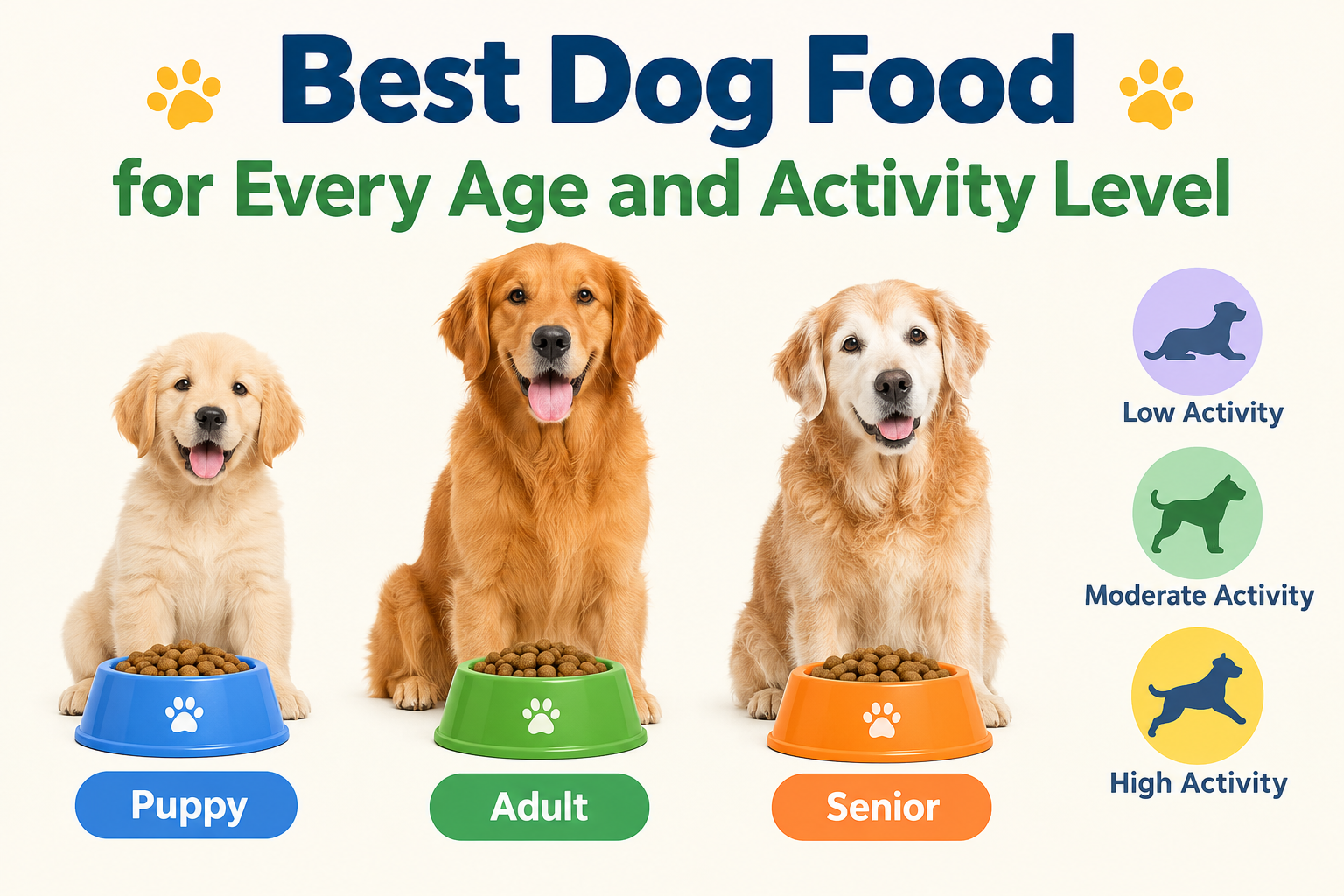
How to Choose the Best Dog Food for Your Dog’s Age and Activity Level
Choosing the best dog food can be challenging because hundreds of brands, ingredients, and nutritional formulas are available. However, finding the right diet becomes easier when you understand your dog’s age, activity level, breed size, and individual health needs. Proper nutrition plays an essential role in maintaining a healthy weight, supporting muscle development, improving digestion, and promoting a longer, healthier life.
The best dog food for a growing puppy may not be suitable for an adult dog or a senior pet. Similarly, an active working dog requires more energy than a dog that spends most of the day resting indoors. Feeding the wrong diet can contribute to obesity, nutritional deficiencies, poor growth, and other health problems.
In this guide, you will learn how to choose the best dog food for every life stage, understand food labels, compare different types of dog food, and adjust your pet’s diet according to their activity level.
Table of Contents
- Understanding Dog Food Life Stages
- Best Dog Food for Puppies
- Choosing Dog Food for Adult Dogs
- Best Dog Food for Senior Dogs
- How Activity Level Affects Dog Nutrition
- Types of Dog Food Explained
- How to Read Dog Food Labels
- Special Dietary Needs and Health Conditions
- How to Change Your Dog’s Food Safely
- How Much Food Should You Give Your Dog?
- Common Dog Food Myths
- Frequently Asked Questions
- Conclusion
Understanding Dog Food Life Stages
Dogs have different nutritional requirements as they grow and age. Most commercial dog foods are designed for puppies, adult dogs, or senior pets, although some products are labeled for all life stages.
Choosing a life-stage-appropriate diet helps ensure that your dog receives the right balance of protein, fat, vitamins, minerals, and calories.
Puppies need additional nutrients to support rapid growth and development. Adult dogs require balanced nutrition to maintain their muscles, energy levels, and body weight. Senior dogs may need adjustments to calorie intake, protein quality, fiber, and other nutrients depending on their health.
When selecting dog food, look for a nutritional adequacy statement indicating that the product is complete and balanced for the intended life stage. In the United States, the Association of American Feed Control Officials (AAFCO) establishes nutrient profiles used to assess nutritional adequacy.
Always consider your dog’s individual needs rather than relying exclusively on age categories or marketing claims.
Best Dog Food for Puppies
Nutritional Needs of Growing Puppies
Puppies grow rapidly during their first months of life. Their developing bones, muscles, brain, and immune system require a carefully balanced diet.
The best puppy food provides sufficient calories, high-quality protein, essential fatty acids, vitamins, and minerals. It should be specifically formulated for growth or for all life stages, including growth, according to the product’s nutritional adequacy statement.
Protein: Protein supplies amino acids needed for muscle development, tissue repair, and normal growth. Look for a complete and balanced puppy formula rather than choosing food based on protein percentage alone.
Healthy fats: Fat provides concentrated energy and supports skin, coat, and brain development. DHA, an omega-3 fatty acid, is particularly important for normal brain and visual development.
Calcium and phosphorus: These minerals are essential for healthy bones and teeth. Their balance is especially important during growth, and excessive supplementation can be harmful.
Vitamins and minerals: Puppies need appropriate amounts of essential nutrients to support immunity, metabolism, and skeletal development.
Best Food for Large-Breed Puppies
Large-breed puppies, including Golden Retrievers, German Shepherds, Labrador Retrievers, and Great Danes, require special attention to nutrition.
Rapid growth and excessive calorie intake can increase the risk of developmental skeletal problems. A large-breed puppy formula is designed to provide controlled energy and appropriate calcium and phosphorus levels.
Avoid adding calcium supplements to a complete puppy diet unless your veterinarian recommends them. Extra supplementation can interfere with normal skeletal development.
Continue feeding an appropriate growth formula until your dog reaches maturity. Large and giant breeds may need puppy food longer than smaller breeds, so consult your veterinarian about the right transition time.
Puppy Feeding Schedule
Young puppies generally need several small meals throughout the day.
- 8–12 weeks: Usually three to four meals daily.
- 3–6 months: Often three meals daily.
- Over 6 months: Many puppies can transition to two meals daily.
The ideal schedule depends on breed size, health, and the food being used. Follow the package feeding guide as a starting point and adjust portions based on your puppy’s growth and body condition.
Choosing the Best Dog Food for Adult Dogs
When Should You Switch to Adult Dog Food?
Most small and medium-sized dogs reach adulthood at around 12 months, although individual development varies. Large and giant breeds may continue growing until approximately 18–24 months.
Switching to adult maintenance food too early may not provide the nutrients needed for growth. On the other hand, feeding puppy food after growth is complete may provide unnecessary calories.
Ask your veterinarian when your dog is ready to transition, particularly if you own a large or giant breed.
Adult Dog Nutritional Requirements
Adult dogs need a complete and balanced diet that supports daily activity without encouraging excessive weight gain.
Protein: Supports muscle maintenance, tissue repair, and normal body functions.
Fat: Supplies energy and essential fatty acids for healthy skin and a shiny coat.
Carbohydrates and fiber: Provide energy and help support digestive health. Common ingredients include rice, oats, potatoes, and other carbohydrate sources.
Vitamins and minerals: Support immunity, bone health, metabolism, and normal organ function.
There is no single ideal protein or fat percentage for every adult dog. Nutritional requirements depend on calorie intake, body condition, health, and exercise level.
Selecting Food for Different Activity Levels
Your dog’s activity level has a major influence on daily calorie requirements.
Low-activity dogs: Dogs that take short walks and spend much of the day resting may need fewer calories. A weight-management formula can help if your dog is overweight, but portion control is also important.
Moderately active dogs: Most family pets that enjoy regular walks and daily play can thrive on a complete adult maintenance diet. Adjust serving sizes to maintain a healthy body condition.
Highly active dogs: Working dogs, sporting dogs, and dogs participating in regular endurance activities may require more calories and fat. Performance formulas can help meet their increased energy needs.
Do not automatically feed a high-calorie performance diet simply because your dog is energetic. Match the formula to actual exercise demands and monitor weight regularly.
Best Dog Food for Senior Dogs
When Does a Dog Become a Senior?
Dogs age at different rates depending on breed, body size, and overall health. Small breeds often live longer than giant breeds, so a single age threshold does not apply to every dog.
Senior dogs may become less active, lose muscle mass, experience joint discomfort, or develop conditions that affect their nutritional requirements.
Regular veterinary checkups can help determine whether your older dog needs a dietary adjustment.
Nutritional Needs of Older Dogs
High-quality protein: Adequate protein helps preserve muscle mass. Healthy senior dogs should not automatically receive a low-protein diet simply because they are older.
Appropriate calorie intake: Some senior dogs need fewer calories because they are less active, while others need additional calories if they lose weight unintentionally.
Omega-3 fatty acids: These fats may help support joint health and contribute to normal skin and coat function.
Digestive support: Suitable fiber levels and well-digested ingredients can help maintain regular bowel movements.
Essential vitamins and minerals: A balanced diet provides nutrients needed for normal immune function and general health.
Some senior formulas also contain ingredients intended to support joint function. However, the usefulness of these products depends on their formulation and the dog’s individual needs.
Should Senior Dogs Eat Less Protein?
Not necessarily. Many healthy older dogs benefit from adequate, high-quality protein to help maintain muscle mass.
Dogs with certain medical conditions, including some stages of kidney disease, may require a specially formulated diet. Protein and phosphorus requirements should be determined by a veterinarian rather than reduced automatically.
If your senior dog has diabetes, heart disease, kidney problems, or another chronic condition, ask your veterinarian whether a therapeutic diet is appropriate.
How Activity Level Affects Dog Food Choices
Two dogs of the same age and breed can have different calorie requirements because they have different lifestyles.
A dog that takes several daily walks and regularly plays fetch may burn substantially more energy than a dog that spends most of the day indoors.
To choose the right food, consider the duration and intensity of exercise, current weight, body condition, age, and any health limitations.
Measure daily food portions rather than estimating them by sight. Treats should generally account for no more than 10% of daily calories, with the remaining calories coming from a complete and balanced diet.
If your dog gains weight, reduce calories gradually with veterinary guidance. If your dog loses weight unexpectedly despite eating normally, schedule a veterinary examination rather than simply increasing food portions.
Types of Dog Food Explained
Dry Dog Food
Dry dog food, commonly called kibble, is convenient, easy to measure, and usually economical. It is available in puppy, adult, senior, and weight-management formulas.
Choose a complete and balanced product appropriate for your dog’s life stage. Store kibble in a cool, dry place and follow the manufacturer’s storage instructions to maintain freshness.
Ordinary kibble should not be considered a replacement for brushing or professional dental care.
Wet or Canned Dog Food
Wet food contains more moisture than dry kibble, which can help increase overall water intake. Its texture and aroma may also appeal to picky eaters.
It can be fed alone or combined with dry food, provided the total daily calories remain appropriate. Refrigerate opened cans according to the label and discard food that has been left out too long.
Check that the product is labeled complete and balanced if it will be your dog’s main diet. Some canned products are intended only for supplemental feeding.
Fresh and Homemade Dog Food
Fresh commercial diets and homemade meals appeal to owners who prefer ingredients they can recognize.
However, a homemade diet is not automatically nutritionally complete. Meat, rice, and vegetables alone may not provide the correct balance of calcium, vitamins, essential fatty acids, and other nutrients.
If you want to prepare your dog’s meals at home, consult a board-certified veterinary nutritionist or another appropriately qualified veterinary professional.
Raw Dog Food
Raw diets may contain uncooked meat, organs, and bones. However, raw ingredients can carry harmful bacteria or parasites that may affect pets and people.
Improperly balanced raw diets can also cause nutritional deficiencies or excesses. Households with young children, older adults, pregnant people, or immunocompromised individuals should be especially cautious.
Discuss the risks and nutritional alternatives with your veterinarian before choosing a raw diet.
Grain-Free Dog Food
Grain-free dog food replaces grains with other carbohydrate ingredients, which may include potatoes, peas, or lentils.
Grain-free food is not automatically healthier than grain-inclusive food. Some diets containing substantial amounts of certain legumes or other ingredients have been investigated for a possible association with dilated cardiomyopathy (DCM), a serious heart condition.
The relationship is complex and has not been fully established for every ingredient or diet. Unless your veterinarian identifies a specific dietary reason, there is generally no need to avoid grains.
How to Read Dog Food Labels
Understanding dog food packaging can help you compare products more effectively.
Ingredient List
Ingredients are generally listed by weight before processing. A named animal protein can be a useful indicator of the product’s composition, but the first ingredient alone does not determine overall nutritional quality.
Meat meals and animal by-products are not automatically poor-quality ingredients. Some by-products, including organ meats, provide valuable nutrients.
Focus on the complete formulation, nutritional adequacy statement, manufacturer transparency, and quality-control practices rather than judging a food by one ingredient.
Guaranteed Analysis
The guaranteed analysis lists minimum crude protein and fat levels and maximum crude fiber and moisture levels.
These figures can help you compare products, but they do not reveal every detail of nutritional quality or digestibility. Wet and dry foods also contain different amounts of water, making direct percentage comparisons misleading.
Nutritional Adequacy Statement
One of the most important parts of a dog food label is the statement describing whether the product is complete and balanced for a particular life stage.
In the United States, look for information indicating that the food meets applicable AAFCO nutrient profiles or has been substantiated through feeding trials.
A feeding trial can provide useful evidence, but it does not guarantee that every dog will thrive on the product. Consider the manufacturer’s expertise and quality-control procedures as well.
Special Dietary Needs and Health Conditions
Dog Food for Weight Management
Excess body fat can increase the risk of joint problems, diabetes, and other health complications.
For an overweight dog, a veterinary-recommended weight-management diet may help reduce calorie intake while supplying sufficient protein and essential nutrients.
Measure meals, limit high-calorie treats, and establish an appropriate exercise routine. Your veterinarian can calculate a suitable calorie target and monitor progress.
Food Allergies and Sensitivities
Food allergies may cause persistent itching, skin irritation, ear problems, or digestive symptoms. However, these signs can also result from environmental allergies, parasites, infections, and other conditions.
A veterinarian may recommend an elimination diet using a hydrolyzed protein or an appropriately selected novel protein. A strict trial often lasts several weeks, commonly around eight weeks or longer depending on the case.
Avoid repeatedly switching foods without a plan, as this can make it harder to identify the cause of your dog’s symptoms.
Prescription Diets for Medical Conditions
Dogs with kidney disease, diabetes, pancreatitis, urinary problems, or certain heart conditions may benefit from a therapeutic veterinary diet.
These foods have specific nutrient profiles designed to help manage particular health problems. A diet appropriate for one condition may not be suitable for another.
Never begin a prescription diet or add supplements without discussing the plan with your veterinarian.
How to Transition Your Dog to New Food
Changing dog food too quickly can cause digestive upset. A gradual transition over approximately seven to ten days is suitable for many healthy dogs.
A typical transition schedule is:
- Days 1–2: Mix 25% new food with 75% old food.
- Days 3–4: Mix 50% new food with 50% old food.
- Days 5–6: Mix 75% new food with 25% old food.
- Days 7–10: Gradually switch to 100% new food.
Some dogs need a slower transition, especially if they have sensitive digestion or a history of gastrointestinal problems.
Monitor your dog for vomiting, diarrhea, reduced appetite, or other unusual symptoms. Contact your veterinarian if symptoms are severe, persistent, or accompanied by weakness or other concerning signs.
How Much Dog Food Should You Feed?
The correct serving size depends on your dog’s weight, age, metabolism, activity level, and health. Feeding instructions on the packaging provide a useful starting point, but they are not exact requirements for every animal.
Use a measuring cup or kitchen scale to portion meals consistently. Check your dog’s body condition regularly.
Ideally, you should be able to feel the ribs without pressing firmly, see a waist when looking from above, and notice an abdominal tuck when viewing your dog from the side.
If your dog becomes overweight, reduce calorie intake carefully. If your dog appears too thin or loses weight unexpectedly, seek veterinary advice to rule out underlying medical conditions.
Common Dog Food Myths Explained
Myth 1: Grain-free food is always better.
Grain-free diets are not inherently healthier. Many dogs tolerate grains well, and dietary choices should be based on nutritional completeness and individual needs.
Myth 2: All animal by-products are harmful.
Animal by-products can include nutritious organs. Their value depends on the ingredients, formulation, and quality controls used by the manufacturer.
Myth 3: More protein is always better.
Protein is essential, but increasing it without a nutritional reason does not guarantee better health. The complete diet and the dog’s individual needs matter more than a single percentage.
Myth 4: Expensive food is always superior.
Price alone does not establish nutritional quality. Evaluate the adequacy statement, manufacturer’s expertise, feeding instructions, and suitability for your dog.
Myth 5: Dogs need frequent food changes for variety.
A nutritionally complete diet can provide everything a dog needs without constant changes. Introduce new foods gradually when a change is necessary or beneficial.
Frequently Asked Questions About Choosing Dog Food
What is the best dog food for all ages?
Some foods are formulated for all life stages, but they must meet the requirements of the life stages stated on the label. Growing puppies, especially large-breed puppies, may need more specialized nutritional management.
Should I feed my dog wet food or dry food?
Both can provide complete nutrition. The better choice depends on your dog’s preferences, hydration needs, dental health, budget, and medical conditions.
How do I know if my dog is eating the right food?
Healthy body condition, stable weight, normal energy, good skin and coat, and consistent stools are useful indicators. Regular veterinary examinations help confirm that your dog’s diet remains appropriate.
Is senior dog food necessary for every older dog?
No. Some older dogs do well on an adult maintenance diet, while others benefit from a senior formula or a therapeutic diet. Choose based on body condition and health rather than age alone.
How often should I change my dog’s food?
There is no requirement to change a complete and balanced diet frequently. Change foods when your dog’s life stage, health needs, or nutritional requirements make a different formula appropriate.
Conclusion
Choosing the best dog food for your dog’s age and activity level is an important part of responsible pet care. Puppies need balanced nutrition for growth, adult dogs need food that supports healthy weight and daily activity, and senior dogs may require adjustments to maintain muscle mass and manage age-related health concerns.
Start by selecting a complete and balanced food for the correct life stage. Consider your dog’s exercise level, body condition, breed size, and medical needs. Read the nutritional adequacy statement, measure daily portions, and introduce new food gradually.
Remember that no single dog food is ideal for every pet. The best choice is one that meets your individual dog’s nutritional requirements, supports a healthy body condition, and fits any veterinary recommendations.
With appropriate nutrition, regular exercise, clean drinking water, and routine veterinary care, you can help your dog maintain better health and enjoy a happier, more active life.
Disclaimer: This article is for educational purposes only and does not replace professional veterinary advice, diagnosis, or treatment. Consult your veterinarian before making significant dietary changes, starting supplements, or selecting a therapeutic diet for a dog with a medical condition.