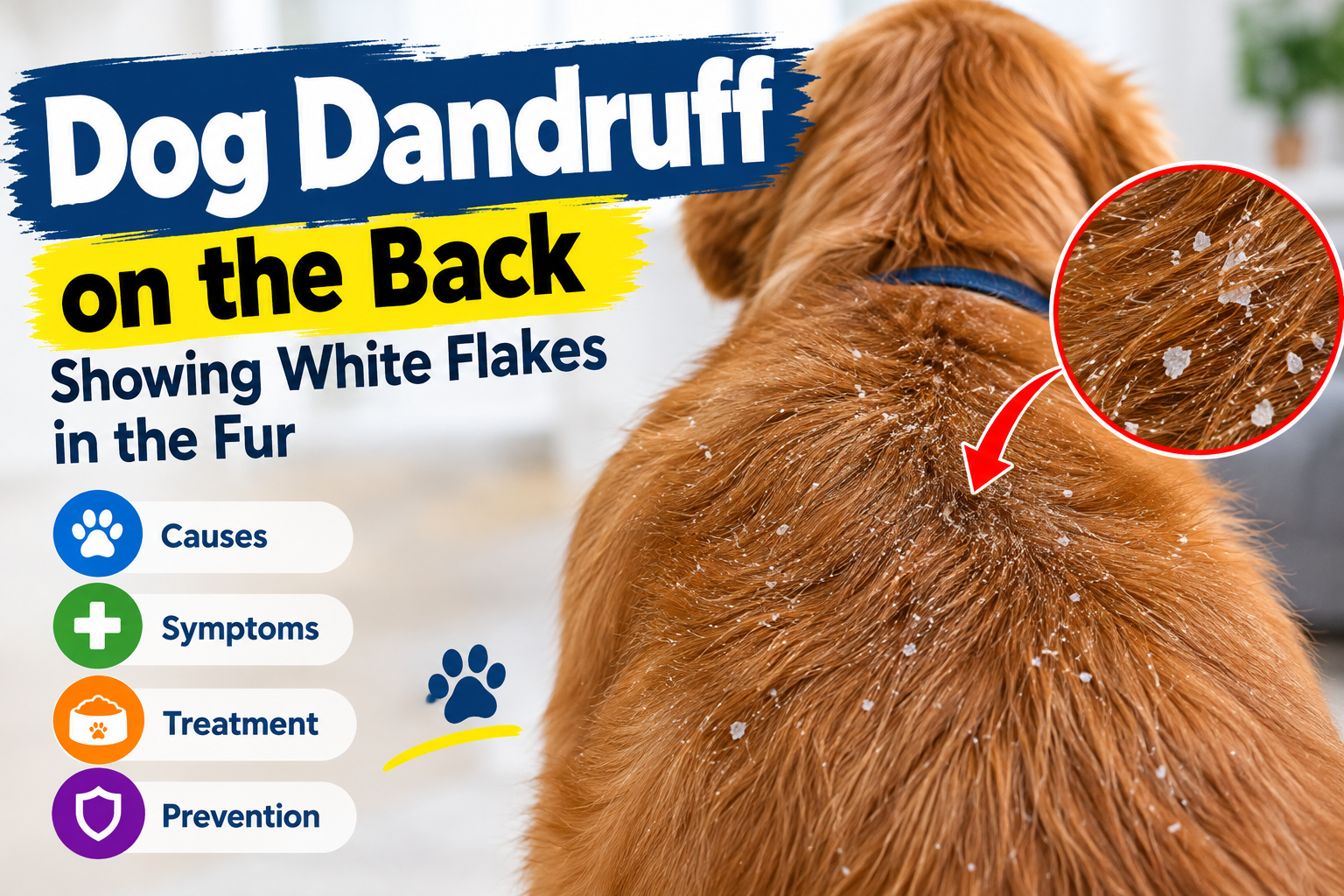
Dog Dandruff on the Back: Causes, Treatment, Home Remedies & Prevention
Dog dandruff on the back is a common skin problem that many pet owners notice while brushing their dogs or petting them. It usually appears as small white flakes scattered across the coat, especially along the spine, near the tail, or around the shoulders. Some dogs experience only mild flaking, while others develop itching, redness, an unpleasant odor, or hair loss.
While dry skin might occasionally be the source of dandruff, it can also be a sign of allergies, parasites, infections, or another underlying medical condition. Knowing the cause is crucial because the best course of action relies on what is causing the flakes.
This tutorial will explain why dogs get dandruff on their backs, how to spot the signs, potential remedies, and how to keep the issue from coming back.
What Is Dog Dandruff on the Back?
Dog dandruff is the visible shedding of dead skin cells that accumulate in a dog’s coat. Healthy skin naturally replaces old cells with new ones, but this process can become more noticeable when the skin is irritated, excessively dry, oily, or affected by disease.
Dandruff on a dog’s back may look like tiny white or gray flakes attached to the fur. In some cases, the flakes are easy to brush away. In others, they stick to the skin or appear alongside greasy patches and scabs.
The condition can affect dogs of any breed, age, or coat type. However, certain dogs may be more susceptible because of their skin characteristics, environment, grooming habits, or underlying medical conditions.
Occasional mild flaking may not be serious, but persistent dandruff deserves attention, especially when other skin symptoms develop.
Common Causes of Dog Dandruff on the Back
Several factors can cause dandruff to appear along a dog’s back. Identifying the likely trigger helps determine the most effective treatment.
1. Dry Skin
Dry skin is one of the most common reasons dogs develop visible flakes. Low humidity, cold weather, indoor heating, and frequent bathing can remove natural oils from the skin.
Dogs with dry skin may have small white flakes across their backs without significant redness or irritation. Their coats may also appear dull or feel rough.
What may help: Use a gentle, dog-specific moisturizing shampoo when appropriate, avoid excessive bathing, and maintain a comfortable indoor humidity level. If the dryness persists, consult a veterinarian.
2. Fleas and Other Parasites
Fleas commonly cause itching and irritation around a dog’s lower back and the base of the tail. Dogs may scratch, bite, or lick these areas, leading to skin flakes, scabs, and hair loss.
Some dogs develop flea allergy dermatitis, an allergic reaction to flea saliva. Even a small number of flea bites can trigger significant itching in sensitive dogs.
Mites can also cause skin problems that resemble dandruff. Certain mites produce heavy scaling, sometimes called walking dandruff, because the flakes may appear to move as mites travel across the skin.
What may help: Ask your veterinarian to recommend an appropriate parasite treatment. Use effective flea prevention and address other pets and the home environment when necessary. Never assume that ordinary dandruff shampoo will eliminate parasites.
3. Allergies
Dogs can develop allergies to environmental substances, food ingredients, or flea bites. Allergies often cause itching, redness, licking, and repeated skin irritation.
Environmental triggers may include pollen, dust mites, or mold. Food allergies can sometimes contribute to persistent itching, although dandruff alone does not establish a food allergy.
Affected dogs may have flaky skin along their backs, but symptoms can also occur on their paws, ears, belly, and face.
What may help: A veterinarian can evaluate the symptoms and recommend appropriate treatment. Suspected food allergies may require a supervised elimination diet rather than frequent food changes.
4. Seborrhea
Seborrhea is a skin condition involving abnormal shedding of skin cells and, in some cases, excessive oil production.
Dogs with dry seborrhea develop fine, powdery flakes, while dogs with oily seborrhea may have greasy skin, a strong odor, and yellowish or white scales.
The back, ears, and other parts of the body may be affected. Seborrhea can occur as a primary disorder or develop because of another condition, such as allergies, parasites, or infection.
What may help: Treatment may involve veterinarian-recommended medicated shampoos and addressing the underlying cause. Persistent or widespread scaling should be professionally evaluated.
5. Bacterial or Yeast Skin Infections
Bacteria and yeast naturally occur on canine skin, but they can multiply excessively under certain conditions. Allergies, moisture, skin damage, and other disorders may contribute to infection.
Possible signs include:
- Red or inflamed skin
- Greasy or sticky fur
- An unpleasant smell
- Persistent itching
- Crusts, scabs, or hair loss
These symptoms require more than routine grooming. A veterinarian may examine skin samples to determine whether bacteria or yeast are involved.
6. Poor Nutrition
A nutritionally unbalanced diet may affect the skin and coat. Dogs need adequate protein, essential fatty acids, vitamins, and minerals to maintain normal skin function.
However, dandruff does not automatically mean a dog has a nutritional deficiency. Many dogs with flaky skin eat balanced diets, and the cause may be an allergy, parasite, or medical condition.
What may help: Feed a complete and balanced dog food appropriate for your pet’s life stage. Discuss supplements with a veterinarian before using them, particularly if your dog already receives a complete diet.
7. Infrequent or Excessive Grooming
A dog’s coat can accumulate dead skin cells, dirt, and loose hair when grooming is inadequate. On the other hand, bathing too frequently or using harsh products can irritate the skin and remove protective oils.
Human shampoos, strongly fragranced products, and unsuitable home treatments may worsen the problem.
What may help: Brush your dog regularly and bathe them according to their coat type and veterinary needs. Always choose products formulated specifically for dogs.
Symptoms That May Accompany Back Dandruff
The appearance of dandruff can provide clues about the underlying problem, although symptoms alone cannot confirm a diagnosis.
Common signs include:
- White flakes visible along the spine
- Dry or rough fur
- Itching, scratching, or biting at the back
- Redness and inflammation
- Greasy skin or a noticeable odor
- Small scabs or crusts
- Hair thinning or bald patches
- Excessive licking near the tail
If your dog has only a few flakes and otherwise appears comfortable, gentle grooming and monitoring may be reasonable. If dandruff is accompanied by significant itching, pain, spreading lesions, or hair loss, arrange a veterinary examination.
How to Treat Dog Dandruff on the Back
The most effective treatment depends on the cause. A dog with uncomplicated dry skin needs a different approach from a dog with fleas, allergies, or a skin infection.
1. Use a Gentle Dog Shampoo
A mild, dog-specific shampoo may help remove loose flakes and dirt. Choose a product appropriate for your dog’s skin and coat.
Follow the label instructions, rinse thoroughly, and dry the coat properly. Avoid vigorous scrubbing because it can worsen irritation.
If the dandruff is persistent, oily, or associated with itching, ask your veterinarian whether a medicated shampoo is appropriate. Products containing ingredients such as chlorhexidine or antifungal agents should be selected according to the suspected condition and professional advice.
2. Treat Fleas and Parasites
If fleas or mites are responsible, appropriate parasite control is essential. Your veterinarian can recommend a treatment based on your dog’s age, weight, health, and exposure risk.
Use products exactly as directed. Never combine treatments without checking their safety, and do not apply products intended for another species.
Reducing parasite exposure can also help prevent repeated irritation and secondary skin infections.
3. Support Skin Health With Proper Nutrition
A balanced diet provides nutrients necessary for healthy skin and a shiny coat. Choose a reputable complete dog food that meets recognized nutritional standards.
Omega-3 fatty acids may benefit certain dogs with inflammatory skin conditions, but the right product and dose depend on the individual animal. Consult your veterinarian before adding fish oil or other supplements.
Avoid giving human vitamin supplements to dogs without professional guidance.
4. Address Allergies and Infections
When dandruff is linked to allergies, successful management may involve reducing exposure to triggers, treating inflammation, and controlling secondary infections.
A veterinarian may recommend skin cytology, parasite testing, or other investigations. If a food allergy is suspected, a structured elimination diet may be necessary.
Do not use leftover antibiotics, human steroid creams, or antifungal medicines without veterinary guidance. The wrong treatment can delay diagnosis or make the condition worse.
5. Improve the Home Environment
Dry indoor air may contribute to flaky skin in some dogs. Maintaining comfortable humidity, providing clean bedding, and washing bedding regularly can support skin care.
If your dog has suspected environmental allergies, reducing dust and washing bedding may help limit exposure, although these measures will not resolve every allergy.
Safe Home Care for Dog Dandruff
Mild dandruff without other symptoms can sometimes improve with simple care. These measures are supportive rather than a substitute for treatment when a medical condition is present.
Brush gently: Use a brush suited to your dog’s coat. Regular brushing removes loose fur and flakes while distributing natural oils.
Avoid overbathing: Too many baths can worsen dryness. Follow your veterinarian’s recommendations and use dog-specific products.
Provide fresh water: Make sure clean drinking water is always available. Proper hydration supports general health, although drinking extra water will not cure every skin problem.
Wash bedding: Clean bedding can help reduce accumulated dirt, loose hair, and some environmental allergens.
Monitor the skin: Check whether the flakes improve or whether itching, redness, odor, or hair loss develops.
Avoid applying vinegar, essential oils, baking soda, human dandruff shampoo, or undiluted household products to your dog’s skin. These substances can cause irritation or toxicity, especially if licked.
How to Prevent Dog Dandruff on the Back
Preventing dandruff starts with maintaining healthy skin and identifying recurring triggers.
- Feed a complete and balanced diet.
- Maintain a consistent, suitable grooming routine.
- Use gentle products made for dogs.
- Avoid unnecessary bathing and harsh shampoos.
- Keep up with veterinarian-recommended flea and parasite prevention.
- Wash bedding and grooming tools regularly.
- Monitor your dog for early signs of allergies or infection.
- Schedule routine veterinary checkups.
If dandruff repeatedly returns despite proper grooming, do not keep switching shampoos without investigating the cause. Recurring symptoms may indicate an underlying condition that requires specific treatment.
When Should You Take Your Dog to a Veterinarian?
Contact your veterinarian if the dandruff persists, spreads, or repeatedly returns despite basic care.
Arrange an examination promptly if you notice severe itching, open sores, bleeding, a strong odor, significant hair loss, painful skin, or extensive redness.
If skin symptoms are accompanied by noticeable lethargy, fever, reluctance to feed, or quickly increasing lesions, consult a veterinarian right away.
When an underlying medical issue is suspected, a veterinarian may examine the skin and coat, look for fleas and mites, gather skin samples, or suggest blood testing.
Early diagnosis can ease discomfort and stop minor skin irritation from getting worse.
Frequently Asked Questions
Why does my dog have white flakes along its back?
White flakes may result from dry skin, grooming problems, allergies, parasites, seborrhea, or infection. The presence of itching, redness, odor, or hair loss can help guide further investigation.
Is dog dandruff on the back serious?
Mild dandruff may be temporary and harmless. However, persistent scaling or dandruff accompanied by itching, scabs, inflammation, or hair loss should be evaluated by a veterinarian.
Can I use human dandruff shampoo on my dog?
It is best to avoid human dandruff shampoos unless your veterinarian specifically recommends a particular product. Human formulations may contain ingredients or concentrations unsuitable for dogs.
Does brushing help remove dog dandruff?
Yes. Gentle brushing can remove loose flakes, dead hair, and debris. However, brushing will not cure dandruff caused by parasites, allergies, or infection.
Can dog dandruff spread to humans?
Ordinary dry-skin dandruff is not contagious. However, certain causes of skin scaling, including some mites and fungal infections such as ringworm, can spread between animals and potentially to people. Wash your hands after handling affected skin and seek veterinary advice if an infection is suspected.
How long does it take for dog dandruff to disappear?
The recovery time depends on the cause and treatment. Mild dryness may improve with appropriate skin care, while allergies, parasites, and infections may require several weeks of targeted treatment. Persistent symptoms should be reassessed.
Final Thoughts
Dog dandruff on the back can develop for many reasons, including dry skin, fleas, allergies, seborrhea, infections, and grooming problems. Although a few flakes may not indicate a serious condition, persistent scaling or additional symptoms should not be ignored.
Start with gentle grooming, a balanced diet, appropriate parasite prevention, and dog-safe skin care. If your pet develops itching, redness, an unpleasant odor, scabs, or hair loss, consult a veterinarian to identify the underlying cause.
With the right diagnosis and consistent care, many dogs can experience healthier skin, a more comfortable coat, and fewer recurring flakes.