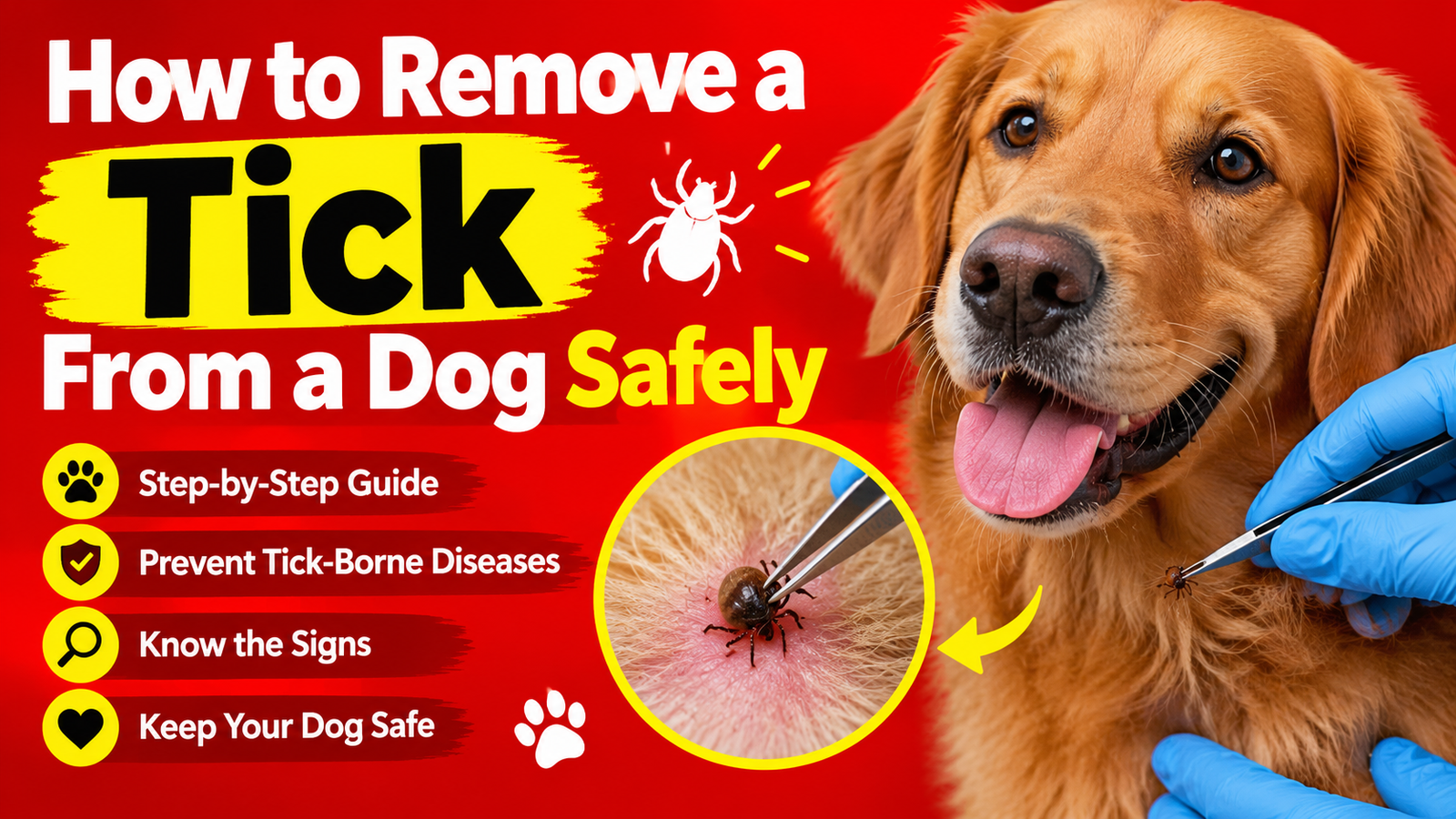
Introduction
Finding a tick on your dog can be worrying, especially if you are unsure how to remove it safely. Ticks are small parasites that attach to an animal’s skin and feed on its blood. Besides causing irritation, they can transmit dangerous diseases that may affect your dog’s overall health.
Learning how to remove a tick from a dog safely is an essential part of responsible pet care. Removing a tick promptly and correctly can help reduce the risk of infection and other complications. However, improper removal methods may damage the tick, irritate your dog’s skin, or leave its mouthparts embedded in the bite area.
In this guide, you will learn how to remove a tick step by step, recognize common tick-related illnesses, identify symptoms that require veterinary attention, and protect your dog from future tick bites.
Why Is It Important to Remove Ticks From Dogs?
Ticks are blood-feeding parasites commonly found in grassy areas, gardens, wooded environments, and places where animals spend time outdoors. They can attach themselves to your dog’s skin without causing obvious discomfort.
Some ticks carry pathogens that cause illnesses such as Lyme disease, ehrlichiosis, anaplasmosis, and babesiosis. Depending on the tick species and the disease involved, symptoms may take days or weeks to develop.
Removing an attached tick as soon as possible is important because the risk of disease transmission can increase the longer certain ticks remain attached. However, prompt removal does not completely eliminate the risk of infection.
Regular tick checks and appropriate preventive treatments can help keep your dog healthy and comfortable.
What You Need to Remove a Tick From Your Dog
Before beginning the removal process, gather the necessary supplies. Having everything ready can make the procedure easier and help you avoid unnecessary handling.
You will need:
- Fine-tipped tweezers or a tick-removal tool: These help you grip the tick close to your dog’s skin.
- Disposable gloves: Gloves reduce direct contact with the tick and its fluids.
- Pet-safe antiseptic: Use a product recommended for dogs to clean the bite area.
- A small sealed container: This can be useful for keeping the removed tick for identification.
- Rubbing alcohol: This may be used to preserve a removed tick inside a suitable container, not to make an attached tick detach.
- Good lighting: Bright light helps you locate small ticks and examine the bite area.
Avoid using your bare fingers to squeeze or crush the tick. Proper tools provide better control and reduce direct contact.
Youtube Video
How to Remove a Tick From a Dog Safely: Step-by-Step Instructions
Removing a tick correctly does not usually require complicated equipment. Follow these steps carefully to remove an attached tick while minimizing irritation.
Step 1: Keep Your Dog Calm
Choose a well-lit, comfortable area where your dog can sit or lie down. Speak gently and offer reassurance to help your pet remain still.
If your dog is nervous, ask another person to help hold and comfort them. Avoid forcing your dog into a position that causes pain or distress.
Keeping your dog calm makes it easier to reach the tick without accidentally pulling your pet’s skin.
Step 2: Put on Disposable Gloves
Wear disposable gloves before touching the tick or the surrounding skin. This helps protect your hands from contact with the parasite and its bodily fluids.
Do not squeeze the tick between your fingers. Crushing it can expose you to potentially infectious material.
Step 3: Grip the Tick Close to the Skin
Separate your dog’s fur so you can clearly see where the tick is attached.
Using fine-tipped tweezers or a tick-removal tool, grip the tick as close to your dog’s skin as possible. Avoid gripping its swollen body because squeezing it may damage the tick.
Getting a secure grip near the attachment point is important for removing the tick effectively.
Step 4: Pull the Tick Out Carefully
Pull upward slowly and steadily using the tweezers. Avoid twisting, jerking, or squeezing the tick unless the specific removal tool’s instructions recommend a different technique.
Once the tick is removed, inspect the bite area. If small mouthparts appear to remain embedded, do not dig into the skin. Contact your veterinarian for advice if you cannot remove them easily.
Never use a hot match, petroleum jelly, nail polish, or other home remedies to force an attached tick to detach. These methods are unreliable and may increase irritation or delay proper removal.
Step 5: Clean the Bite Area
After removing the tick, gently clean the affected area using a pet-safe antiseptic recommended by your veterinarian.
Avoid applying harsh chemicals or products that are not intended for use on dogs. Do not allow your pet to lick the area if the product’s instructions require preventing contact.
A small amount of redness may occur, but increasing redness, swelling, discharge, or persistent irritation should be checked by a veterinarian.
Step 6: Dispose of or Save the Tick
If possible, place the removed tick in a sealed container. You can also take a clear photograph before disposal.
Your veterinarian may use the photograph or specimen to help identify the tick if your dog develops symptoms later.
If you do not need to keep it, dispose of the tick securely according to local guidance. Do not crush it with your fingers.
Step 7: Wash Your Hands and Clean Your Tools
Remove your gloves and dispose of them properly. Wash your hands thoroughly with soap and water, then clean your tweezers or tick-removal tool according to its instructions.
Finally, check your dog’s skin for additional ticks.
What Do Ticks Look Like on Dogs?
Ticks can vary in size, color, and appearance depending on their species and whether they have recently fed.
An unfed tick may look like a tiny, flat, oval-shaped speck attached to the skin. After feeding, it can become larger, rounder, and more swollen.
Ticks may appear brown, black, gray, or reddish. Some are small enough to resemble a poppy seed, while larger, engorged ticks can be much easier to notice.
Because ticks can hide beneath thick fur, it is important to examine your dog’s skin carefully rather than relying only on a quick visual check.
Common Places to Check for Ticks
Pay special attention to these areas:
- Around and inside the outer folds of the ears
- Under the collar
- Around the eyes and eyelids
- Along the neck and shoulders
- Between the toes and around the paws
- Under the front legs
- Around the belly and groin
- Near the base of the tail
- Along the back and hindquarters
Run your fingers gently through your dog’s fur and look for unusual bumps. Use good lighting and a magnifying glass if necessary.
Check your dog after walks, outdoor play, hiking, or spending time in areas where ticks may be present.
What Happens If You Remove a Tick Incorrectly?
Incorrect tick removal can cause several problems. Understanding these risks can help you avoid common mistakes.
1. The Tick May Be Damaged
Squeezing or crushing an attached tick can release its fluids and increase the chance of exposure to potentially infectious material.
2. Mouthparts May Remain in the Skin
If part of the tick remains embedded, the bite area may become irritated. Do not dig into your dog’s skin with sharp objects to retrieve remaining mouthparts. Seek veterinary advice if removal is difficult or the area becomes inflamed.
3. Removal May Be Delayed
Using petroleum jelly, nail polish, heat, or other substances to make a tick detach is not recommended. These methods can delay effective removal and may irritate your dog’s skin.
4. Signs of Disease May Be Missed
Removing a tick does not guarantee that your dog will remain healthy. Some tick-borne infections develop after the bite, so monitoring your pet for changes in behavior or appetite is important.
Tick-Borne Diseases That Can Affect Dogs
Some ticks transmit organisms that cause serious illnesses. The specific diseases a dog may be exposed to depend on the tick species and the geographic area.
Lyme Disease
Lyme disease is associated with certain black-legged ticks. Dogs may develop symptoms such as:
- Fever
- Reduced appetite
- Lethargy
- Joint pain or swelling
- Limping that may come and go
- Swollen lymph nodes
Some infected dogs show few obvious signs, while others develop significant illness. Contact a veterinarian if your dog develops concerning symptoms after a tick bite.
Rocky Mountain Spotted Fever
Rocky Mountain spotted fever is a potentially serious tick-borne disease caused by bacteria. Dogs may experience:
- Fever
- Loss of appetite
- Lethargy
- Joint pain or swelling
- Vomiting or diarrhea
- Abdominal discomfort
- Breathing difficulties in severe cases
Seek prompt veterinary attention if these symptoms appear, especially after possible tick exposure.
Ehrlichiosis
Ehrlichiosis is a bacterial infection transmitted by certain ticks. Symptoms can include:
- Fever
- Weakness or fatigue
- Reduced appetite
- Joint discomfort
- Unusual bleeding or bruising
- Eye abnormalities
The illness can become severe without appropriate treatment, making early veterinary assessment important.
Babesiosis
Babesiosis is caused by microscopic parasites that infect red blood cells. Signs may include:
- Fever
- Weakness and lethargy
- Pale gums
- Reduced appetite
- Yellowing of the eyes or gums
- Dark urine or other signs of anemia
Babesiosis requires veterinary diagnosis and treatment.
Anaplasmosis
Anaplasmosis is another tick-borne infection that can affect dogs. Possible symptoms include:
- Fever
- Tiredness
- Reduced appetite
- Joint pain or lameness
- Vomiting or diarrhea
- Dehydration
A veterinarian can determine whether testing or treatment is needed based on your dog’s symptoms and exposure history.
When Should You Take Your Dog to the Veterinarian?
Not every tick bite causes illness, but some situations require professional help.
Contact your veterinarian if:
- You cannot remove the tick safely.
- Part of the tick appears to remain embedded and the area is irritated.
- The bite becomes increasingly red, swollen, painful, or begins producing discharge.
- Your dog develops a fever, weakness, or unusual tiredness.
- Your pet stops eating or develops vomiting or diarrhea.
- You notice limping, swollen joints, pale gums, or unusual bruising.
- Your dog develops breathing difficulties, collapse, seizures, or severe weakness.
Emergency symptoms, such as difficulty breathing, collapse, or seizures, require immediate veterinary care.
Some tick-borne diseases may not cause noticeable symptoms immediately. Monitor your dog after exposure and follow your veterinarian’s advice about testing or follow-up.
How to Prevent Ticks on Dogs
Prevention is one of the most effective ways to reduce your dog’s exposure to ticks and tick-borne diseases.
1. Use Veterinarian-Recommended Tick Prevention
Several preventive products are available, including topical treatments, oral medications, and medicated collars. The appropriate option depends on your dog’s age, weight, health, lifestyle, and local parasite risks.
Always follow the product label and your veterinarian’s instructions. Never use a product intended for another animal species unless a veterinarian specifically confirms it is appropriate.
2. Check Your Dog After Outdoor Activities
Examine your dog’s skin and fur after walks, outdoor play, or visits to grassy and wooded areas.
Remember that small ticks can be difficult to see, so check the ears, paws, belly, neck, and areas beneath the collar carefully.
3. Keep Your Yard Maintained
If you have a yard, keep grass trimmed and remove excessive leaf litter where practical. Reduce overgrown vegetation around areas where your dog spends time.
These measures may help reduce suitable tick habitats, although they cannot eliminate all ticks.
4. Wash Bedding and Clean Resting Areas
Regularly clean your dog’s bedding and maintain the areas where your pet sleeps or relaxes.
If you find ticks indoors, inspect your dog and surrounding areas carefully. Persistent infestations may require professional pest-control advice.
5. Maintain Prevention Throughout the Year When Recommended
Ticks may remain active during different seasons depending on local temperatures, climate, and species. Do not assume that your dog is completely safe during colder months.
Ask your veterinarian which preventive schedule is appropriate for your region and your dog’s lifestyle.
Frequently Asked Questions About Ticks on Dogs
How do you remove a tick from a dog at home?
Wear gloves, use fine-tipped tweezers or a tick-removal tool, grip the tick close to the skin, and pull upward with steady pressure. Clean the bite area with a pet-safe product and contact your veterinarian if removal is difficult.
Can I remove a tick from my dog with my fingers?
Using your fingers is not recommended because you may squeeze or damage the tick and come into direct contact with its fluids. Use an appropriate removal tool instead.
Should I take my dog to the vet after every tick bite?
Not necessarily. Many tick bites do not lead to illness, but you should contact your veterinarian if you cannot remove the tick properly, the bite becomes inflamed, or your dog develops symptoms. Your veterinarian can also advise whether testing is appropriate.
What should I do if the tick’s head remains in my dog’s skin?
What appears to be the head may be the tick’s mouthparts. Do not dig into the skin to remove them. Keep the area clean and consult your veterinarian if the mouthparts cannot be removed easily or the skin becomes irritated.
How quickly can a tick make a dog sick?
The timing varies according to the tick species and the disease involved. Some infections may cause symptoms days or weeks after exposure. Removing ticks promptly and monitoring your pet are important, but removal cannot guarantee that disease transmission has been prevented.
Can dogs get ticks in their own backyard?
Yes. Ticks can live in gardens and other outdoor spaces, particularly where vegetation, shade, wildlife, or suitable animal hosts are present. Regular checks and appropriate preventive products are useful even for dogs that spend most of their time at home.
Is tick prevention necessary for indoor dogs?
Indoor dogs may still encounter ticks during bathroom breaks, walks, or contact with people, other animals, and outdoor environments. Ask your veterinarian whether year-round prevention is appropriate for your pet.
Conclusion
Knowing how to remove a tick from a dog safely can help you protect your pet from unnecessary irritation and reduce the risk of tick-related complications. Use fine-tipped tweezers or a suitable tick-removal tool, grip the tick close to the skin, and pull steadily without squeezing it.
After removal, clean the bite area appropriately, wash your hands, and inspect your dog for other ticks. Watch for symptoms such as fever, weakness, reduced appetite, limping, pale gums, or unusual bleeding, and seek veterinary care when necessary.
Most importantly, do not rely on tick removal alone. Regular skin checks, a clean environment, and veterinarian-recommended tick prevention can help reduce the risk of future bites and tick-borne diseases.
Your dog’s health starts with consistent care, early detection, and the right preventive measures.