How to Store Dog Food to Keep It Fresh: A Complete Guide for Pet Owners
Introduction
Proper dog food storage is an important part of keeping your pet healthy. Whether you feed your dog dry kibble, canned food, fresh meals, or homemade recipes, the way you store food can affect its freshness, taste, nutritional quality, and safety. Food that is exposed to moisture, heat, air, or pests may spoil more quickly and become unsuitable for your dog.
Many pet owners believe that keeping dog food fresh only requires putting it in a plastic container. However, the type of food, its packaging, and your home’s environment all affect the best way to store it. When stored improperly, even premium dog food might lose its freshness.
The good news is that you may prevent needless food wastage and safeguard your dog’s meals with a few easy behaviours. This book will teach you how to properly store dog food, pick appropriate containers, spot spoiling indicators, and steer clear of typical storage blunders.
1. Store Dry Dog Food in a Cool, Dry Place
Dry dog food, commonly called kibble, is convenient because it generally lasts longer than opened wet food. However, it still needs proper storage to maintain its quality.
Heat, humidity, and exposure to air can damage the fats in kibble, causing them to become rancid. Moisture can also encourage mold growth, especially when food is stored in damp environments.
Choose a cool, dry location away from direct sunlight. A pantry or dedicated storage cupboard is often a good option. Keep the food away from ovens, heaters, radiators, and areas where temperature changes frequently.
Avoid storing kibble in garages, sheds, or outdoor spaces if they become hot or humid. These conditions can shorten its usable life and attract insects or rodents.
Always check the manufacturer’s storage instructions and follow the expiration or best-by date printed on the packaging.
2. Keep Dog Food in Its Original Bag
One of the easiest ways to store dog food safely is to keep it in the original packaging.
Dog food bags are designed to protect the product and provide important information, including ingredients, nutritional details, lot numbers, expiration dates, and manufacturer contact information.
Instead of pouring all the kibble directly into a storage bin, place the entire bag inside a clean, dry container. This method combines the protection of a container with the information and packaging intended for the food.
After opening the bag, remove excess air without crushing the kibble and seal the opening securely using the original closure, a clip, or another suitable method.
Keeping the original bag also makes it easier to identify the product if you notice an unusual smell, discoloration, or other quality problem.
YouTube Video
3. Choose the Right Dog Food Storage Container
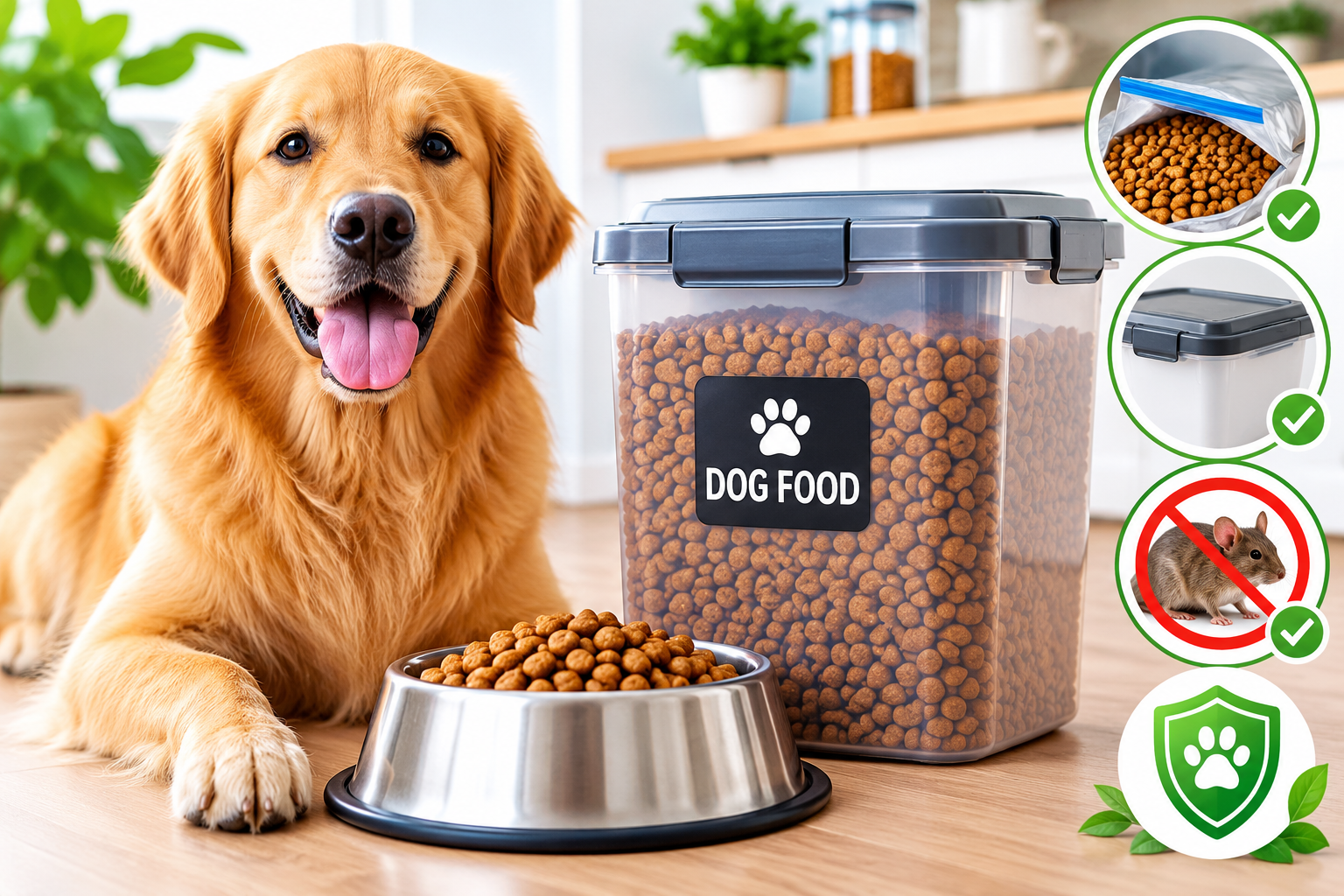
A good dog food container should protect the food from air, moisture, pests, and accidental spills. It should also be easy to clean and large enough to hold the amount of food you need.
Look for a container with a secure-fitting lid and food-safe materials. Durable plastic and stainless steel are common options, provided they are suitable for food storage and kept clean.
When choosing a container, consider these factors:
- Airtight or secure lid: Helps reduce exposure to air and humidity.
- Food-safe material: Reduces the risk of unsuitable materials contacting your dog’s food.
- Easy cleaning: Makes it easier to remove crumbs, grease, and old food residue.
- Suitable size: Prevents you from buying a container that is unnecessarily large.
- Pest protection: Helps keep insects and rodents away from the food.
Avoid topping up a container with a new bag of kibble before the old food has been used and the container cleaned. Old crumbs and oily residue can accumulate over time.
4. How to Store Opened Wet Dog Food
Wet dog food requires different handling because it contains more moisture than dry kibble. Once a can, tray, or pouch is opened, its contents become more exposed to air and contamination.
If your dog does not finish the entire serving, promptly cover the remaining food and place it in the refrigerator. Use a suitable reusable lid or a clean, airtight food container.
As a general guideline, opened canned dog food can usually be refrigerated for about three to five days, but the manufacturer’s instructions should take priority. Some products may have a shorter recommended storage period.
Keep your refrigerator at 40°F (4°C) or below. Do not leave wet food sitting in your dog’s bowl for extended periods, particularly in a warm room.
When serving refrigerated food, offer a small portion and allow it to lose some of its chill if your dog prefers food closer to room temperature. Do not leave it out long enough to become unsafe.
Discard wet food if it develops an unusual smell, changes in appearance, or signs of mold.
5. Follow the Correct Storage Rules for Fresh and Homemade Dog Food
Fresh dog food and homemade meals can spoil faster than commercially packaged dry food. Their storage requirements depend on their ingredients, preparation, and whether they are raw or cooked.
For cooked homemade meals, refrigerate leftovers promptly in clean, covered containers. As a general food-safety rule, perishable food should not remain at room temperature for more than two hours, or more than one hour when the temperature is above 90°F (32°C).
If you prepare several meals in advance, divide them into individual portions before refrigerating or freezing. This makes daily feeding easier and reduces repeated handling.
Freeze portions that will not be used within the recommended refrigerated storage period. Label each container with the preparation date and contents.
Raw dog food needs particularly careful handling because it may contain harmful bacteria. Keep it separate from human food, use dedicated preparation equipment, wash your hands thoroughly, and follow the manufacturer’s storage and thawing instructions.
If you prepare homemade meals regularly, consult a veterinarian or board-certified veterinary nutritionist to make sure the diet provides complete and balanced nutrition.
6. Can You Freeze Dog Food to Keep It Fresh?
Freezing can be useful for preserving certain types of dog food, especially fresh meals and homemade portions. However, not every commercial product is intended for freezing, so check the packaging before doing so.
To freeze suitable food safely:
- Divide the food into meal-sized portions.
- Place each portion in a clean, freezer-safe container or bag.
- Remove excess air and seal it securely.
- Label each package with the date and type of food.
- Freeze promptly and follow the food manufacturer’s storage guidance.
Thaw frozen dog food in the refrigerator rather than leaving it on the kitchen counter. Once thawed, use it within the recommended period and avoid repeatedly thawing and refreezing it.
Freezing does not make spoiled food safe again, and it does not eliminate every potential pathogen. Always start with fresh food and follow safe handling instructions.
7. Check Expiration Dates Before Feeding Your Dog
Expiration dates and best-by dates provide useful information about a product’s intended quality and shelf life. Check the date before opening a new bag or can, particularly when purchasing food in bulk.
Do not assume that an unopened package will remain suitable indefinitely. Packaging damage, poor storage conditions, or exposure to moisture can affect food quality before the printed date.
When you buy dog food, check the package for tears, punctures, swelling, leaks, or damaged seals. Avoid products with suspicious packaging or an unusual odor.
It is also helpful to write the date you opened a bag or can on the package. This small habit helps you track how long the food has been in use and reduces the chance of feeding food that has been stored too long.
Remember that the printed date does not override signs of spoilage. If food appears or smells abnormal, do not feed it to your dog.
8. Protect Dog Food From Pests and Moisture
Insects and rodents can contaminate dog food and damage its packaging. Even a small opening in a bag may allow pests to reach the kibble.
Keep food containers tightly closed and store them off the floor when practical. Clean the surrounding storage area regularly and remove spilled kibble immediately.
Do not place dog food near cleaning chemicals, pesticides, fuel, or other substances that could contaminate it. Keep these products in separate storage areas.
Moisture is another important concern. Never use a wet scoop, and make sure the storage container is completely dry before adding food. If kibble becomes damp or you find mold, discard the affected food rather than attempting to dry it and feed it later.
A clean storage area protects food quality and makes it easier to spot potential problems early.
9. Clean Dog Food Containers Regularly
Even if a container looks clean, small crumbs and oily residue can collect along its bottom, corners, and lid. Over time, this buildup may affect the quality of newly added kibble.
When the container is empty, wash it with warm water and dish soap, rinse it thoroughly, and allow it to dry completely before refilling it.
Pay particular attention to the lid, seals, corners, and any areas that are difficult to reach. Follow the manufacturer’s cleaning instructions, especially for containers with removable gaskets.
If you store food in its original bag inside the container, remove the bag before cleaning the bin. Never add fresh food to a container that still contains old crumbs or moisture.
Use a clean, dry scoop for serving portions, and avoid leaving it buried in food if it could introduce moisture or contamination.
10. Recognize the Signs of Spoiled Dog Food
Knowing when dog food may have spoiled is just as important as storing it properly. Although some problems are easy to recognize, others may not be visible.
Watch for these warning signs:
- A sour, rancid, or otherwise unusual smell.
- Visible mold or unexpected discoloration.
- Damp, sticky, or unusually clumped kibble.
- Damaged packaging or evidence of insects and rodents.
- Swollen, leaking, or badly damaged cans.
- A noticeable change in texture that cannot be explained by the product itself.
Do not taste questionable food to check whether it is safe. If you suspect contamination or spoilage, discard the food securely and clean the storage area.
If your dog eats potentially spoiled food and develops repeated vomiting, diarrhea, weakness, or other concerning symptoms, contact a veterinarian. Seek urgent veterinary help if your dog has severe symptoms or may have consumed contaminated food or a toxic substance.
11. Avoid Common Dog Food Storage Mistakes
Several everyday habits can reduce the freshness and safety of dog food. Fortunately, most are easy to correct.
Leaving kibble bags open: Open bags expose food to air and humidity. Fold and seal the top securely after each use.
Storing food in direct sunlight: Sunlight and heat can speed up quality deterioration. Choose a shaded, temperature-stable location.
Mixing old and new food: Leftover crumbs and residue can contaminate a fresh batch. Empty and clean the container before refilling it.
Buying more food than you can use: Large bags may be economical, but they are not always the best option for dogs that eat small amounts. Choose a package size that suits your dog’s consumption rate.
Leaving wet food in the bowl: Warm conditions encourage bacterial growth. Follow the label’s feeding instructions and remove uneaten wet food promptly.
Ignoring storage instructions: Different foods have different requirements. Always read the manufacturer’s guidance rather than relying on one method for every product.
12. How Long Does Dog Food Stay Fresh After Opening?
The exact storage period depends on the product, packaging, temperature, and manufacturer’s recommendations.
Here is a general guide:
| Type of dog food | Storage guidance |
|---|---|
| Dry kibble | Keep sealed in a cool, dry place and follow the label’s recommended use period after opening. |
| Opened canned food | Refrigerate promptly; commonly use within 3–5 days if the label permits. |
| Fresh cooked dog food | Refrigerate promptly and follow the recipe or manufacturer’s safe storage period. |
| Frozen dog food | Keep frozen according to package directions and thaw safely in the refrigerator. |
| Raw dog food | Follow the specific handling, refrigeration, freezing, and thawing instructions carefully. |
These are general guidelines, not guarantees. Always follow the product’s specific instructions, and discard food that has been stored improperly or shows signs of spoilage.
Conclusion
Learning how to store dog food properly can help preserve freshness, reduce food waste, and protect your dog’s health. Keep dry kibble in its original bag inside a clean, dry container, store it away from heat and moisture, and refrigerate opened wet food promptly.
For fresh or homemade meals, use appropriate refrigeration or freezing methods and follow safe food-handling practices. Check expiration dates, clean storage containers regularly, and never feed food that appears spoiled or contaminated.
With a consistent storage routine, you can help ensure that your dog receives safe, fresh, and enjoyable meals every day.
Frequently Asked Questions (FAQs)
1. What is the best way to store dry dog food?
The best method is to keep dry dog food in its original bag, seal the opening tightly, and place the bag inside a clean, dry container with a secure lid. Store it in a cool location away from sunlight and moisture.
2. Should dog food be refrigerated after opening?
Dry kibble generally does not need refrigeration when stored correctly. Opened canned or other moist dog food should usually be covered and refrigerated promptly. Follow the manufacturer’s instructions for the specific product.
3. Can dog food go bad in an airtight container?
Yes. An airtight container cannot prevent every form of spoilage. Food may deteriorate because of age, heat, moisture, contamination, or poor initial storage. Always follow the expiration date and storage instructions.
4. Is it safe to put dry dog food directly into a plastic bin?
It may be safe if the bin is made from suitable food-safe material and is thoroughly cleaned and dried. However, keeping the original bag inside the bin is generally preferable because it preserves product information and provides an additional packaging barrier.
5. How can I tell if dry dog food is spoiled?
Look for unusual odors, mold, moisture, discoloration, pests, or damaged packaging. If you suspect that the food has spoiled, do not feed it to your dog.
6. Can I store dog food in the garage?
A garage is not always suitable because temperatures and humidity can fluctuate significantly. A cool, dry indoor cupboard or pantry is usually a better choice.
7. Does freezing dog food keep it fresh longer?
Freezing can extend the storage life of suitable fresh or homemade food when handled correctly. However, you should check the manufacturer’s instructions because not all dog foods are designed for freezing.