A dog ear infection is one of the most common health problems seen in dogs. It can affect dogs of any breed, but those with floppy ears, allergies, or frequent exposure to water are at higher risk. Without proper treatment, an ear infection can become painful and may even lead to hearing problems or chronic ear disease.
Recognizing the early signs and seeking prompt veterinary care can help your dog recover quickly and prevent complications.
What Is a Dog Ear Infection?
A dog ear infection occurs when bacteria, yeast, or other factors cause inflammation inside the ear canal. Depending on the location of the infection, veterinarians classify ear infections into three types:
- Otitis Externa – Infection of the outer ear canal (the most common type)
- Otitis Media – Infection affecting the middle ear
- Otitis Interna – Infection involving the inner ear, which is more serious and may affect balance
Early diagnosis is important because untreated infections can spread deeper into the ear.
Signs of a Dog Ear Infection
Dogs often show clear signs when their ears are painful or irritated.
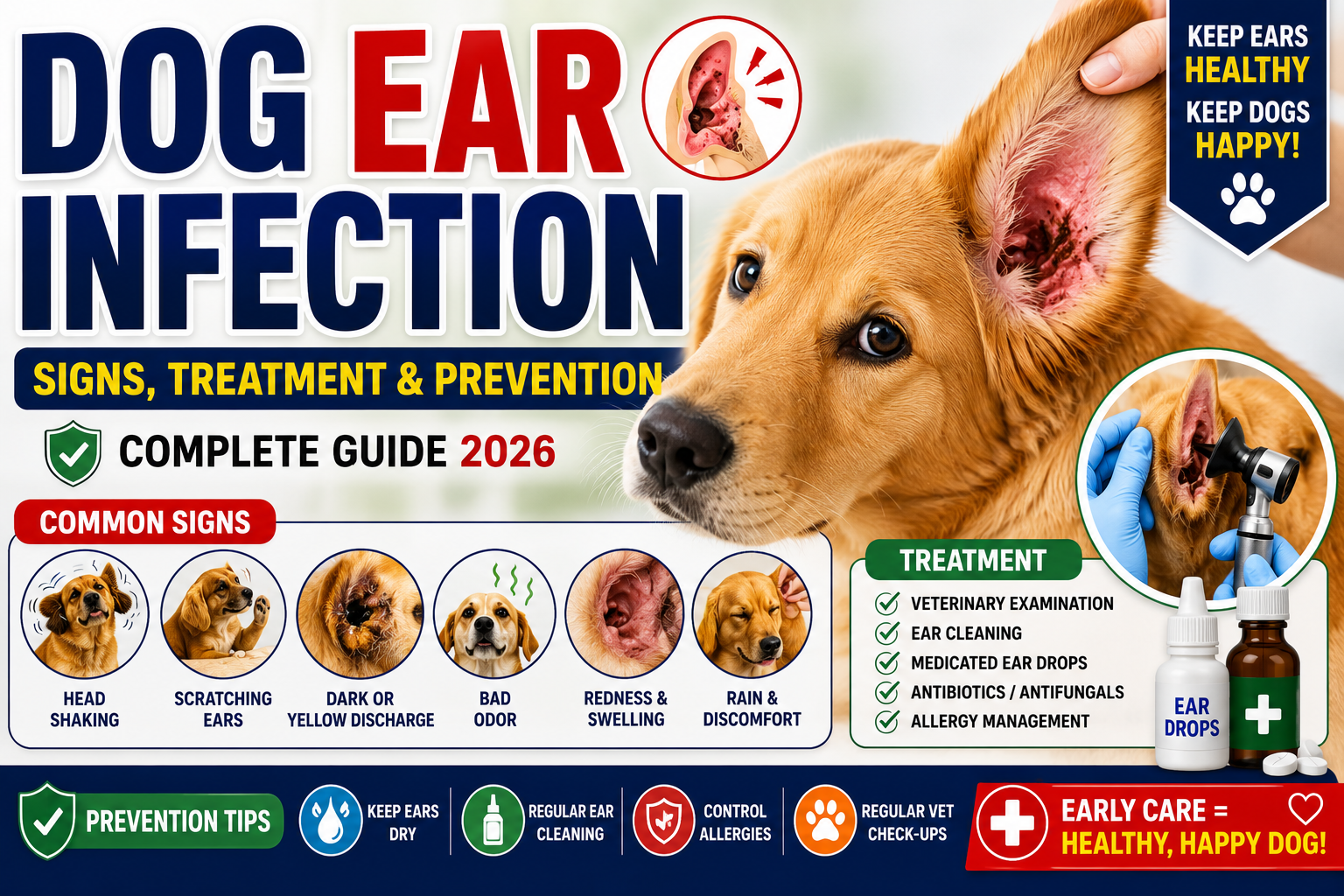
Common Symptoms
- Frequent head shaking
- Constant scratching at the ears
- Red or swollen ear canal
- Dark brown, yellow, or green ear discharge
- Bad odor coming from the ears
- Pain when the ear is touched
- Crusting around the ear opening
- Hair loss around the ears from scratching
- Tilting the head to one side
- Loss of balance in severe cases
If you notice any of these symptoms, arrange a veterinary examination as soon as possible.
What Causes Dog Ear Infections?
Several underlying conditions can lead to ear infections.
1. Yeast Infections
Yeast naturally lives in a dog’s ears, but overgrowth can occur when the ear environment becomes warm and moist.
Signs
- Brown waxy discharge
- Strong odor
- Itching
- Redness
2. Bacterial Infections
Bacteria may multiply inside the ear, especially if the skin is already inflamed.
Symptoms include:
- Thick discharge
- Pain
- Swelling
- Bad smell
3. Allergies
Dogs with allergies often develop recurring ear infections.
Possible triggers include:
- Food allergies
- Pollen
- Dust mites
- Mold
- Grass
Managing the underlying allergy is often necessary to prevent repeated infections.
4. Ear Mites
Ear mites are tiny parasites that commonly affect puppies and young dogs.
Symptoms include:
- Severe itching
- Dark, crumbly discharge resembling coffee grounds
- Head shaking
- Ear irritation
Ear mites are contagious between animals and require veterinary treatment.
5. Excess Moisture
Dogs that swim frequently or receive frequent baths may retain moisture in their ears.
This creates an ideal environment for bacteria and yeast to grow.
Breeds that enjoy swimming may require routine ear care after water activities.
6. Foreign Objects
Grass seeds, plant material, or small debris can become trapped inside the ear canal.
These foreign objects can cause:
- Sudden head shaking
- Pawing at the ear
- Pain
- Secondary infection
A veterinarian should remove foreign objects safely.
7. Excess Ear Wax
Some dogs naturally produce more ear wax than others.
If wax builds up excessively, it can trap moisture and encourage the growth of bacteria or yeast.
Routine ear cleaning may help dogs prone to wax buildup.
Dogs Most at Risk
Some breeds are more likely to develop ear infections because of their ear shape or coat type.
Higher-risk breeds include:
- Cocker Spaniels
- Basset Hounds
- Labrador Retrievers
- Golden Retrievers
- Poodles
- Beagles
- Springer Spaniels
Dogs with floppy ears or heavy hair inside the ear canal may require more frequent ear checks.
How Veterinarians Diagnose Ear Infections
A veterinarian will perform a complete ear examination.
Diagnosis may include:
- Visual inspection
- Otoscope examination to look inside the ear canal
- Ear swab for microscopic examination (cytology)
- Culture and sensitivity testing in severe or recurring cases
- Evaluation for underlying allergies or hormonal disorders if infections keep returning
Accurate diagnosis helps determine whether bacteria, yeast, mites, or another issue is responsible.
Can Dog Ear Infections Heal Without Treatment?
Mild irritation may improve if the underlying cause is addressed, but true ear infections generally require veterinary treatment. Leaving an infection untreated can allow it to worsen, increasing the risk of chronic inflammation, a ruptured eardrum, hearing loss, or deeper infection.
Avoid using over-the-counter ear products unless your veterinarian has confirmed they are appropriate for your dog’s condition.
Best Treatments for Dog Ear Infection
The most effective treatment depends on the underlying cause of the infection. Your veterinarian will determine whether the infection is caused by bacteria, yeast, ear mites, allergies, or another problem.
1. Ear Cleaning
The first step in treatment is often a professional ear cleaning to remove:
- Wax buildup
- Debris
- Pus
- Dead skin cells
Cleaning helps medications reach the infected area more effectively.
2. Antibiotic Ear Drops
If bacteria are causing the infection, your veterinarian may prescribe antibiotic ear drops.
These medications help:
- Kill bacteria
- Reduce inflammation
- Relieve pain
- Clear the infection
Always complete the full course of treatment, even if your dog seems better.
3. Antifungal Medication
For yeast infections, antifungal ear medications are commonly used.
They help:
- Eliminate yeast overgrowth
- Reduce itching
- Control inflammation
- Prevent recurrence
4. Anti-Inflammatory Medication
Dogs with severe swelling or pain may receive anti-inflammatory medications.
These medications help:
- Reduce redness
- Ease discomfort
- Improve healing
Only use medications prescribed by your veterinarian.
5. Treatment for Ear Mites
If ear mites are diagnosed, treatment may include:
- Prescription ear mite medication
- Thorough ear cleaning
- Treating all pets in the household if recommended
Follow your veterinarian’s instructions carefully to prevent reinfestation.
Home Care Tips
Home care can support recovery, but it should never replace veterinary treatment for an active infection.
Helpful Tips
- Keep your dog’s ears dry after bathing or swimming.
- Prevent excessive scratching with an Elizabethan collar if needed.
- Give all medications exactly as prescribed.
- Attend follow-up appointments if recommended.
- Monitor for recurring symptoms such as odor or discharge.
Avoid inserting cotton swabs deep into the ear canal, as this can cause injury.
How to Clean Your Dog’s Ears Safely
Routine ear cleaning may help reduce the risk of future infections in dogs that are prone to ear problems.
Step-by-Step Guide
- Use a veterinarian-approved ear cleaner.
- Lift the ear flap gently.
- Fill the ear canal with the cleaning solution as directed.
- Massage the base of the ear for about 20–30 seconds.
- Allow your dog to shake its head.
- Wipe away loosened debris with clean cotton or gauze.
Never use alcohol, hydrogen peroxide, or sharp objects inside your dog’s ears unless specifically instructed by your veterinarian.
Prevention Tips
Good ear care can significantly reduce the risk of infection.
Preventive Measures
- Check your dog’s ears weekly.
- Dry the ears thoroughly after swimming or bathing.
- Use only veterinarian-approved ear cleaners.
- Keep allergies under control.
- Maintain regular grooming around the ears if recommended.
- Schedule routine veterinary checkups.
Dogs with floppy ears may benefit from more frequent ear inspections.
Foods That Support Ear Health
A balanced diet supports healthy skin and a strong immune system, which may help reduce the risk of recurring ear problems.
Consider foods rich in:
- Omega-3 fatty acids
- High-quality protein
- Zinc
- Vitamin E
- Vitamin A
- Probiotics (if recommended by your veterinarian)
If food allergies are contributing to ear infections, your veterinarian may recommend a special elimination or prescription diet.
Possible Complications
Untreated ear infections can lead to serious health problems.
Potential complications include:
- Chronic ear infections
- Hearing loss
- Ruptured eardrum
- Middle or inner ear infection
- Facial nerve damage (rare)
- Loss of balance
- Persistent pain
Early treatment greatly reduces the risk of these complications.
When to Visit the Veterinarian
Contact your veterinarian if your dog has:
- Persistent head shaking
- Foul-smelling ears
- Thick or bloody discharge
- Swollen ear canals
- Severe pain
- Loss of balance
- Hearing changes
- Symptoms that do not improve within a few days of treatment
Prompt diagnosis helps prevent long-term damage.
Frequently Asked Questions (FAQs)
What causes ear infections in dogs?
Common causes include bacteria, yeast, ear mites, allergies, excess moisture, foreign objects, and excessive ear wax.
Can a dog ear infection heal on its own?
Most true ear infections require veterinary treatment. Delaying treatment can allow the infection to worsen and increase the risk of complications.
How can I tell if my dog’s ear infection is serious?
Signs of a more serious infection include severe pain, foul odor, thick discharge, swelling, loss of balance, or hearing problems. These symptoms require prompt veterinary attention.
Can I use human ear drops on my dog?
No. Human ear medications may be unsafe for dogs and should never be used unless specifically prescribed by a veterinarian.
How long does treatment take?
Many mild ear infections improve within 1–2 weeks with appropriate treatment. More severe or chronic infections may require longer treatment and follow-up visits.
How can I prevent future ear infections?
Regular ear checks, proper ear cleaning, drying the ears after swimming, managing allergies, and routine veterinary care can help reduce the risk of recurrence.
Conclusion
A dog ear infection is a common but treatable condition. Early recognition of symptoms such as head shaking, ear scratching, discharge, and unpleasant odor can help your dog receive timely treatment and avoid complications.
With proper veterinary care, regular ear cleaning, and preventive measures, most dogs recover well and maintain healthy ears. If your dog develops recurring infections, work with your veterinarian to identify and manage the underlying cause.