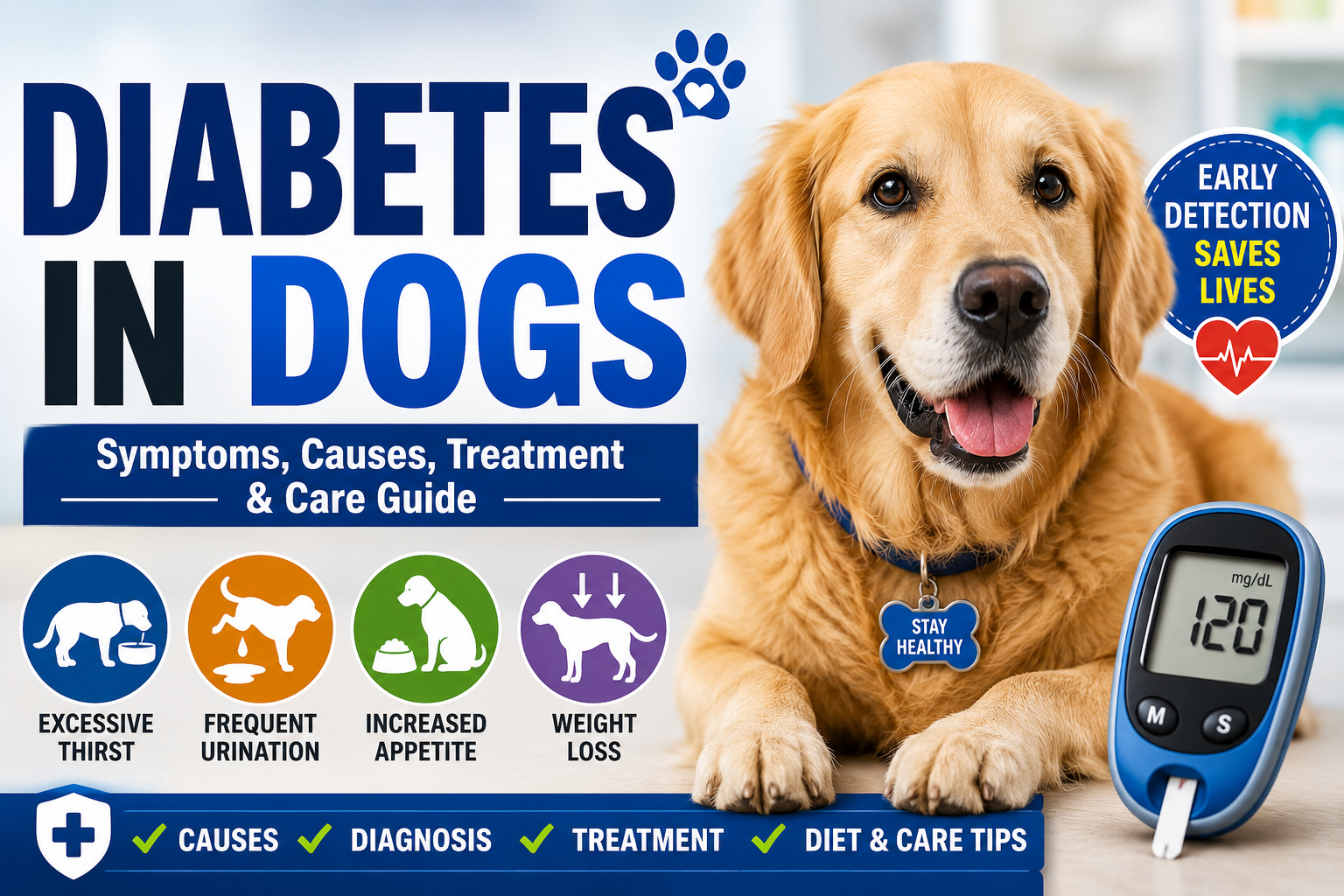
Diabetes in dogs is a common hormonal disorder that affects thousands of pets every year. Just like humans, dogs can develop diabetes when their bodies cannot produce enough insulin or cannot use insulin effectively. Without proper treatment, diabetes can lead to serious health problems, including blindness, kidney disease, and life-threatening complications.
The good news is that with early diagnosis, insulin therapy, a balanced diet, and regular veterinary care, most diabetic dogs can enjoy a long and happy life.
In this complete guide, you’ll learn everything about diabetes in dogs, including its symptoms, causes, diagnosis, treatment options, diet recommendations, and prevention tips.
What Is Diabetes in Dogs?
Diabetes mellitus is a disease in which the body cannot properly regulate blood sugar (glucose). Glucose is the primary source of energy for your dog’s cells, and insulin—produced by the pancreas—helps move glucose from the bloodstream into the cells.
When insulin is lacking or doesn’t work properly, glucose builds up in the bloodstream, leading to high blood sugar levels (hyperglycemia).
Types of Diabetes in Dogs
Type 1 Diabetes (Insulin-Dependent)
This is the most common type in dogs.
The pancreas produces little or no insulin, so dogs require lifelong insulin injections.
Type 2 Diabetes
Rare in dogs but more common in cats. In this type, the body becomes resistant to insulin.
Common Symptoms of Diabetes in Dogs
Early detection is important. Watch for these signs:
- Excessive thirst
- Frequent urination
- Increased appetite
- Weight loss despite eating well
- Fatigue
- Weakness
- Cloudy eyes or cataracts
- Poor coat condition
- Recurrent infections
- Sweet-smelling breath (in severe cases)
If your dog shows several of these symptoms, schedule a veterinary examination promptly.
Causes of Diabetes in Dogs
Several factors may contribute to diabetes, including:
Obesity
Excess body fat can reduce insulin effectiveness.
Genetics
Some breeds are more likely to develop diabetes.
Age
Most diabetic dogs are middle-aged or older.
Pancreatitis
Inflammation of the pancreas can damage insulin-producing cells.
Hormonal Disorders
Conditions such as Cushing’s disease may increase diabetes risk.
Certain Medications
Long-term use of corticosteroids can contribute to diabetes in some dogs.
Dog Breeds at Higher Risk
Some breeds have a higher risk, including:
- Miniature Schnauzer
- Poodle
- Dachshund
- Beagle
- Samoyed
- Cairn Terrier
- Australian Terrier
Any breed, however, can develop diabetes.
Risk Factors
Your dog’s risk increases if they are:
- Overweight
- Female (especially unspayed)
- Older than 7 years
- Less physically active
- Diagnosed with pancreatitis
- Living with hormonal disorders
How Veterinarians Diagnose Diabetes
Diagnosis typically includes:
Physical Examination
The veterinarian checks weight, hydration, and overall health.
Blood Tests
High blood glucose levels are a key indicator.
Urine Test
Glucose in the urine strongly supports a diabetes diagnosis.
Additional Testing
Your veterinarian may recommend blood chemistry panels, urine cultures, or imaging to check for related health problems.
Treatment for Diabetes in Dogs
Insulin Therapy
Most diabetic dogs need insulin injections once or twice daily.
Your veterinarian will determine the correct insulin type and dose based on your dog’s needs.
Never change your dog’s insulin dose without veterinary guidance.
Diet
A consistent diet is an essential part of diabetes management.
A diabetic dog’s diet should include:
- High-quality protein
- Moderate fiber
- Controlled carbohydrates
- Healthy fats
- Consistent meal times
Feed your dog at the same times each day to help maintain stable blood sugar levels.
Exercise
Regular exercise helps:
- Improve insulin sensitivity
- Maintain a healthy weight
- Support overall health
Avoid sudden changes in exercise intensity, as they may affect blood sugar.
Weight Management
If your dog is overweight, gradual weight loss can improve diabetes control and overall health.
Best Food for Diabetic Dogs
Recommended foods often include:
- Lean chicken
- Turkey
- Fish
- Eggs
- Green beans
- Pumpkin (plain)
- Broccoli
- Spinach
- Veterinary diabetic diets
Avoid making major dietary changes without consulting your veterinarian.
Foods to Avoid
Limit or avoid:
- Sugary treats
- Candy
- Table scraps
- White bread
- Sweet desserts
- High-fat processed foods
- Foods containing xylitol (which is highly toxic to dogs)
How to Give Insulin
Many owners worry at first, but most dogs tolerate insulin injections well.
General steps:
- Feed your dog as directed.
- Prepare the insulin according to your veterinarian’s instructions.
- Use the correct syringe.
- Inject under the skin in the recommended area.
- Rotate injection sites.
- Reward your dog afterward.
Your veterinary team can demonstrate the proper technique.
Monitoring Diabetes
Successful management involves regular monitoring.
Your veterinarian may recommend:
- Blood glucose curves
- Urine testing
- Weight checks
- Routine examinations
- Bloodwork every few months
Keeping a daily record of appetite, water intake, insulin doses, and activity can be helpful.
Possible Complications
Untreated diabetes may lead to:
- Cataracts
- Blindness
- Urinary tract infections
- Kidney disease
- Liver problems
- Diabetic ketoacidosis (DKA), a medical emergency
Signs of Low Blood Sugar (Hypoglycemia)
Too much insulin or missed meals can cause blood sugar to drop too low.
Symptoms include:
- Weakness
- Shaking
- Confusion
- Disorientation
- Collapse
- Seizures
This requires immediate veterinary attention.
Can Diabetes Be Cured?
Most dogs require lifelong treatment. However, with consistent insulin therapy, proper nutrition, exercise, and routine veterinary care, many diabetic dogs enjoy an excellent quality of life.
How to Prevent Diabetes in Dogs
While not all cases can be prevented, you can lower the risk by:
- Maintaining a healthy weight
- Feeding a balanced diet
- Providing regular exercise
- Scheduling routine veterinary checkups
- Avoiding unnecessary steroid medications unless prescribed
- Monitoring senior dogs for early signs of illness
Living with a Diabetic Dog
Managing diabetes becomes easier with a routine. Feed meals on schedule, give insulin consistently, monitor your dog’s behavior, and attend regular veterinary appointments. Many owners find that after the initial adjustment period, caring for a diabetic dog becomes a normal part of daily life.
Frequently Asked Questions
Can dogs live a long life with diabetes?
Yes. With proper treatment and regular veterinary care, many diabetic dogs live for years with a good quality of life.
What is the first sign of diabetes in dogs?
Excessive thirst and frequent urination are often among the earliest signs.
Can diabetic dogs eat treats?
Yes, but treats should be approved by your veterinarian and fit within the dog’s diabetes management plan.
Is diabetes painful for dogs?
Diabetes itself is not usually painful, but complications can affect your dog’s comfort and health if the disease is not managed properly.
How often do diabetic dogs need insulin?
Many dogs require insulin once or twice daily, depending on the veterinarian’s treatment plan.
Conclusion
Diabetes in dogs is a manageable condition when detected early and treated consistently. Recognizing symptoms such as increased thirst, frequent urination, weight loss, and fatigue can lead to earlier diagnosis and better outcomes. With insulin therapy, a balanced diet, regular exercise, and ongoing veterinary care, diabetic dogs can continue to enjoy active and fulfilling lives.