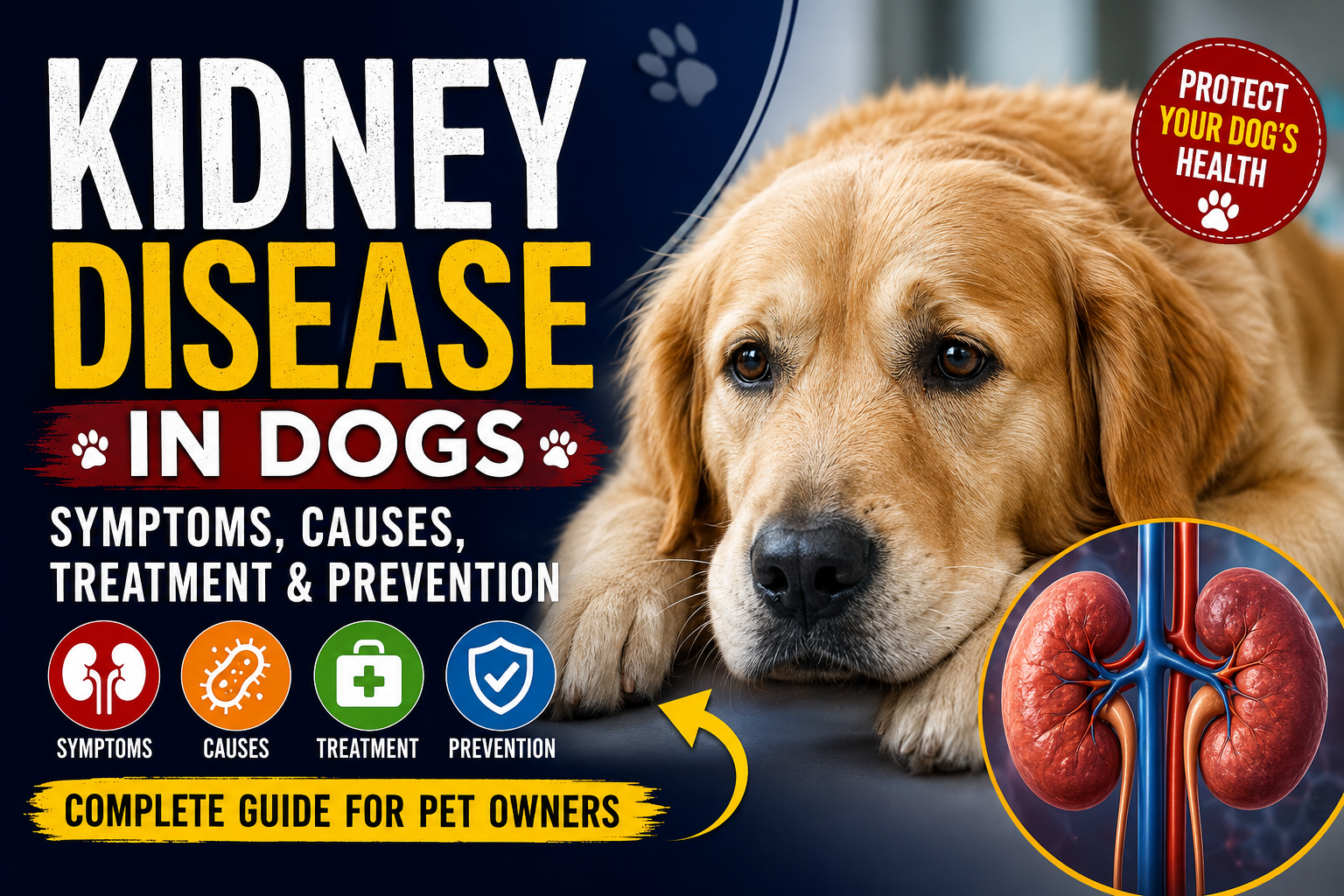
Kidney disease in dogs is one of the most common health problems affecting both young and senior dogs. The kidneys play a vital role in filtering toxins from the blood, balancing fluids, regulating blood pressure, and producing hormones that help create healthy red blood cells. When these organs stop functioning properly, toxins begin to build up inside the body, leading to serious illness.
Although kidney disease can be life-threatening, early diagnosis and proper treatment can significantly improve a dog’s quality of life and even extend its lifespan.
In this comprehensive guide, you’ll learn everything about kidney disease in dogs, including causes, symptoms, diagnosis, treatment options, dietary recommendations, prevention tips, and frequently asked questions.
What Is Kidney Disease in Dogs?
Kidney disease occurs when one or both kidneys lose their ability to filter waste products efficiently. As a result, harmful toxins remain in the bloodstream instead of leaving the body through urine.
Veterinarians generally classify kidney disease into two main types:
1. Acute Kidney Disease
Acute kidney disease develops suddenly, often within hours or days.
Common causes include:
- Poisoning
- Severe dehydration
- Heatstroke
- Certain medications
- Bacterial infections
- Urinary blockage
With immediate veterinary treatment, some dogs recover completely.
2. Chronic Kidney Disease (CKD)
Chronic kidney disease develops slowly over months or years.
It is much more common in older dogs and usually cannot be cured.
However, proper treatment can slow disease progression and improve quality of life.
What Causes Kidney Disease in Dogs?
Many factors can damage a dog’s kidneys.
Common causes include:
- Aging
- Genetics
- Poisoning
- Infections
- Dental disease
- High blood pressure
- Kidney stones
Some dog breeds, including Shih Tzus, Cocker Spaniels, Bull Terriers, German Shepherds, Samoyeds, and English Cocker Spaniels, may have a higher genetic risk of kidney disease.
Symptoms of Kidney Disease in Dogs
Symptoms often develop gradually.
Watch for:
- Increased thirst
- Frequent urination
- Weight loss
- Loss of appetite
- Vomiting
- Bad breath
- Mouth ulcers
- Weakness
- Lethargy
- Pale gums
- Dehydration
- Diarrhea
- Poor coat quality
- Muscle loss
- Depression
- Blood in urine
- Difficulty urinating
As the disease progresses, dogs may also develop seizures or even fall into a coma.
Early Signs You Should Never Ignore
Many owners mistake the early symptoms of kidney disease for normal aging.
Contact your veterinarian if your dog shows:
- Drinking much more water than usual
- Frequent urination
- Reduced appetite
- Mild weight loss
- Repeated vomiting
- Constant tiredness
Early diagnosis significantly improves treatment outcomes.
How Veterinarians Diagnose Kidney Disease
Diagnosis typically involves:
Blood Tests
These measure:
- Creatinine
- Blood Urea Nitrogen (BUN)
- SDMA
- Electrolytes
Urinalysis
Urine testing evaluates:
- Protein levels
- Urine concentration
- Infection
- Blood
- Crystals
Blood Pressure Monitoring
Many dogs with kidney disease also develop hypertension.
Ultrasound
An ultrasound helps detect:
- Kidney stones
- Tumors
- Structural abnormalities
- Chronic damage
X-rays
X-rays may reveal enlarged kidneys, urinary stones, or blockages.
Stages of Chronic Kidney Disease
Stage 1
- Mild kidney damage
- Few or no symptoms
- Best opportunity to slow disease progression
Stage 2
- Mild elevation in kidney values
- Increased thirst
- Mild weight loss
Stage 3
- Significant kidney dysfunction
- Vomiting
- Poor appetite
- Fatigue
- Dehydration
Stage 4
- Severe kidney failure
- Heavy toxin buildup
- Poor prognosis
- Intensive treatment required
Treatment for Kidney Disease in Dogs
Treatment depends on the underlying cause and disease severity.
Common treatments include:
IV Fluid Therapy
Fluid therapy helps:
- Flush toxins
- Correct dehydration
- Improve blood flow to the kidneys
Prescription Kidney Diet
Special veterinary diets are formulated with:
- Reduced phosphorus
- Controlled protein
- Omega-3 fatty acids
- Antioxidants
These diets help reduce the workload on the kidneys.
Medications
Your veterinarian may prescribe medications to manage:
- High blood pressure
- Nausea
- Vomiting
- Anemia
- Elevated phosphorus levels
Antibiotics
Antibiotics are used if a bacterial infection is present.
Potassium Supplements
Some dogs require potassium replacement to maintain normal muscle and nerve function.
Appetite Stimulants
These medications encourage dogs to eat and maintain proper nutrition.
Best Diet for Dogs with Kidney Disease
Nutrition plays an essential role in managing kidney disease.
Recommended foods include:
- Prescription kidney diets
- Lean chicken (if approved by your veterinarian)
- White rice (when appropriate)
- Egg whites
- Fish oil supplements
- Low-phosphorus foods
- Plenty of fresh, clean water
Avoid:
- High-sodium foods
- Processed treats
- High-phosphorus foods
- Bones
- Fatty table scraps
Always consult your veterinarian before making dietary changes.
Can Dogs Recover from Kidney Disease?
Recovery depends on the type of kidney disease.
Acute Kidney Disease
With prompt treatment, some dogs recover completely.
Chronic Kidney Disease
Although CKD cannot be cured, proper management can slow progression and allow many dogs to live comfortably for months or even years.
How to Prevent Kidney Disease in Dogs
Help protect your dog’s kidneys by:
- Providing fresh water every day
- Feeding a balanced, high-quality diet
- Scheduling regular veterinary examinations
- Keeping toxic substances out of reach
- Maintaining good dental hygiene
- Preventing obesity
- Treating urinary tract infections promptly
- Never giving human medications without veterinary approval
- Keeping vaccinations current
When Should You Visit a Veterinarian?
Seek immediate veterinary care if your dog:
- Stops eating
- Vomits repeatedly
- Cannot urinate
- Has blood in the urine
- Becomes extremely weak
- Drinks excessive amounts of water
- Suddenly collapses
Prompt treatment can be life-saving.
Frequently Asked Questions (FAQs)
Can a dog live with kidney disease?
Yes. Many dogs with chronic kidney disease live comfortably for months or years when managed with the right diet, medication, and routine veterinary care.
Is kidney disease painful for dogs?
While kidney disease itself may not always be painful, complications such as dehydration, ulcers, nausea, and urinary obstruction can cause significant discomfort.
What foods should dogs with kidney disease avoid?
Avoid foods that are high in phosphorus, sodium, and unhealthy fats. Table scraps and human foods should only be offered if approved by your veterinarian.
Can puppies develop kidney disease?
Yes. Although uncommon, puppies can develop kidney disease due to congenital defects, inherited conditions, infections, or toxin exposure.
How often should a dog with kidney disease visit the veterinarian?
Most dogs with chronic kidney disease benefit from regular checkups every few months, though the schedule depends on the disease stage and treatment plan.
Conclusion
Kidney disease in dogs is a serious but manageable condition. Recognizing the warning signs early, obtaining prompt veterinary care, and following a long-term treatment plan can greatly improve your dog’s quality of life. A kidney-friendly diet, proper hydration, regular monitoring, and preventive healthcare all contribute to helping affected dogs live healthier and longer lives.