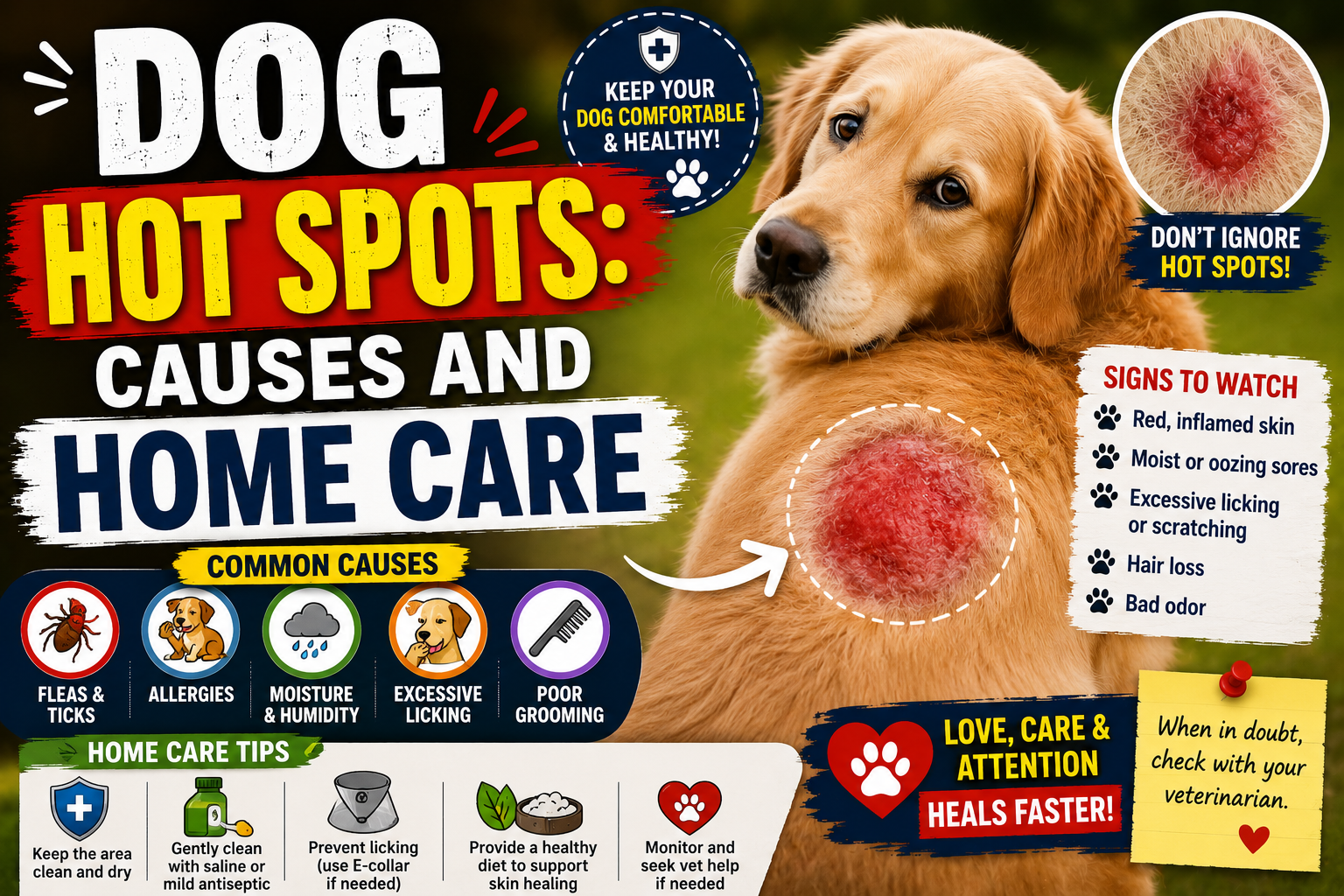
Hot spots, also known as acute moist dermatitis, are one of the most common skin problems in dogs. They appear as red, inflamed, moist, and painful patches of skin that can develop very quickly. A small itchy area can become a large, infected wound within just a few hours if a dog continues scratching, licking, or biting it.
Although hot spots are painful, they can usually be treated successfully when caught early. Proper home care, good hygiene, and identifying the underlying cause are essential for fast healing and preventing future outbreaks.
In this complete guide, you’ll learn what causes dog hot spots, how to recognize the symptoms, safe home care methods, veterinary treatment options, and the best ways to prevent them.
Table of Contents
- What Are Dog Hot Spots?
- What Causes Dog Hot Spots?
- Symptoms of Dog Hot Spots
- Dogs Most at Risk
- How to Treat Dog Hot Spots at Home
- Veterinary Treatment
- Healing Time
- Prevention Tips
- Common Mistakes to Avoid
- When to Visit a Veterinarian
- Frequently Asked Questions
- Conclusion
What Are Dog Hot Spots?
A hot spot is a localized area of inflamed skin caused by excessive scratching, licking, or chewing. The condition is medically known as acute moist dermatitis because the affected skin becomes wet, irritated, and often infected with bacteria.
Hot spots usually develop suddenly and can increase in size within a day if left untreated.
Common locations include:
- Neck
- Face
- Behind the ears
- Chest
- Hips
- Tail base
- Legs
What Causes Dog Hot Spots?
Hot spots usually begin with something that makes a dog itch. Once the dog scratches or licks the area repeatedly, the skin becomes damaged, allowing bacteria to multiply.
1. Fleas and Ticks
Parasites are one of the leading causes of hot spots. Even a few flea bites can trigger intense itching, especially in dogs with flea allergies.
2. Allergies
Dogs may develop allergies to:
- Grass
- Pollen
- Dust mites
- Mold
- Food ingredients
- Household cleaners
Allergic dogs often scratch constantly, increasing the risk of hot spots.
3. Moisture Trapped in the Coat
Dogs with thick or long coats may develop hot spots after:
- Swimming
- Rain
- Baths
- High humidity
Moisture trapped close to the skin creates an ideal environment for bacteria.
4. Poor Grooming
Matted fur traps dirt, moisture, and bacteria, increasing the chance of skin irritation.
5. Ear Infections
Dogs with painful ear infections often scratch around the ears and neck, leading to hot spots.
6. Boredom or Anxiety
Some dogs lick themselves excessively because of stress or separation anxiety, which can eventually damage the skin.
Symptoms of Dog Hot Spots
Hot spots are easy to recognize because they usually appear suddenly.
Common signs include:
- Bright red skin
- Moist or oozing wound
- Hair loss
- Swelling
- Bad odor
- Yellow discharge
- Constant licking
- Continuous scratching
- Pain when touched
- Crusting during healing
Dogs Most at Risk
Some dogs develop hot spots more often than others.
Breeds commonly affected include:
- Golden Retriever
- Labrador Retriever
- German Shepherd
- Saint Bernard
- Border Collie
- Newfoundland
- Cocker Spaniel
Dogs with thick double coats are especially prone to hot spots.
How to Treat Dog Hot Spots at Home
If the hot spot is small and your dog is otherwise healthy, you may be able to provide basic home care.
1. Trim the Hair Around the Area
Carefully trim the fur surrounding the hot spot to allow air to reach the skin. This helps keep the area dry and makes cleaning easier.
2. Clean the Wound
Gently clean the area with:
- Sterile saline solution
- Pet-safe antiseptic recommended by your veterinarian
Avoid using harsh chemicals, alcohol, or hydrogen peroxide because they may delay healing.
3. Keep the Area Dry
Moisture slows healing and encourages bacterial growth. After cleaning, gently pat the area dry.
4. Prevent Licking and Scratching
Use an Elizabethan collar (cone) or another veterinarian-approved protective device to stop your dog from irritating the wound.
5. Monitor Daily
Check the hot spot every day. It should gradually become less red, less moist, and smaller. If it worsens or develops pus, seek veterinary care.
Veterinary Treatment
Large, painful, or infected hot spots usually require professional treatment.
Your veterinarian may recommend:
- Clipping the affected area
- Prescription antibiotics
- Anti-inflammatory medication
- Anti-itch medication
- Medicated shampoos
- Pain relief
- Treatment for underlying allergies or parasites
Addressing the root cause is important to prevent the problem from returning.
How Long Do Hot Spots Take to Heal?
With prompt treatment, many mild hot spots begin improving within a few days and heal in 7–14 days.
Healing time depends on:
- Size of the wound
- Severity of infection
- Whether the dog continues licking
- Overall health
- Following the treatment plan consistently
Preventing Dog Hot Spots
Prevention is easier than treating an infected wound.
Follow these tips:
- Use year-round flea and tick prevention.
- Brush your dog regularly.
- Dry the coat thoroughly after swimming or bathing.
- Keep ears clean.
- Feed a balanced diet rich in omega-3 fatty acids.
- Schedule routine veterinary checkups.
- Treat allergies early.
- Provide daily exercise and mental stimulation.
Common Mistakes to Avoid
Avoid these common errors:
- Ignoring early signs of irritation
- Allowing your dog to keep licking the area
- Using human creams without veterinary advice
- Skipping flea prevention
- Waiting too long before seeking treatment
- Not finishing prescribed medications
When to Visit a Veterinarian
Contact your veterinarian immediately if your dog has:
- A large or rapidly spreading hot spot
- Thick yellow or green discharge
- Fever or lethargy
- Severe pain
- Multiple hot spots
- Loss of appetite
- No improvement after two days of home care
- Frequent recurring hot spots
Frequently Asked Questions
Are dog hot spots contagious?
No. Hot spots themselves are not contagious, although underlying causes such as fleas can spread between pets.
Can dog hot spots heal on their own?
Very small hot spots may improve if the underlying irritation is removed, but many require treatment because they can become infected quickly.
Should I cover a hot spot with a bandage?
In most cases, no. Hot spots heal better when kept clean, dry, and exposed to air unless your veterinarian advises otherwise.
Can I use coconut oil?
Coconut oil may moisturize healthy skin, but it is not a substitute for treating an infected hot spot. Consult your veterinarian before applying any home remedies.
How can I stop my dog from licking a hot spot?
An Elizabethan collar or other veterinarian-approved protective device is usually the most effective way to prevent licking while the area heals.
Conclusion
Dog hot spots are painful but highly treatable skin conditions that often develop because of allergies, parasites, moisture, or excessive licking. Early recognition and proper care can prevent a small irritation from turning into a serious infection. Keep the affected area clean and dry, prevent your dog from licking it, and seek veterinary advice if the wound is severe, infected, or not improving. With good grooming, flea prevention, and regular health care, you can greatly reduce your dog’s risk of developing hot spots and keep their skin healthy year-round.