Fleas and ticks are more than just annoying pests—they can cause severe itching, allergic reactions, skin infections, anemia, and even transmit dangerous diseases. Whether you have a playful puppy or a senior dog, choosing the right flea and tick treatment is essential for keeping your pet healthy and comfortable.
With so many products available, it can be difficult to know which one is best. Some treatments kill fleas within hours, while others provide month-long protection against both fleas and ticks. The right choice depends on your dog’s age, size, health, and lifestyle.
In this comprehensive guide, we’ll explore the best flea and tick treatments for dogs, compare different options, discuss safety tips, and explain how to prevent infestations before they start.
Table of Contents
- Why Flea and Tick Prevention Matters
- Signs Your Dog Has Fleas or Ticks
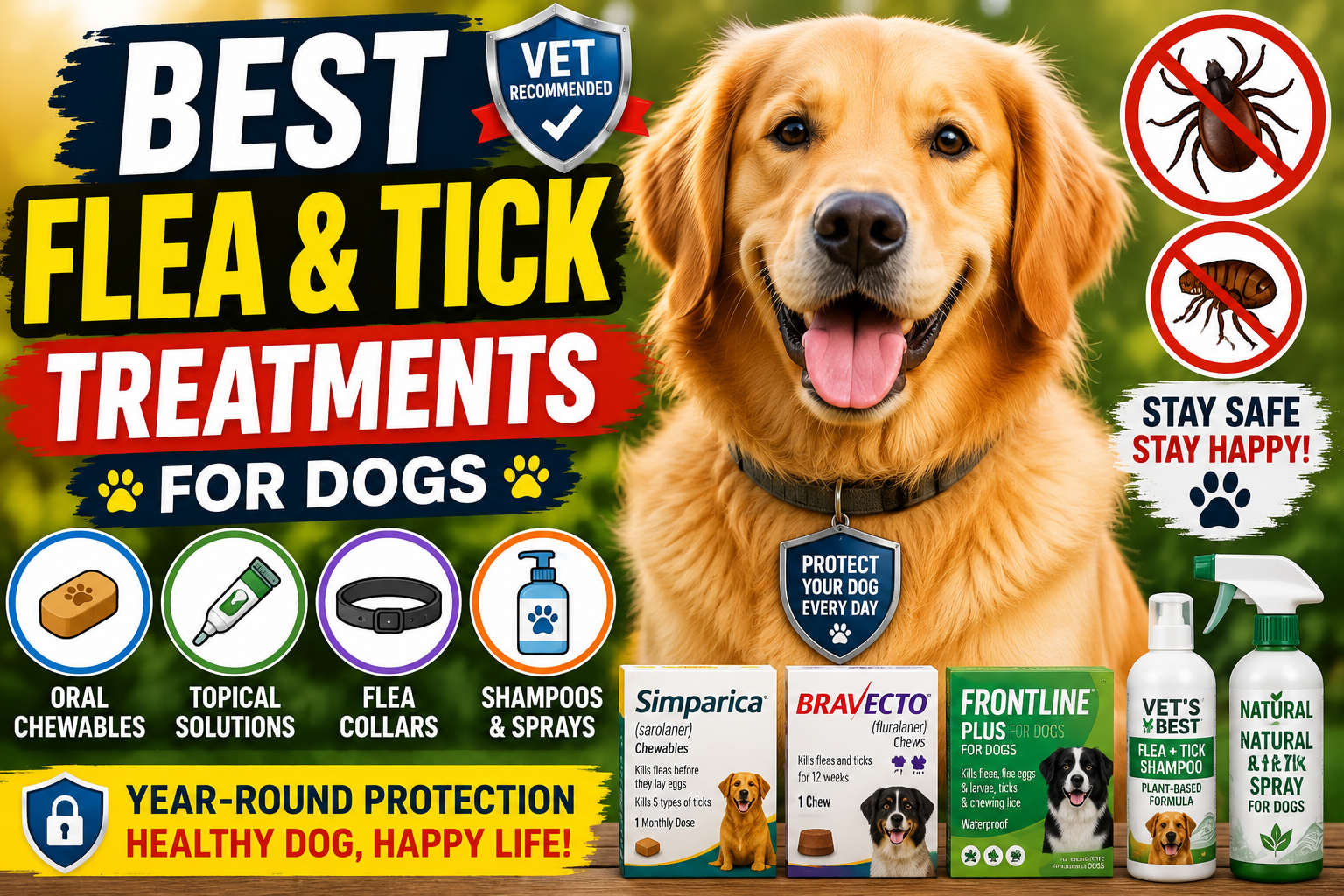
- Types of Flea and Tick Treatments
- Best Oral Flea and Tick Medications
- Best Topical Treatments
- Best Flea Collars
- Flea Shampoos and Sprays
- Natural Flea Prevention Methods
- How to Choose the Right Treatment
- Safety Tips
- Frequently Asked Questions
- Conclusion
Why Flea and Tick Prevention Matters
Fleas and ticks can cause serious health problems, including:
- Intense itching
- Flea allergy dermatitis
- Skin infections
- Hair loss
- Tapeworm infections
- Lyme disease
- Ehrlichiosis
- Anaplasmosis
- Anemia (especially in puppies)
Using a reliable flea and tick preventive year-round is the best way to protect your dog.
Signs Your Dog Has Fleas or Ticks
Watch for these common symptoms:
- Constant scratching
- Excessive licking
- Biting at the skin
- Red bumps
- Hair loss
- Flea dirt (small black specks)
- Visible ticks attached to the skin
- Restlessness
- Scabs or sores
Early treatment helps prevent complications.
Types of Flea and Tick Treatments
There are several effective treatment options:
Oral Medications
- Monthly chewable tablets
- Fast-acting
- Easy to administer
- Long-lasting protection
Topical Treatments
- Applied directly to the skin
- Protect for about one month
- Water-resistant options available
Flea Collars
- Long-term protection
- Convenient and low maintenance
- Can last several months
Flea Shampoos
- Kill existing fleas
- Offer immediate relief
- Usually need to be combined with preventive treatments
Flea Sprays
- Useful for dogs and home environments
- Help control infestations
Best Oral Flea and Tick Treatments
Popular veterinarian-prescribed oral preventives are valued because they:
- Kill fleas quickly
- Control ticks
- Work for about a month (depending on the product)
- Are easy to give to most dogs
They are often a good choice for active dogs or those that swim frequently.
Best Topical Treatments
Topical “spot-on” products are applied between the shoulder blades.
Benefits include:
- Easy monthly application
- Effective against fleas and many tick species
- Some products also help control mites and lice
Follow the label instructions carefully and avoid bathing your dog immediately after application if the product advises against it.
Best Flea Collars
Modern flea collars can provide long-lasting protection.
Advantages include:
- Continuous protection
- Convenient once fitted correctly
- Helpful for dogs spending lots of time outdoors
Always ensure the collar fits properly and check it regularly.
Flea Shampoos and Sprays
Shampoos and sprays can:
- Kill fleas already on the dog
- Reduce itching
- Clean the coat
However, they generally do not replace monthly preventive products.
Natural Flea Prevention Tips
While natural methods alone may not eliminate an infestation, they can support your overall prevention plan.
Helpful practices include:
- Brush your dog regularly
- Wash bedding weekly
- Vacuum carpets frequently
- Keep grass trimmed
- Check your dog after outdoor walks
- Maintain a healthy diet
How to Choose the Right Treatment
Consider:
- Your dog’s age
- Weight
- Overall health
- Lifestyle (indoor vs. outdoor)
- Swimming habits
- Local flea and tick risk
- Recommendations from your veterinarian
Never use a product labeled for dogs on cats, and never exceed the recommended dose.
Safety Tips
For safe use:
- Read the product label completely.
- Use the correct dosage based on your dog’s weight.
- Store products out of children’s reach.
- Monitor your dog after the first treatment.
- Contact your veterinarian if you notice vomiting, tremors, excessive drooling, or unusual behavior.
Preventing Fleas in Your Home
Treating your dog is only part of the solution.
To reduce reinfestation:
- Wash blankets and bedding in hot water.
- Vacuum floors, rugs, and furniture frequently.
- Empty the vacuum immediately after use.
- Keep your yard clean and trimmed.
- Treat all pets in the household if recommended by your veterinarian.
Frequently Asked Questions
What is the most effective flea and tick treatment for dogs?
The best option depends on your dog’s needs. Veterinarian-recommended oral medications, topical products, and long-lasting flea collars are all effective when used correctly.
How often should I treat my dog?
Many products are given monthly, while some flea collars provide protection for several months. Always follow the product instructions.
Can puppies use flea treatments?
Yes, but only products approved for their age and weight. Always check the label or ask your veterinarian.
Are natural flea remedies enough?
Natural methods may help reduce exposure, but they are usually not sufficient to control established flea or tick infestations on their own.
Can indoor dogs get fleas?
Yes. Fleas can enter the home on people, other pets, or wildlife, so indoor dogs can still become infested.
Conclusion
Protecting your dog from fleas and ticks is an essential part of responsible pet care. Whether you choose an oral medication, topical treatment, flea collar, or a combination recommended by your veterinarian, consistent prevention is the key to avoiding itchy skin, infections, and parasite-borne diseases. Combine preventive products with good grooming and home hygiene to keep your dog healthy and comfortable all year long.