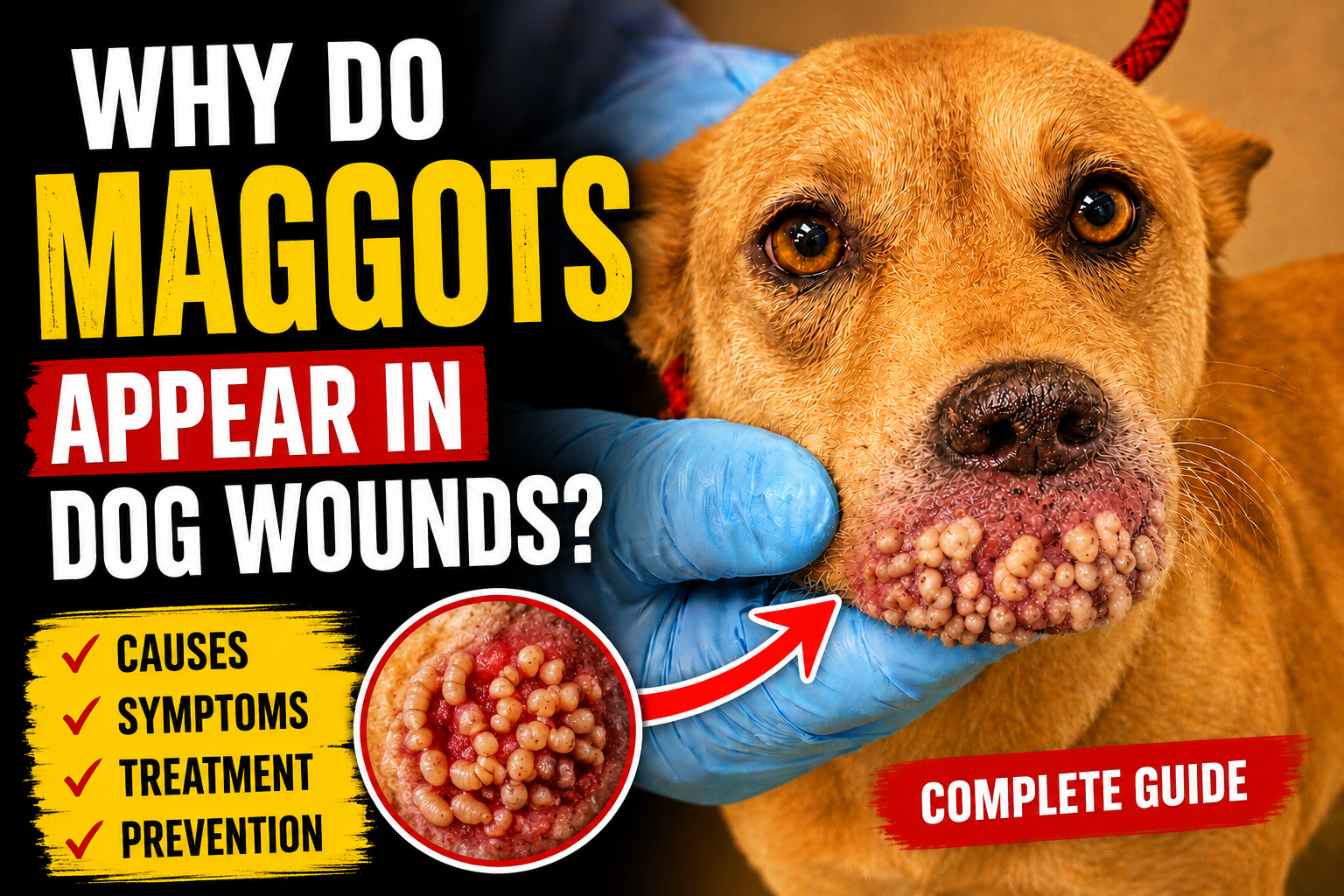
Why Do Maggots Appear in Dog Wounds?
Finding maggots in your dog’s wound is one of the most distressing experiences a pet owner can face. Although it may seem shocking, maggots don’t appear randomly. They develop when flies lay eggs in open, infected, or neglected wounds, especially during warm and humid weather.
This condition is known as myiasis, a serious medical problem that requires immediate veterinary attention. If left untreated, maggots can rapidly destroy healthy tissue, worsen infections, and even become life-threatening.
The good news is that myiasis is preventable with proper wound care, regular grooming, and early veterinary treatment.
In this comprehensive guide, you’ll learn:
- Why maggots infest dog wounds
- How fly larvae develop
- Early warning signs
- Risk factors
- Diagnosis
- Emergency treatment
- Prevention strategies
What Are Maggots?
Maggots are the larval stage of certain flies, including:
- Blowflies
- Flesh flies
- Houseflies
Adult flies are naturally attracted to:
- Blood
- Dead tissue
- Pus
- Moist skin
- Open wounds
- Feces
- Urine-soaked fur
Once they locate a suitable area, female flies lay dozens—or even hundreds—of microscopic eggs.
Within hours, those eggs hatch into larvae (maggots), which begin feeding on tissue.
What Is Myiasis in Dogs?
Myiasis is the infestation of living animals by fly larvae.
Some maggots only consume dead tissue, but many species invade healthy tissue as well, causing severe damage.
Without treatment, the larvae continue growing for several days before leaving the wound to become adult flies.
Because the damage progresses quickly, veterinary treatment should never be delayed.
Why Do Maggots Appear in Dog Wounds?
There are several reasons flies choose certain wounds.
1. Open Cuts
Fresh cuts expose tissue and blood, attracting flies almost immediately.
Even a tiny scratch can become infested if ignored outdoors.
2. Infected Wounds
Bacteria create unpleasant odors.
These smells attract flies from long distances.
Signs include:
- Yellow discharge
- Green pus
- Swelling
- Bad smell
3. Dirty Fur
Dogs with matted or dirty fur provide ideal hiding places for flies.
Long hair traps:
- Moisture
- Blood
- Feces
- Urine
These conditions are perfect for egg-laying.
4. Hot Weather
Maggot infestations are much more common during:
- Summer
- Rainy seasons
- Warm climates
Higher temperatures accelerate both egg hatching and larval growth.
5. Dogs That Stay Outside
Outdoor dogs have much greater exposure to flies.
Risk increases if they:
- Sleep outdoors
- Live near garbage
- Stay near livestock
- Spend time around standing water
6. Poor Hygiene
Dogs unable to groom themselves are especially vulnerable.
Examples include:
- Elderly dogs
- Injured dogs
- Obese dogs
- Paralyzed dogs
Dirty skin quickly attracts flies.
7. Skin Diseases
Skin infections produce moisture and odor.
Common conditions include:
- Hot spots
- Allergies
- Dermatitis
- Yeast infections
All increase fly attraction.
8. Surgical Incisions
After surgery, dogs often have fresh incisions.
Without proper wound protection, flies may lay eggs around stitches.
How Do Flies Lay Eggs in Dog Wounds?
The process is surprisingly fast.
Step 1
The fly detects the odor of blood or infection.
Step 2
It lands on the wound.
Step 3
It deposits clusters of eggs.
Step 4
Eggs hatch within:
8–24 hours
Step 5
Larvae begin feeding.
Step 6
They grow larger every day.
Within only a few days, hundreds of maggots may be present.
Which Dogs Are Most at Risk?
Some dogs are far more likely to develop myiasis.
High-risk dogs include:
- Senior dogs
- Puppies
- Stray dogs
- Disabled dogs
- Dogs recovering from surgery
- Dogs with untreated wounds
- Dogs living outdoors
- Long-haired breeds
- Dogs with urinary incontinence
- Dogs suffering from diarrhea
Symptoms of Maggots in Dog Wounds
Early recognition can save your dog’s life.
Common signs include:
Visible Maggots
The most obvious symptom is seeing white, cream-colored larvae moving inside the wound.
Bad Odor
An extremely foul smell often develops before maggots become visible.
Excessive Licking
Dogs instinctively lick painful wounds.
If licking suddenly becomes obsessive, inspect the area immediately.
Swelling
The wound may become:
- Red
- Inflamed
- Warm
Bleeding
Damaged tissue often bleeds easily.
Pus
Yellow, green, or bloody discharge is common.
Pain
Dogs may cry, whine, or refuse to let you touch the wound.
Restlessness
Infested dogs often appear uncomfortable and constantly change positions.
Fever
Severe infections may cause:
- Fever
- Weakness
- Loss of appetite
Where Do Maggots Usually Appear?
Common locations include:
- Bite wounds
- Surgical wounds
- Tail injuries
- Ear infections
- Paw injuries
- Skin folds
- Around the anus
- Around the genital area
- Neck wounds
- Hip sores
Dogs with long fur may hide infestations for several days.
Can Maggots Kill a Dog?
Unfortunately, yes.
Although not every infestation is fatal, untreated myiasis can cause:
- Severe tissue destruction
- Massive bacterial infection
- Blood poisoning (sepsis)
- Shock
- Organ failure
- Death
Prompt veterinary care greatly improves the outcome.
How Veterinarians Diagnose Myiasis
Diagnosis usually involves:
- Physical examination
- Wound inspection
- Identifying larvae
- Assessing tissue damage
- Checking for infection
- Blood tests (if systemic illness is suspected)
Additional imaging may be recommended if deeper tissue involvement is suspected.
If you discover maggots in your dog’s wound, treat it as a medical emergency. Do not wait to see if the problem improves on its own. Maggots can spread quickly and cause severe tissue damage within hours or days.
What to Do Immediately
- Keep your dog calm and prevent excessive licking or scratching.
- Place an Elizabethan collar (cone) on your dog if available.
- Move your dog indoors, away from flies.
- Cover the wound loosely with a clean, damp gauze if possible.
- Contact your veterinarian or an emergency animal hospital immediately.
What NOT to Do
Avoid these common mistakes:
- Do not pour bleach, kerosene, gasoline, or insecticides on the wound.
- Do not use household chemicals to kill maggots.
- Do not squeeze or dig into the wound with sharp objects.
- Do not delay treatment because the infestation will worsen quickly.
- Do not bandage the wound tightly unless instructed by your veterinarian.
How Veterinarians Remove Maggots
Professional treatment is the safest and most effective option.
Step 1: Sedation or Anesthesia
Depending on the severity of the wound, your dog may receive:
- Mild sedation
- Local anesthesia
- General anesthesia
This minimizes pain and allows thorough cleaning.
Step 2: Clipping the Fur
The veterinarian clips away hair surrounding the wound to expose hidden larvae and improve visibility.
Step 3: Cleaning the Wound
The wound is flushed with sterile saline or veterinary antiseptic solutions to remove dirt, bacteria, and debris.
Step 4: Manual Removal
Using sterile forceps, the veterinarian carefully removes every visible maggot.
This process may take considerable time if hundreds of larvae are present.
Step 5: Debridement
Dead or severely damaged tissue is surgically removed. This encourages healthy tissue to heal and reduces infection.
Step 6: Final Irrigation
The wound is flushed repeatedly until no larvae remain.
Step 7: Dressing the Wound
Some wounds are left open to drain, while others receive protective dressings depending on their severity.
Medications Used for Myiasis
Treatment usually includes one or more of the following:
Antibiotics
Because infected wounds often contain harmful bacteria, veterinarians frequently prescribe antibiotics to control infection.
Pain Relief
Pain management improves comfort and supports recovery.
Common options include:
- Anti-inflammatory medications
- Veterinary pain relievers
Never give human pain medications unless specifically prescribed.
Anti-Parasitic Drugs
In severe cases, veterinarians may administer medications that help eliminate remaining larvae.
Fluids
Dogs suffering from dehydration, shock, or severe infection may require intravenous fluids.
Recovery After Treatment
Recovery depends on:
- The size of the wound
- Number of maggots
- Overall health
- Speed of treatment
Most dogs begin feeling better within several days after complete removal and proper wound care.
Large wounds may require weeks to heal completely.
Caring for Your Dog at Home
Follow your veterinarian’s instructions carefully.
Keep the Wound Clean
Clean the wound only with products recommended by your veterinarian.
Avoid alcohol or hydrogen peroxide unless instructed.
Give All Medications
Complete the full course of antibiotics even if your dog appears better.
Stopping early can allow infection to return.
Prevent Licking
Dogs naturally lick painful wounds, which can slow healing.
Use:
- Elizabethan collar
- Recovery suit
- Veterinary-approved protective bandage
Change Bandages
If your veterinarian recommends bandages:
- Wash your hands first.
- Use clean materials.
- Replace dressings as directed.
Monitor Healing
Watch for:
- Redness
- Swelling
- Bad smell
- New discharge
- Fever
- Loss of appetite
Report any worsening symptoms immediately.
How to Prevent Maggots in Dog Wounds
Prevention is far easier than treatment.
Check Your Dog Daily
Inspect your dog for:
- Cuts
- Scratches
- Bite wounds
- Skin infections
- Hot spots
Early detection prevents fly infestations.
Treat Wounds Immediately
Even minor wounds should be cleaned promptly.
Cover wounds if recommended by your veterinarian.
Maintain Good Grooming
Regular brushing helps you detect injuries early.
Trim excessive hair around:
- Tail
- Hindquarters
- Skin folds
Especially during warm weather.
Control Fleas and Ticks
Parasites cause scratching and skin damage that attracts flies.
Follow a year-round parasite prevention program.
Keep Living Areas Clean
Remove:
- Garbage
- Animal waste
- Spoiled food
Clean environments reduce fly populations.
Keep Dogs Indoors During Peak Fly Activity
Flies are most active:
- Warm afternoons
- Humid weather
- Summer months
Allow your dog indoors whenever possible.
Maintain Proper Hygiene
Bathe your dog regularly using veterinary-approved shampoos.
Dogs with long coats require extra grooming.
Monitor Senior Dogs Closely
Older dogs may have difficulty grooming themselves.
Check elderly pets every day for:
- Moist skin
- Urine scald
- Pressure sores
- Hidden wounds
Protect Surgical Incisions
After surgery:
- Prevent licking.
- Keep the incision clean.
- Attend follow-up appointments.
- Watch for swelling or discharge.
Can Humans Catch Maggots from Dogs?
The maggots themselves are not usually contagious between pets and people.
However:
- The bacteria inside infected wounds can spread through poor hygiene.
- Always wear disposable gloves when handling wound dressings.
- Wash your hands thoroughly after caring for your dog.
Frequently Asked Questions
Why do maggots appear in dog wounds?
Flies lay eggs in open, moist, or infected wounds. The eggs hatch into maggots, which feed on tissue.
Can maggots survive inside healthy skin?
Most species require damaged or infected tissue, but some can invade healthy tissue if left untreated.
How quickly do maggots appear?
Fly eggs can hatch within 8–24 hours, especially in warm weather.
Can I remove maggots at home?
It is not recommended. Hidden larvae often remain deep within the wound, and incomplete removal can lead to continued infection.
Is myiasis painful for dogs?
Yes. Maggot infestations cause significant pain, inflammation, and tissue damage.
How long does recovery take?
Minor cases may heal within one to two weeks, while severe wounds can require several weeks or even months of treatment.
Final Thoughts
Maggots appear in dog wounds because flies are attracted to open, moist, infected, or neglected tissue. Although the sight can be alarming, prompt veterinary care greatly improves the chances of a full recovery.
The best protection is prevention. Regular grooming, daily skin checks, immediate wound care, parasite control, and maintaining a clean environment can significantly reduce the risk of myiasis. If you ever notice moving larvae, a foul-smelling wound, or sudden swelling, seek veterinary attention immediately. Quick action can prevent serious complications and help your dog recover safely.