Introduction
Fly strike is one of the most painful and dangerous skin conditions that can affect dogs, particularly during warm and humid weather. Many pet owners don’t realize how quickly a minor cut or dirty patch of fur can attract flies. Within just a few hours, flies may lay eggs that hatch into maggots, causing severe tissue damage.
The medical term for fly strike is myiasis, which occurs when fly larvae infest a dog’s skin or wounds. If left untreated, this condition can spread rapidly, leading to infection, severe pain, and even life-threatening complications.
Knowing the early symptoms of fly strike can help you seek veterinary care before the condition becomes severe. This guide explains everything dog owners need to know about recognizing, treating, and preventing fly strike.
What Is Dog Fly Strike?
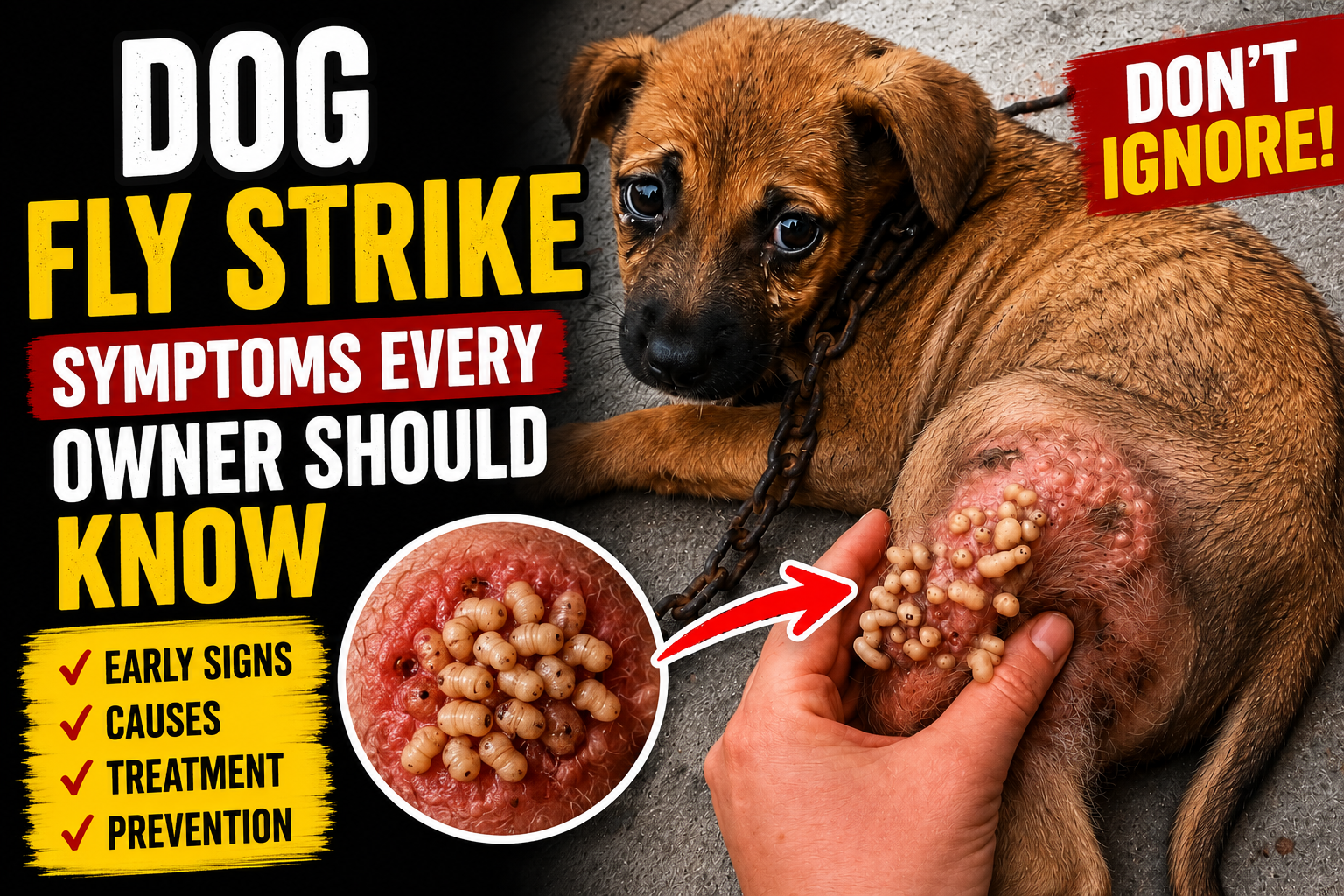
Dog fly strike occurs when certain species of flies lay eggs on a dog’s body. These eggs hatch into larvae (maggots), which begin feeding on damaged skin, infected tissue, or moist areas of the body.
Although maggots naturally help break down dead tissue in nature, they are extremely harmful when they infest living animals.
Without prompt treatment, the larvae continue to burrow deeper into the skin, increasing pain and tissue destruction.
What Causes Fly Strike in Dogs?
Several factors increase a dog’s risk of developing fly strike.
1. Open Wounds
Even a small scratch or bite wound can attract flies. Blood and exposed tissue provide the ideal environment for egg-laying.
2. Skin Infections
Dogs suffering from hot spots, dermatitis, or bacterial skin infections often have moist, inflamed skin that attracts flies.
3. Poor Grooming
Long-haired dogs with dirty or matted coats are at greater risk because moisture and debris become trapped in the fur.
4. Feces or Urine on Fur
Dogs with diarrhea, urinary incontinence, or limited mobility may have soiled fur around the hindquarters. Flies are strongly attracted to these areas.
5. Warm Weather
Fly strike is most common during:
- Summer
- Late spring
- Early autumn
- Hot and humid climates
Warm temperatures allow fly eggs to hatch much faster.
6. Dogs Living Outdoors
Dogs kept outside for long periods are exposed to significantly more flies, especially near garbage bins, compost piles, or livestock.
7. Surgical Incisions
Fresh surgical wounds can attract flies if not properly protected during recovery.
Which Dogs Are Most at Risk?
Some dogs are more vulnerable than others, including:
- Senior dogs
- Puppies
- Long-haired breeds
- Obese dogs
- Disabled dogs
- Dogs recovering from surgery
- Dogs with untreated wounds
- Stray dogs
- Dogs with chronic skin disease
Dog Fly Strike Symptoms Every Owner Should Know
Recognizing the early warning signs is critical because fly strike can worsen rapidly.
1. Excessive Licking or Biting
One of the earliest symptoms is constant licking, chewing, or scratching at one area of the body.
Dogs instinctively try to relieve pain and irritation.
2. Bad Smell
An unpleasant odor often develops before maggots become visible.
This smell is caused by:
- Dead tissue
- Bacterial infection
- Moist wounds
A foul-smelling wound should always be examined by a veterinarian.
3. Swollen Skin
The affected area may become:
- Red
- Warm
- Puffy
- Painful
Inflammation is one of the first signs that tissue is becoming infected.
4. Visible Maggots
As the infestation progresses, small cream-colored maggots may be seen moving within the wound or beneath the fur.
This confirms a medical emergency requiring immediate veterinary care.
5. Hair Loss Around the Wound
Hair may fall out around the infected area due to inflammation and constant licking.
6. Moist or Wet Fur
Persistent moisture caused by blood, pus, or wound discharge attracts additional flies.
Wet, sticky fur is often an early warning sign.
7. Pus or Discharge
Infected wounds commonly produce:
- Yellow pus
- Green discharge
- Bloody fluid
Any abnormal discharge requires veterinary attention.
8. Bleeding
As larvae damage tissue, wounds may begin bleeding.
Repeated bleeding usually indicates worsening tissue destruction.
9. Severe Pain
Dogs with fly strike often react strongly when the area is touched.
Signs of pain include:
- Whining
- Crying
- Growling
- Pulling away
- Hiding
10. Loss of Appetite
As infection worsens, many dogs stop eating and become less interested in normal activities.
11. Fever
Serious infections may lead to:
- High body temperature
- Lethargy
- Weakness
- Dehydration
12. Depression and Lethargy
Dogs may sleep more than usual and avoid exercise due to discomfort.
Where Does Fly Strike Commonly Occur?
Fly strike can develop almost anywhere on the body, but the most common locations include:
- Bite wounds
- Surgical incisions
- Ear infections
- Tail injuries
- Paw wounds
- Skin folds
- Around the anus
- Around the vulva or penis
- Hot spots
- Pressure sores
Dogs with thick coats may hide these wounds, making regular inspections especially important.
How Fast Does Fly Strike Develop?
Fly strike can develop surprisingly quickly.
In warm conditions:
- Flies may lay eggs within minutes of finding a suitable wound.
- Eggs often hatch within 8–24 hours.
- Maggots begin feeding immediately after hatching.
- Severe tissue damage can occur within a few days.
Because of this rapid progression, early detection is essential.
Is Fly Strike Dangerous?
Yes. Fly strike is considered a veterinary emergency.
If untreated, it can lead to:
- Severe skin destruction
- Deep tissue damage
- Secondary bacterial infections
- Blood poisoning (sepsis)
- Shock
- Organ failure
- Death
Prompt veterinary treatment offers the best chance of a full recovery.
How Veterinarians Diagnose Fly Strike
Diagnosis usually includes:
- A complete physical examination
- Careful inspection of the affected area
- Identification of fly larvae
- Assessment of wound depth and tissue damage
- Blood tests if a systemic infection is suspected
In severe cases, imaging may be recommended to determine how deeply the infestation has spread.
Emergency Treatment for Dog Fly Strike
Fly strike is a veterinary emergency. If you notice maggots, a foul-smelling wound, or unusual skin damage on your dog, seek veterinary care immediately. Delaying treatment can allow the larvae to burrow deeper into the tissue, increasing pain, infection, and the risk of life-threatening complications.
What You Should Do Immediately
If you suspect fly strike:
- Move your dog indoors, away from flies.
- Prevent your dog from licking or scratching the affected area.
- Place an Elizabethan collar (cone) if available.
- Cover the wound lightly with clean gauze if it is bleeding.
- Contact your veterinarian or an emergency animal hospital as soon as possible.
What You Should NOT Do
Avoid these common mistakes:
- Do not pour bleach, kerosene, gasoline, or insecticides onto the wound.
- Do not attempt to dig deep into the wound with tweezers or sharp objects.
- Do not delay treatment because the infestation can worsen within hours.
- Do not use human antiseptics or medications unless instructed by a veterinarian.
- Do not tightly bandage the wound without veterinary guidance.
How Veterinarians Treat Fly Strike
Professional veterinary treatment is essential because many maggots remain hidden beneath the skin.
Step 1: Physical Examination
The veterinarian will carefully examine the wound to determine:
- Number of maggots
- Depth of tissue damage
- Signs of bacterial infection
- Overall health of your dog
Step 2: Sedation or Anesthesia
Many dogs experience severe pain during treatment.
Depending on the wound, your veterinarian may use:
- Mild sedation
- Local anesthesia
- General anesthesia
This keeps your dog comfortable while allowing the wound to be cleaned thoroughly.
Step 3: Clipping the Fur
Hair around the affected area is clipped to expose hidden larvae and improve visibility.
Removing matted fur also helps keep the wound clean.
Step 4: Removing the Maggots
Using sterile forceps, the veterinarian carefully removes each maggot.
Because larvae often burrow into deeper tissue, this process requires patience and experience.
Step 5: Cleaning the Wound
After all visible larvae are removed, the wound is flushed repeatedly with sterile saline or veterinary-approved antiseptic solutions to remove dirt, bacteria, and remaining debris.
Step 6: Debridement
Dead, infected, or severely damaged tissue may need to be surgically removed.
This procedure encourages healthy tissue to heal properly.
Step 7: Bandaging
Some wounds are covered with sterile dressings, while others are left open for drainage depending on the severity of the infection.
Medications Used for Fly Strike
Veterinarians often prescribe several medications to support healing.
Antibiotics
Antibiotics help eliminate bacterial infections that commonly accompany fly strike.
Always complete the full course as prescribed.
Pain Relief
Pain management improves your dog’s comfort and recovery.
Veterinarians may prescribe:
- Anti-inflammatory medications
- Veterinary-approved pain relievers
Never give human painkillers unless specifically instructed.
Anti-Parasitic Medication
In severe infestations, medications may be used to kill any remaining larvae and prevent further damage.
Intravenous Fluids
Dogs suffering from dehydration, fever, or shock may require IV fluids to stabilize their condition.
Home Care After Treatment
Proper home care is essential for a successful recovery.
Keep the Wound Clean
Follow your veterinarian’s cleaning instructions carefully.
Only use recommended wound-cleaning solutions.
Give All Medications
Complete every prescribed medication, even if your dog appears fully recovered.
Stopping treatment too early can allow the infection to return.
Prevent Licking
Dogs naturally lick painful wounds, slowing the healing process.
Use:
- Elizabethan collar (cone)
- Recovery suit
- Veterinary-approved protective bandage
Change Bandages Properly
If your veterinarian instructs you to change dressings:
- Wash your hands first.
- Use sterile materials.
- Replace the bandage exactly as directed.
Monitor Healing
Watch for:
- Increased redness
- Swelling
- Foul odor
- New discharge
- Fever
- Loss of appetite
Contact your veterinarian immediately if any of these symptoms worsen.
Recovery Timeline
Recovery depends on:
- Size of the wound
- Number of larvae
- Severity of infection
- Overall health of the dog
- Speed of treatment
Minor cases often improve within 7–14 days, while severe infestations may require several weeks of ongoing wound care and follow-up visits.
15 Tips to Prevent Dog Fly Strike
Prevention is the best defense against myiasis.
- Check your dog’s skin every day.
- Clean cuts and scratches immediately.
- Groom your dog regularly.
- Trim excess hair around the hindquarters.
- Keep your dog’s bedding clean.
- Remove feces from your yard daily.
- Dispose of garbage properly.
- Control flies around your home.
- Use veterinarian-approved flea and tick prevention.
- Keep wounds covered when advised by your veterinarian.
- Bathe your dog regularly.
- Monitor elderly or disabled dogs closely.
- Protect surgical incisions during healing.
- Keep outdoor kennels clean and dry.
- Schedule routine veterinary checkups.
Frequently Asked Questions (FAQs)
What is dog fly strike?
Dog fly strike, also known as myiasis, is a condition where flies lay eggs on a dog’s skin or wounds. The eggs hatch into maggots that feed on damaged tissue.
How quickly does fly strike develop?
Fly eggs can hatch within 8–24 hours, especially during warm, humid weather.
Can fly strike kill a dog?
Yes. Without prompt treatment, fly strike can cause severe infections, tissue destruction, sepsis, and may become fatal.
Can I remove maggots at home?
Home removal is not recommended because larvae often hide deep within the wound. Veterinary treatment is the safest and most effective option.
Which dogs are most at risk?
Senior dogs, puppies, long-haired breeds, outdoor dogs, dogs with wounds, and pets with poor hygiene are at the highest risk.
Conclusion
Dog fly strike is a serious but preventable condition that requires immediate attention. Flies are attracted to open wounds, moist skin, dirty fur, and infected areas, where they lay eggs that quickly hatch into damaging larvae. Recognizing early symptoms—such as excessive licking, foul odor, swelling, discharge, and visible maggots—can make a significant difference in your dog’s recovery.
By maintaining good hygiene, treating wounds promptly, grooming regularly, and seeking veterinary care at the first sign of infection, you can greatly reduce the risk of fly strike and protect your dog from unnecessary pain and complications.