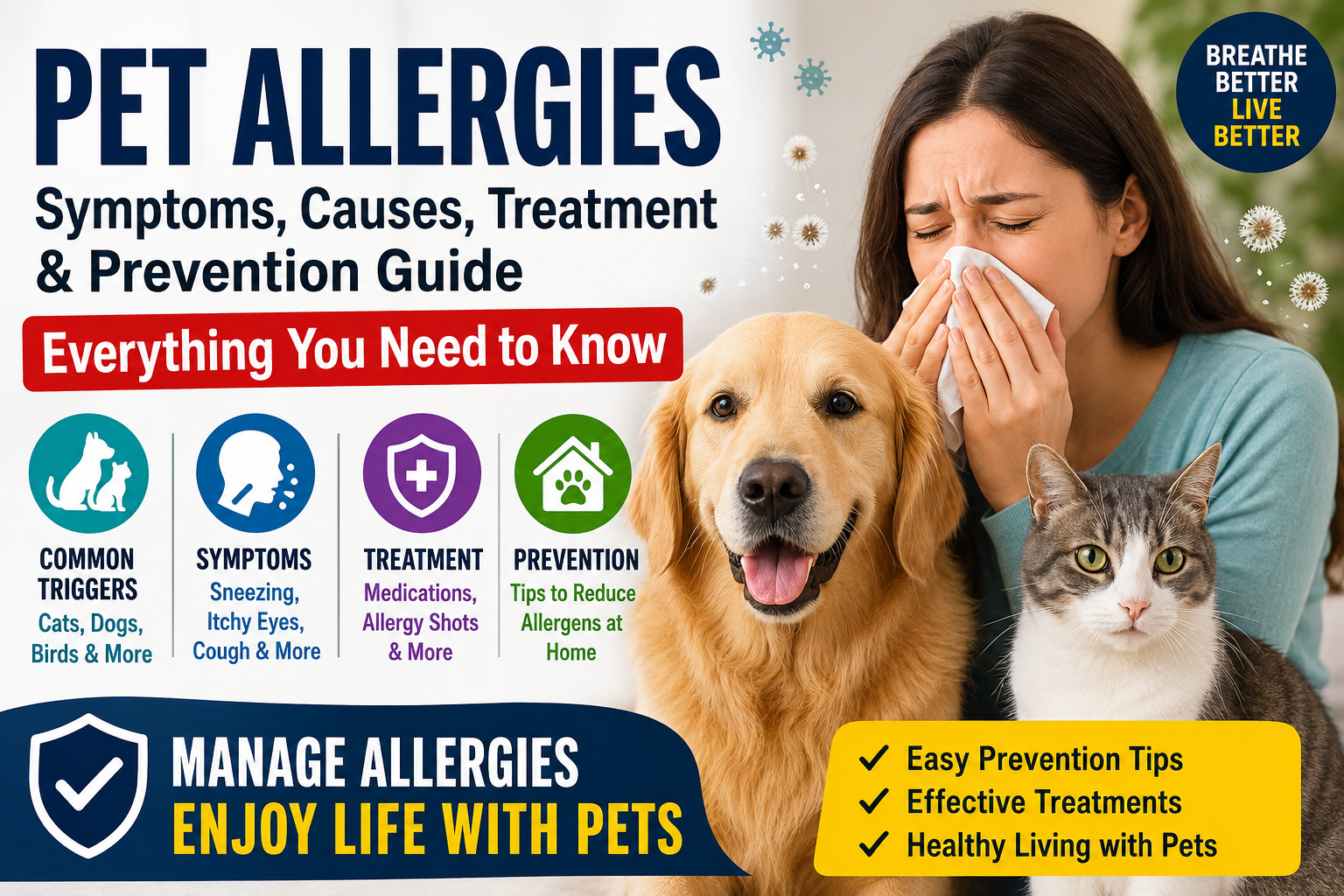
Pet Allergies: Everything You Need to Know
Pets bring joy, companionship, and emotional support to millions of families. However, for many people, spending time around animals can trigger uncomfortable allergic reactions. Pet allergies are common and may affect both children and adults. Fortunately, understanding the causes, recognizing the symptoms, and following proper treatment and prevention strategies can help you manage them effectively.
This complete guide explains what pet allergies are, why they happen, how they are diagnosed, and the best ways to reduce symptoms while continuing to enjoy life with pets.
What Are Pet Allergies?
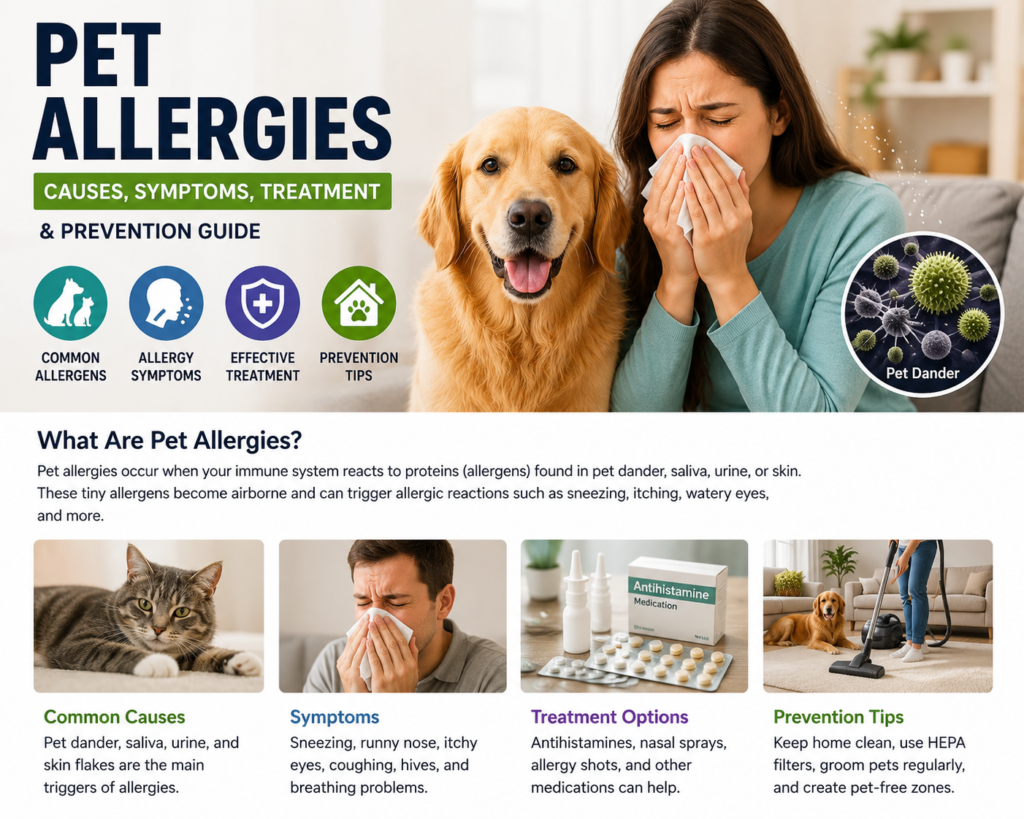
Pet allergies occur when your immune system overreacts to certain proteins (allergens) produced by animals. These proteins are normally harmless, but in sensitive individuals, the body mistakenly identifies them as dangerous and launches an immune response.
Contrary to popular belief, pet allergies are not caused by fur itself. The real triggers are microscopic proteins found in:
- Pet dander (dead skin flakes)
- Saliva
- Urine
- Skin secretions
- Fur that carries allergens
These tiny allergens can remain suspended in the air and settle on clothing, carpets, furniture, and bedding, making exposure possible even after a pet has left the room.
Which Pets Commonly Cause Allergies?
Almost any animal can produce allergens, but furry and feathered pets are the most common triggers.
Animals frequently linked to allergies include:
- Cats
- Dogs
- Rabbits
- Birds
- Horses
- Guinea pigs
- Hamsters
- Gerbils
- Rats
- Mice
Cat allergies are generally more common than dog allergies because cats produce highly potent allergens that spread easily throughout the home.
Common Symptoms of Pet Allergies
Pet allergy symptoms vary from mild irritation to more severe breathing problems.
Typical symptoms include:
- Sneezing
- Runny or stuffy nose
- Itchy nose
- Watery eyes
- Red eyes
- Itchy skin
- Hives
- Persistent coughing
- Scratchy throat
- Wheezing
- Shortness of breath
- Chest tightness
- Worsening asthma symptoms
Symptoms often resemble those of the common cold or seasonal allergies, making proper diagnosis important.
Can Pet Allergies Cause Fatigue?
Yes. Many people experience fatigue because allergy-related nasal congestion and coughing interfere with quality sleep. Ongoing inflammation caused by allergies can also leave you feeling tired, even if other symptoms seem mild.
How Quickly Do Symptoms Appear?
The timing depends on your sensitivity.
- Severe allergies: Symptoms may begin within 15–30 minutes of exposure.
- Mild allergies: Symptoms can develop several hours or even days after contact.
Repeated exposure may cause symptoms to last longer.
What Causes Pet Allergies?
Your immune system creates antibodies called Immunoglobulin E (IgE) after exposure to pet allergens. The next time you encounter the same allergen, these antibodies trigger the release of histamine and other inflammatory chemicals.
Histamine is responsible for common allergy symptoms such as sneezing, itching, watery eyes, and nasal congestion.
Risk Factors
Anyone can develop pet allergies, but your risk increases if:
- One or both parents have allergies.
- You already have asthma.
- You suffer from eczema.
- You have seasonal allergies.
Genetics play an important role in allergy development.
How Pet Allergies Are Diagnosed
A healthcare provider begins by reviewing your medical history and asking about your symptoms.
Questions may include:
- When did symptoms start?
- Which animals trigger your symptoms?
- Do you have a family history of allergies?
- Do allergy medications help?
If a pet allergy is suspected, additional testing may be recommended.
Allergy Tests
Blood Test (IgE Test)
A blood sample is analyzed to measure IgE antibodies that react to specific pet allergens.
Skin Prick Test
Small amounts of common allergens are placed on your skin using tiny pricks. If redness or swelling develops, it suggests an allergy.
These tests help confirm the diagnosis and identify the exact allergen.
Treatment Options
Although pet allergies cannot be permanently cured, several treatments can effectively control symptoms.
Antihistamines
These medications help relieve:
- Sneezing
- Itching
- Runny nose
- Watery eyes
Many begin working within 30 minutes.
Nasal Corticosteroid Sprays
These sprays reduce nasal inflammation and congestion. Maximum improvement may take one to two weeks.
Nasal Antihistamine Sprays
These often work within 15 to 30 minutes and provide rapid symptom relief.
Allergy Immunotherapy (Allergy Shots)
For long-term symptom control, allergy shots gradually train your immune system to become less sensitive to pet allergens. Many people experience lasting improvement after completing treatment.
Always consult your healthcare provider before starting any medication.
How Long Do Symptoms Last?
Symptoms usually improve within several hours after leaving the environment containing pet allergens.
People with severe allergies may continue experiencing symptoms for several days.
Changing clothes, showering, and washing exposed fabrics can help remove allergens more quickly.
Tips to Prevent Pet Allergy Symptoms
If avoiding pets completely isn’t possible, these strategies can significantly reduce exposure.
Wash Hands Frequently
Always wash your hands after:
- Petting animals
- Cleaning litter boxes
- Feeding pets
- Handling pet toys
Create Pet-Free Zones
Keep pets out of:
- Bedrooms
- Beds
- Sofas
- Nurseries
Reducing exposure during sleep often improves symptoms.
Use HEPA Air Filters
High-Efficiency Particulate Air (HEPA) filters capture airborne pet dander and improve indoor air quality.
Bathe and Groom Pets Regularly
Regular bathing helps reduce allergen buildup on your pet’s coat.
Whenever possible, have a non-allergic family member handle grooming outdoors.
Vacuum Frequently
Vacuum carpets, rugs, furniture, and curtains at least twice each week using a vacuum with a HEPA filter.
If possible, replace carpets with hard flooring to minimize allergen accumulation.
Clean Your Home Often
Regularly wash:
- Pet bedding
- Blankets
- Curtains
- Cushion covers
- Soft toys
Dust and pet dander collect quickly on fabrics.
Can You Keep a Pet If You Have Allergies?
Yes, many people successfully live with pets while managing allergies.
The best approach includes:
- Following prescribed treatment
- Keeping your home clean
- Limiting exposure
- Using air filtration
- Maintaining regular pet grooming
Every person’s sensitivity is different, so discuss the best strategy with your healthcare provider.
Are There Hypoallergenic Pets?
There is no truly hypoallergenic dog or cat. Even breeds that shed less still produce allergy-causing proteins in their saliva and skin.
If you have severe allergies, pets without fur or feathers—such as fish, reptiles, or amphibians—are generally less likely to trigger allergic reactions.
When Should You See a Doctor?
Seek medical advice if:
- Symptoms interfere with daily activities.
- Over-the-counter medications no longer help.
- You experience wheezing or shortness of breath.
- Your asthma worsens after contact with pets.
Early diagnosis can improve symptom control and reduce complications.
Frequently Asked Questions
What causes pet allergies?
Pet allergies are caused by proteins found in pet dander, saliva, urine, and skin—not by fur itself.
Are cat allergies worse than dog allergies?
For many people, yes. Cat allergens are smaller, spread more easily, and often trigger stronger allergic reactions.
Can pet allergies disappear over time?
Some people experience improvement with allergy immunotherapy, while others continue to have symptoms throughout life.
Is there a cure for pet allergies?
There is no permanent cure, but medications and allergy shots can significantly reduce symptoms.
Can children develop pet allergies?
Yes. Children can develop allergies at any age, especially if allergies run in the family.
Final Thoughts
Pet allergies can be frustrating, but they don’t always mean you must give up the companionship of your favorite animal. By understanding the causes, recognizing symptoms early, using effective treatments, and maintaining a clean environment, many people can successfully manage their allergies. If symptoms persist or become severe, consult an allergy specialist for a personalized treatment plan.