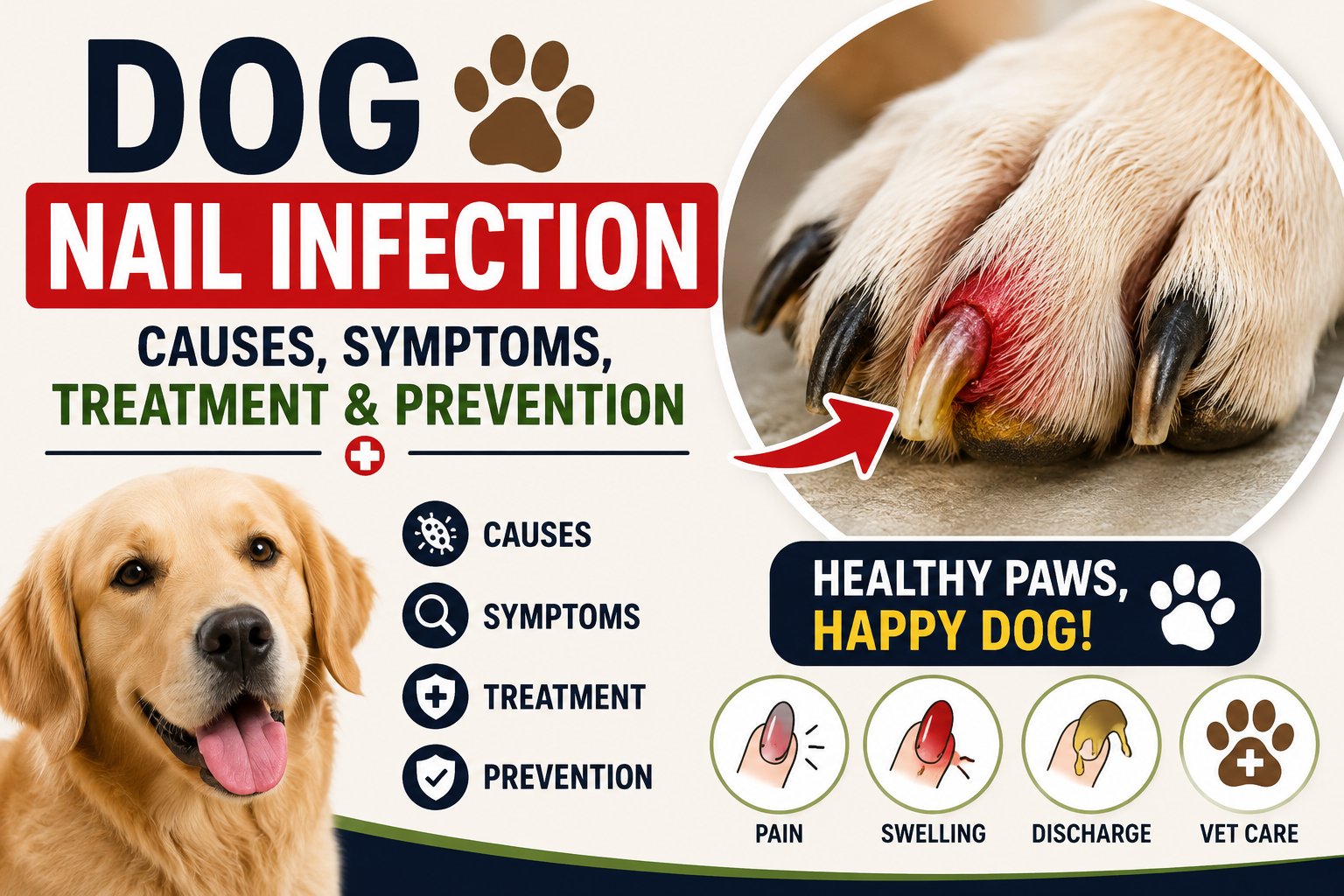
Dog Nail Infection: Causes, Symptoms, Treatment, and Prevention
A dog nail infection can be painful and uncomfortable, especially when the infection affects the nail bed or surrounding skin. Dogs with infected nails may lick or chew their paws, limp, develop swelling, or show redness and discharge around the nail.
A nail infection can develop after a broken nail, an injured quick, excessive licking, allergies, foreign objects, or an underlying skin condition. In some cases, bacteria or yeast can enter damaged tissue and cause an infection.
Because several different problems can look similar, it is important to identify the underlying cause rather than treating every nail problem the same way.
This guide explains the causes, symptoms, treatment options, home care, prevention tips, and warning signs of dog nail infections.
What Is a Dog Nail Infection?
A dog nail infection occurs when microorganisms such as bacteria or yeast affect the nail, nail bed, or surrounding tissues.
The infection may affect:
- The nail itself
- The quick
- Nail bed
- Skin around the nail
- Paw pads or nearby tissues
Sometimes an infection develops in only one nail. Other times, multiple nails can become abnormal, which may suggest an underlying skin, immune, allergic, or systemic problem.
A broken nail is particularly vulnerable because damage can expose sensitive tissue and create an opportunity for microorganisms to enter.
Common Causes of Dog Nail Infection
Understanding the cause is important because treatment depends on what is triggering the problem.
1. Broken or Damaged Nails
A cracked or broken nail is one of the most common reasons a dog may develop inflammation or infection around the nail.
If the nail breaks close to the quick, the exposed tissue can become painful and vulnerable to infection.
Dogs may continue licking the injured area, which can introduce additional bacteria and delay healing.
2. Bacterial Infection
Bacteria can enter damaged tissue around the nail and cause inflammation.
Possible signs include:
- Redness
- Swelling
- Pain
- Warmth
- Pus or discharge
- Bad odor
- Excessive licking
A bacterial infection may require veterinary treatment, particularly when it is deep, painful, or spreading.
3. Yeast Overgrowth
Yeast can contribute to paw and skin problems, particularly in dogs with allergies or chronic skin irritation.
Yeast-related paw problems may cause:
- Brown or reddish staining
- Musty odor
- Licking
- Itching
- Red skin
- Moist skin between the toes
When multiple paws or nails are affected, an underlying allergy or skin condition may need to be investigated.
4. Allergies
Environmental or food-related allergies can cause chronic paw irritation.
A dog that constantly licks or chews its paws can damage the skin around the nails. This repeated trauma may increase the risk of secondary bacterial or yeast infections.
If your dog repeatedly develops nail or paw problems, treating only the infection may not solve the underlying issue.
5. Foreign Objects
Grass seeds, splinters, small pieces of debris, or other foreign material can become lodged around the paw or nail.
This can cause inflammation, pain, and sometimes infection.
If your dog suddenly starts limping or intensely licking one paw, inspect the area carefully, but do not dig deeply into the tissue.
6. Parasites and Skin Problems
Certain parasites and dermatological conditions can cause intense itching around the paws.
Persistent scratching and licking can damage the skin and contribute to secondary infections.
7. Immune or Nail Disorders
When several nails become brittle, distorted, cracked, or repeatedly infected, the problem may not simply be a routine infection.
Some dogs can develop disorders that affect nail growth and the nail structures themselves.
Multiple abnormal nails should therefore be evaluated by a veterinarian.
Symptoms of Dog Nail Infection
The symptoms can vary depending on the cause and severity.
Common signs include:
Redness
The skin around the nail may become red or irritated.
Swelling
The nail bed or surrounding tissue may appear swollen.
Pain
Your dog may pull its paw away when you touch the affected nail.
Limping
Painful nails can cause a noticeable change in walking.
Excessive Licking
Frequent licking is one of the most common signs of paw discomfort.
Chewing
Some dogs chew directly on the affected nail or surrounding skin.
Discharge
Yellow, green, cloudy, or bloody discharge can indicate inflammation or infection.
Bad Odor
An unpleasant smell from the paw can occur with bacterial or yeast-related problems.
Nail Color Changes
The nail may become discolored, brittle, cracked, or abnormal.
Nail Separation
In some conditions, the nail may partially or completely separate from the nail bed.
Dog Nail Infection vs. Broken Nail
A broken nail and an infected nail are not always the same thing.
A broken nail may cause immediate pain and bleeding, particularly if the quick is exposed.
An infection may develop afterward if microorganisms enter the injured tissue.
Signs that suggest infection include increasing:
- Redness
- Swelling
- Warmth
- Discharge
- Odor
- Pain
If symptoms become worse rather than better after a nail injury, contact your veterinarian.
How Is a Dog Nail Infection Diagnosed?
A veterinarian may examine the nail, paw, skin, and surrounding tissue.
Depending on the situation, diagnostic testing may include:
- Cytology
- Bacterial culture
- Fungal or yeast testing
- Skin examination
- Nail examination
- Blood tests
- Imaging in complicated cases
- Biopsy in selected chronic cases
Testing can be particularly important when the infection keeps returning or multiple nails are affected.
The goal is to identify whether the problem is bacterial, fungal/yeast-related, traumatic, allergic, autoimmune, or caused by another condition.
Dog Nail Infection Treatment
Treatment depends on the underlying cause.
1. Cleaning the Affected Area
For minor injuries, gentle cleaning may help keep the area free of debris.
Use only products that are appropriate for dogs and follow veterinary instructions.
Avoid repeatedly scrubbing an already irritated nail because excessive cleaning can further damage the tissue.
2. Topical Medication
A veterinarian may recommend a topical medication if the infection is superficial.
The medication depends on the suspected cause.
Do not use random human creams or leftover medications without veterinary advice.
Some ingredients may irritate dogs or may be unsafe if repeatedly licked.
3. Oral Antibiotics
Bacterial infections that are deep, severe, or spreading may require prescription antibiotics.
Antibiotics should only be used when a veterinarian determines that they are appropriate.
Never give leftover antibiotics from another pet or an old prescription.
4. Antifungal or Antimicrobial Treatment
If yeast or another fungal organism is involved, the veterinarian may recommend an appropriate antifungal treatment.
The treatment can be topical, oral, or a combination depending on the severity and location.
5. Nail Trimming or Removal
A severely damaged nail may need to be trimmed or removed by a veterinarian.
This can allow the injured tissue to heal properly and prevent a loose nail from repeatedly catching on carpets or other surfaces.
Do not attempt to pull off a deeply attached nail at home.
6. Treating the Underlying Cause
If allergies, chronic skin disease, parasites, or another condition is contributing to the nail problem, that issue also needs to be addressed.
Otherwise, the infection may keep coming back.
Can You Treat a Dog Nail Infection at Home?
Mild irritation after a minor nail injury may sometimes be managed temporarily with gentle cleaning and preventing licking, but a true infection should not be assumed to be treatable with home remedies alone.
Home care can support recovery, but it should not replace veterinary treatment when there is significant infection.
Safe supportive care may include:
- Keeping the paw clean and dry
- Preventing excessive licking
- Limiting activities that could damage the nail
- Checking the paw daily
- Following prescribed treatment carefully
If your dog has swelling, pus, significant pain, persistent bleeding, or worsening symptoms, contact a veterinarian.
Can You Use Hydrogen Peroxide on a Dog’s Nail?
Hydrogen peroxide is commonly suggested as a home remedy, but repeated use can irritate healthy tissue and potentially delay healing.
Do not routinely pour hydrogen peroxide onto an injured or infected nail unless a veterinarian specifically instructs you to use it.
A veterinarian can recommend a safer cleaning method based on the injury.
Can You Use Apple Cider Vinegar?
Apple cider vinegar is sometimes promoted online for yeast and paw problems, but it can irritate damaged or inflamed skin.
If the skin around the nail is raw, cracked, or bleeding, acidic home remedies can make discomfort worse.
It is safer to have the cause diagnosed before trying DIY treatments.
How to Prevent Dog Nail Infections
Prevention starts with good paw and nail care.
Keep Nails Trimmed
Overgrown nails are more likely to catch on surfaces and break.
Trim them regularly, but avoid cutting into the quick.
If you are uncomfortable trimming your dog’s nails, ask a groomer or veterinary professional to help.
Inspect the Paws Regularly
Check your dog’s paws after walks, especially if your dog spends time outdoors.
Look for:
- Cracks
- Cuts
- Swelling
- Foreign objects
- Broken nails
- Redness
- Unusual discharge
Early detection can prevent minor problems from becoming more serious.
Keep Paws Clean
Clean obvious dirt from the paws after outdoor activities.
Dry the paws thoroughly, particularly between the toes.
Prevent Excessive Licking
If your dog constantly licks its paws, investigate the reason rather than simply stopping the licking.
Allergies, pain, parasites, and skin infections can all contribute to excessive licking.
Maintain a Healthy Diet
A complete and balanced diet provides the nutrients needed for normal skin, coat, and nail health.
Do not rely on nail supplements unless your veterinarian recommends them.
Dog Nail Infection Recovery Time
Recovery time depends on the cause and severity of the problem.
A minor nail injury may improve relatively quickly, while a deeper infection or chronic nail disorder can take considerably longer.
Nails also grow slowly, so even after an infection is controlled, visible nail abnormalities may remain until healthy nail grows out.
Follow your veterinarian’s treatment instructions and avoid stopping prescribed medication early simply because the nail looks better.
When Is a Dog Nail Infection an Emergency?
Some nail injuries require prompt veterinary attention.
Seek veterinary care quickly if your dog has:
- Severe pain
- Heavy or uncontrolled bleeding
- A deeply broken nail
- Significant swelling
- Pus or large amounts of discharge
- A rapidly spreading infection
- Fever or marked lethargy
- Inability to walk normally
- A nail that has been torn away
- A foreign object deeply embedded in the paw
If your dog seems severely unwell, seek urgent veterinary care.
Why Does My Dog Keep Getting Nail Infections?
Repeated nail infections may indicate that something else is going on.
Possible contributing factors include:
- Chronic allergies
- Yeast overgrowth
- Repeated trauma
- Excessive licking
- Parasites
- Poor nail care
- Immune-related conditions
- Nail disorders
- Other underlying diseases
When the same problem repeatedly affects multiple nails, a veterinary dermatology evaluation may be helpful.
Frequently Asked Questions
What does an infected dog nail look like?
An infected nail may have redness, swelling, discharge, odor, pain, or abnormal nail growth. The surrounding skin may also become irritated.
Can a dog nail infection heal on its own?
A minor nail injury may heal without complications, but a true infection can worsen or spread. If there is swelling, pus, significant pain, or worsening symptoms, veterinary evaluation is recommended.
What can I put on my dog’s infected nail?
Do not apply random human medications or home remedies. A veterinarian can recommend the appropriate cleaning solution or medication after determining the cause.
Should I take my dog to the vet for a broken nail?
A minor broken nail may not require emergency treatment, but a nail broken close to the quick, persistent bleeding, severe pain, or signs of infection should be evaluated by a veterinarian.
How do I stop my dog from licking an infected nail?
Your veterinarian may recommend a protective cone or another appropriate method to prevent licking. Keeping the paw protected and following the prescribed treatment can help prevent additional irritation.
Can allergies cause infected dog nails?
Yes. Allergies can cause chronic paw itching and licking, which can damage the skin and contribute to secondary bacterial or yeast infections.
Final Thoughts
A dog nail infection should never be ignored, especially when your dog has pain, swelling, discharge, bleeding, or difficulty walking. Nail problems can begin with something as simple as a broken nail but may become complicated when infection or an underlying skin condition is involved.
The safest approach is to keep the affected paw clean and dry, prevent excessive licking, avoid irritating home remedies, and seek veterinary care when infection is suspected.
Regular nail trimming, paw inspections, good nutrition, and early treatment of allergies or skin problems can help reduce the risk of recurring nail infections.
If your dog’s nails repeatedly become damaged, discolored, brittle, or infected, ask your veterinarian to investigate the underlying cause rather than treating each episode as an isolated infection.