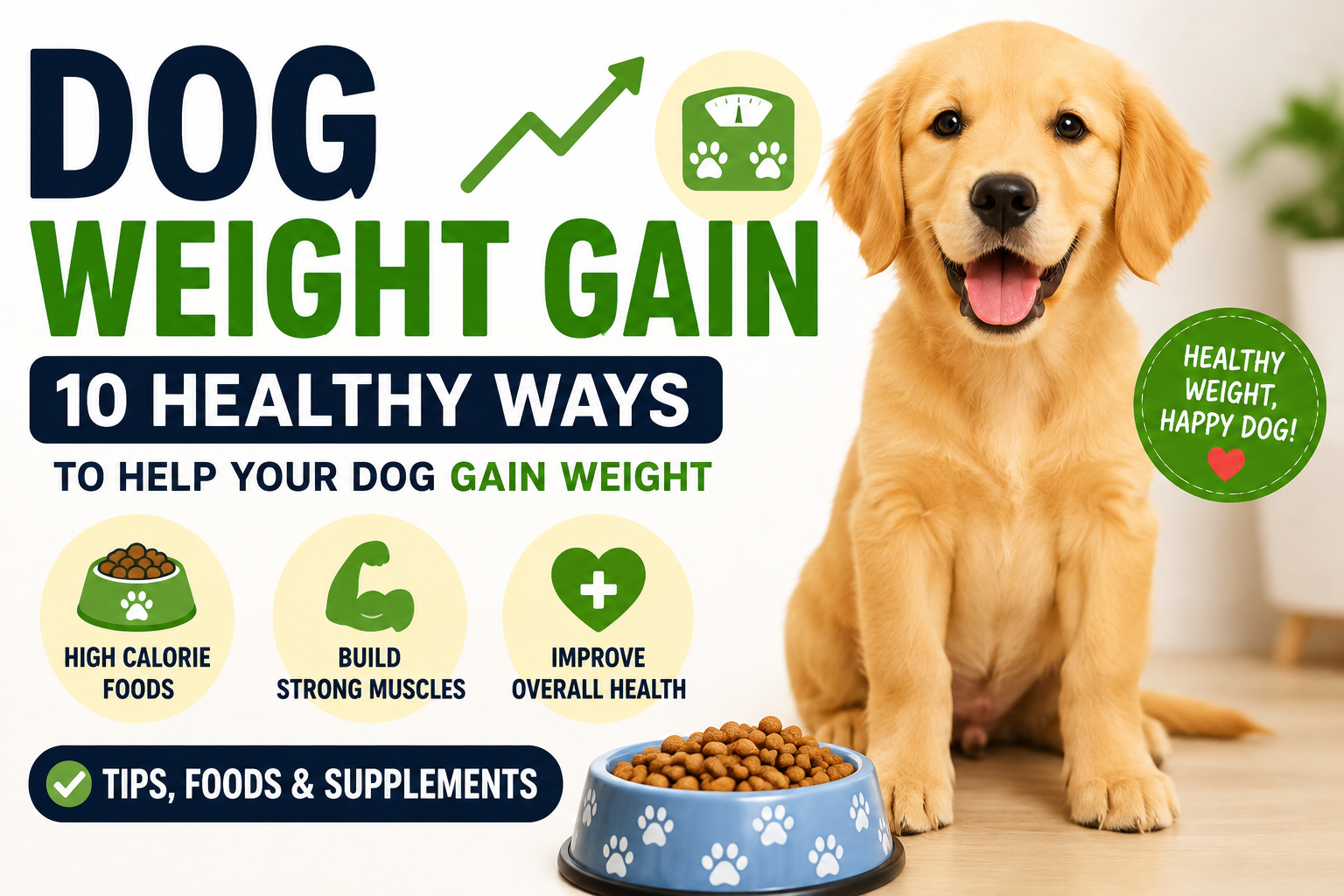
If your dog is underweight, losing weight unexpectedly, or simply struggling to maintain a healthy body condition, it is important to find the reason before trying to increase food or add supplements. Healthy dog weight gain is not just about feeding more calories. Your dog needs enough protein, essential nutrients, and appropriate calories while any underlying health problem is addressed.
Some dogs are naturally lean, while others may become underweight because of poor appetite, dental problems, intestinal parasites, illness, stress, or an unsuitable diet. Puppies, senior dogs, highly active dogs, and dogs recovering from illness may also have special nutritional needs.
This guide explains the common causes of low body weight, the best ways to help a dog gain weight safely, foods that may help, and when veterinary care is necessary.
What Is a Healthy Weight for a Dog?
There is no single ideal weight for every dog. A healthy weight depends on breed, size, age, muscle mass, and individual body structure.
Instead of focusing only on the number on the scale, veterinarians often evaluate a dog’s Body Condition Score (BCS).
A dog that is at a healthy body condition generally has:
- Ribs that can be felt without excessive fat covering
- A visible waist when viewed from above
- An abdominal tuck when viewed from the side
- Good muscle condition
- Normal energy and activity levels
If your dog’s ribs, spine, or hip bones are very prominent, or your dog has lost weight recently, veterinary evaluation is recommended.
10 Healthy Ways to Help Your Dog Gain Weight
1. Find Out Why Your Dog Is Underweight
The first and most important step is identifying the reason for the low weight.
Possible causes include:
- Not eating enough calories
- Poor-quality or inappropriate food
- Dental pain
- Intestinal parasites
- Stress or anxiety
- Vomiting or diarrhea
- Food intolerance
- Chronic gastrointestinal disease
- Diabetes
- Kidney or liver disease
- Thyroid or hormonal disorders
- Cancer
- Difficulty chewing or swallowing
If your dog is losing weight without an obvious reason, do not assume that simply adding more food will solve the problem.
A veterinarian can examine your dog and determine whether diagnostic tests are necessary.
2. Choose a Complete and Balanced Dog Food
The foundation of healthy weight gain is a complete and balanced diet appropriate for your dog’s life stage.
Look for a reputable dog food formulated for your dog’s age, size, and nutritional needs.
For dogs that need additional calories, your veterinarian may recommend a more energy-dense food. These diets can provide more calories in a smaller portion, which can be useful for dogs with poor appetites.
Avoid relying on human junk food or high-fat table scraps for weight gain.
The goal is to increase calories while still providing appropriate nutrition.
3. Increase Meals Gradually
If your dog currently eats very little, suddenly doubling the amount of food can cause digestive problems.
Instead, increase food gradually and monitor your dog’s stool, appetite, energy, and body weight.
Some dogs do better with several smaller meals instead of one or two large meals.
For example, a dog that normally eats twice daily may benefit from a veterinarian-approved feeding schedule divided into three or four smaller meals.
This approach can be particularly helpful for dogs with small appetites.
4. Add Healthy Calorie Sources
Depending on your dog’s health and dietary requirements, your veterinarian may recommend calorie-dense additions to the regular diet.
Possible options can include:
- Veterinary-recommended wet food
- A complete and balanced high-calorie diet
- Plain cooked meat in appropriate quantities
- Cooked egg
- Certain veterinary nutritional supplements
However, additions should not replace the dog’s complete diet.
Too many extras can unbalance the diet and may also cause digestive upset.
If your dog has pancreatitis, diabetes, kidney disease, liver disease, or another medical condition, do not add high-fat foods without veterinary advice.
5. Try Wet Food if Your Dog Has a Poor Appetite
Some dogs find wet food more appealing than dry kibble because of its smell and texture.
Adding an appropriate wet food to a dog’s diet may encourage eating, particularly when appetite is reduced.
You can also ask your veterinarian whether gently warming the food is appropriate. Warming food slightly may make its aroma stronger and more appealing.
Never serve food that is dangerously hot.
6. Make Mealtime More Appealing
Some dogs are picky eaters, while others lose interest in food because of stress or changes in their environment.
Create a calm feeding area away from loud noises and other pets if necessary.
You can also maintain a consistent feeding schedule.
Avoid constantly changing foods because this can cause digestive upset and make it harder to determine which food your dog tolerates well.
If your dog suddenly refuses food, however, treat this as a potential health concern rather than simply calling the dog a picky eater.
7. Check Your Dog’s Teeth and Mouth
Dental problems are an overlooked cause of poor eating.
A dog may want to eat but experience pain when chewing.
Signs of possible dental disease include:
- Bad breath
- Drooling
- Difficulty chewing
- Dropping food
- Pawing at the mouth
- Swollen gums
- Loose teeth
- Reluctance to eat hard food
If your dog shows these signs, schedule a veterinary examination.
Treating the underlying dental problem may improve appetite and make healthy weight maintenance easier.
8. Treat Intestinal Parasites
Parasites can sometimes contribute to poor body condition, particularly in puppies and dogs with ongoing gastrointestinal symptoms.
Possible signs include:
- Diarrhea
- Vomiting
- Poor growth
- Dull coat
- Pot-bellied appearance in some puppies
- Weight loss
- Changes in appetite
Do not give random deworming products without knowing what parasite you are treating.
A veterinarian can recommend appropriate parasite testing and treatment based on your dog’s age, symptoms, lifestyle, and risk factors.
9. Monitor Weight and Body Condition
You cannot know whether your weight-gain plan is working unless you monitor progress.
Weigh your dog regularly using a consistent method.
For larger dogs, a veterinary clinic may have an appropriate scale. Smaller dogs may sometimes be weighed using a household scale, although the method should be consistent.
Keep a simple record of:
- Body weight
- Food amount
- Appetite
- Stool quality
- Activity
- Vomiting or diarrhea
- Changes in body condition
Gradual improvement is generally preferable to rapid weight gain.
10. Consider a Veterinary Nutrition Supplement
Some dogs may benefit from nutritional supplements, but supplements should be selected based on the dog’s individual needs.
Veterinarians may recommend specific nutritional products for dogs that need additional calories or nutritional support.
Avoid human weight-gain supplements or bodybuilding products. They may contain ingredients that are unsuitable for dogs.
A supplement should complement a balanced diet rather than replace it.
Best Foods for Healthy Dog Weight Gain
If your veterinarian confirms that your dog needs more calories, certain foods may be incorporated into a feeding plan.
Complete and Balanced High-Calorie Dog Food
A veterinary-approved energy-dense food is often a better choice than simply adding large amounts of treats.
Wet Dog Food
Wet food can improve palatability and may be easier for some dogs to eat.
Plain Cooked Chicken
Plain, fully cooked chicken can sometimes be used as a food topper in small amounts, provided it is appropriate for your dog.
Do not add onions, garlic, heavy seasoning, sauces, or cooked bones.
Cooked Eggs
Plain cooked egg can provide protein and calories. Feed appropriate portions rather than making eggs a major part of the diet.
Veterinary Recovery Diets
Dogs recovering from illness or surgery may sometimes need specially formulated recovery foods that provide concentrated nutrition.
These should be used according to veterinary recommendations.
Foods to Avoid for Dog Weight Gain
Trying to make a dog gain weight does not mean feeding unlimited human food.
Avoid foods such as:
- Chocolate
- Grapes and raisins
- Onions
- Garlic
- Xylitol-containing products
- Alcohol
- Macadamia nuts
- Cooked bones
- Very fatty foods
- Spicy foods
- Highly processed junk food
High-fat foods can also cause gastrointestinal upset and may increase the risk of pancreatitis in susceptible dogs.
Can Peanut Butter Help a Dog Gain Weight?
Plain peanut butter can be calorie-dense, but it should not be considered a primary weight-gain food.
If your veterinarian says it is appropriate, use only a small amount and carefully check the ingredient label.
Never give peanut butter containing xylitol, an artificial sweetener that is highly toxic to dogs.
Because peanut butter is high in calories and fat, too much can contribute to digestive problems and excessive weight gain.
Dog Weight Gain for Puppies
Puppies have different nutritional requirements from adult dogs.
A puppy that is not gaining weight appropriately should be examined by a veterinarian rather than simply being given extra treats.
Potential causes of poor puppy growth include:
- Inadequate nutrition
- Intestinal parasites
- Infection
- Congenital conditions
- Digestive problems
- Competition for food
Puppies should receive food formulated specifically for their growth stage.
Large-breed puppies have particularly important nutritional requirements, so avoid making major dietary changes without professional guidance.
Dog Weight Gain for Senior Dogs
Older dogs may lose weight for many reasons.
Dental disease, reduced appetite, digestive problems, kidney disease, cancer, and other age-related conditions can affect body weight.
If a senior dog starts losing weight unexpectedly, schedule a veterinary examination.
A senior dog may need a diet adjusted for their health condition rather than simply a higher-calorie diet.
Dog Weight Gain After Illness
Dogs recovering from illness may temporarily have reduced appetite.
During recovery, nutritional needs can vary depending on the condition.
Your veterinarian may recommend:
- Small frequent meals
- Highly digestible food
- Veterinary recovery diets
- Additional hydration
- Specific nutritional supplements
Do not force-feed your dog unless a veterinarian has specifically instructed you how to do so.
How Long Does It Take for a Dog to Gain Weight?
There is no universal timeline for healthy weight gain.
The speed of weight gain depends on:
- Current body condition
- Age
- Breed
- Activity level
- Underlying health
- Calorie intake
- Digestive function
- Muscle condition
Healthy weight gain should generally be gradual and monitored.
Rapidly increasing calories can cause digestive problems and excessive fat accumulation.
The goal is not simply to make the number on the scale increase. The goal is to achieve an appropriate body condition while maintaining good health.
Why Is My Dog Losing Weight Even Though He Eats?
Weight loss despite a normal or increased appetite can be a warning sign.
Potential causes can include:
- Diabetes
- Intestinal parasites
- Gastrointestinal disorders
- Malabsorption
- Certain endocrine diseases
- Chronic infection
- Cancer
If your dog is eating normally but continues to lose weight, veterinary evaluation is especially important.
When Should You See a Veterinarian?
Contact your veterinarian if your dog:
- Is losing weight unexpectedly
- Refuses food
- Has repeated vomiting
- Has persistent diarrhea
- Drinks or urinates much more than usual
- Has difficulty chewing
- Has severe dental problems
- Appears weak or lethargic
- Has a swollen abdomen
- Has blood in the stool or vomit
- Has rapidly changing body condition
Unexpected weight loss can sometimes be the first sign of an underlying medical condition.
Frequently Asked Questions
What is the fastest way to help a dog gain weight?
The safest approach is to identify the reason for the low weight and then provide an appropriate calorie-controlled, complete and balanced diet. A veterinarian can determine whether your dog needs an energy-dense food or additional nutritional support.
What can I add to my dog’s food to help him gain weight?
Depending on your dog’s health, your veterinarian may approve appropriate wet food, plain cooked egg, lean cooked meat, or a veterinary nutritional product. Avoid adding large amounts of fatty foods.
Is chicken good for dogs that need to gain weight?
Plain, fully cooked chicken can provide protein, but chicken alone is not a complete and balanced diet. It should generally be used only as an appropriate topper or treat in moderation.
Can eggs help a dog gain weight?
Plain cooked eggs can provide protein and calories, but portions should be appropriate. Eggs should not replace a complete and balanced dog food.
Should I give my dog a weight-gain supplement?
Only use a weight-gain supplement after discussing it with your veterinarian. Human supplements and bodybuilding products may contain ingredients that are unsafe for dogs.
Why is my dog skinny but eating normally?
A dog that remains thin despite eating normally may have a medical problem, parasite infection, digestive disorder, or another condition affecting calorie absorption or metabolism. Veterinary evaluation is recommended.
Final Thoughts
Helping an underweight dog gain weight is about more than simply giving extra food. The first step is understanding why your dog is underweight. Once medical problems have been ruled out, a veterinarian can help you choose an appropriate calorie level and complete, balanced diet.
Healthy weight gain should focus on maintaining muscle, providing adequate nutrients, improving appetite when necessary, and monitoring body condition over time.
Avoid relying on excessive treats, fatty table scraps, or human weight-gain supplements. Instead, use nutritious dog food and veterinarian-approved additions as part of a structured plan.
With the right diet, regular monitoring, and veterinary guidance, most dogs can gradually move toward a healthier body condition.