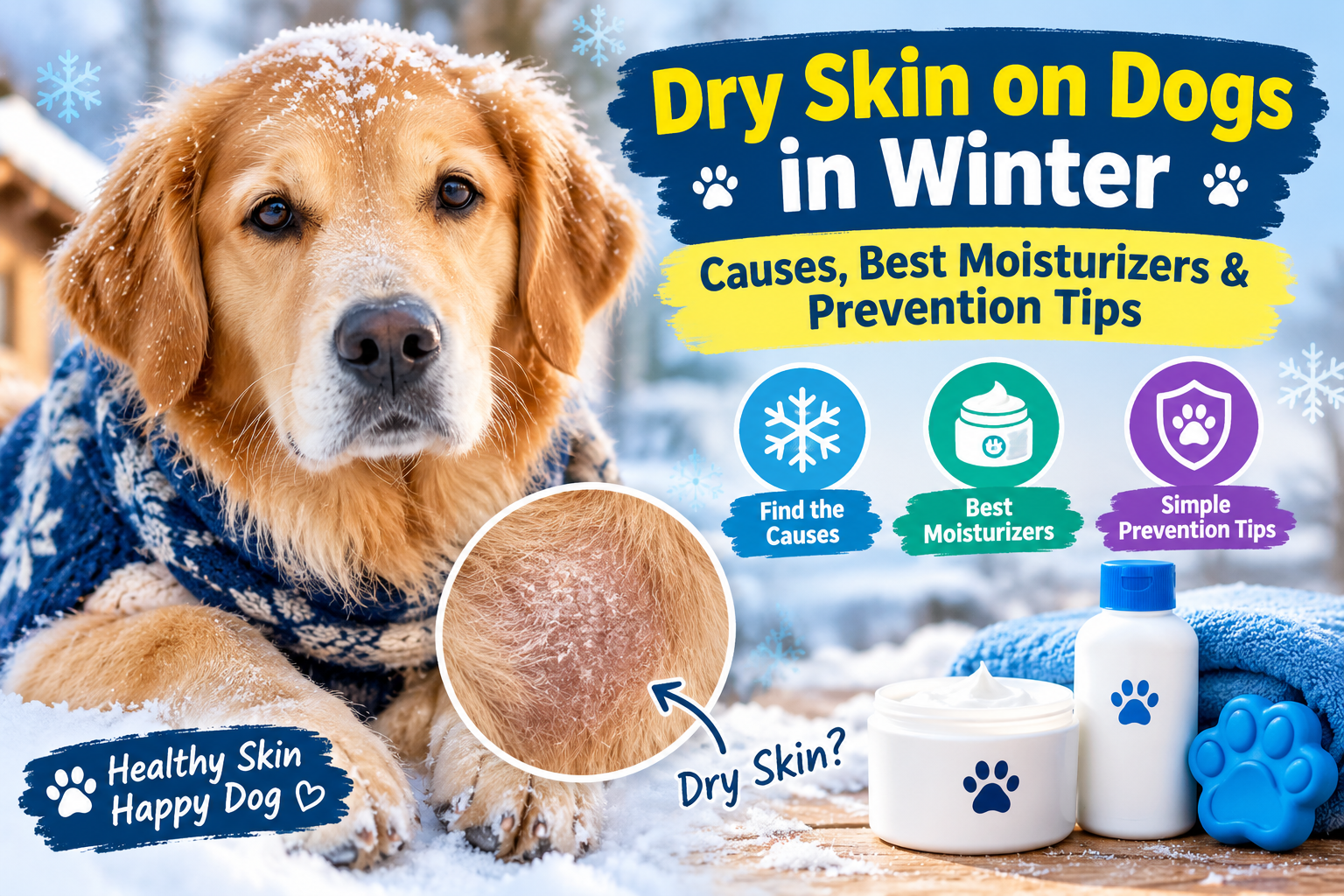
Dry Skin on Dogs in Winter: Causes, Best Moisturizers & Prevention Tips
Introduction
Winter can be challenging for dogs, especially those with sensitive skin. Cold outdoor temperatures, dry indoor heating, frequent bathing, and low humidity can cause a dog’s skin to become dry, flaky, and itchy. Some dogs may develop dandruff, redness, or rough patches that make them uncomfortable.
Dry skin could be the cause of your dog’s increased scratching during the winter. It is crucial to determine the underlying reason of itching because it can also be caused by allergies, fleas, infections, or other skin disorders.
The good news is that many mild cases of dry skin on dogs in winter can improve with gentle grooming, suitable moisturizers, balanced nutrition, and a comfortable indoor environment.
In this guide, you will learn about the common causes of winter dryness, the best moisturizers for dogs, safe home care methods, and practical ways to protect your dog’s skin throughout the season.
What Causes Dry Skin on Dogs in Winter?
Several factors can contribute to dry skin in dogs during winter. Understanding these causes can help you choose the right treatment and prevent the problem from returning.
1. Cold Weather and Low Humidity
Cold air often contains less moisture than warm air. When dogs spend time outside in cold, dry conditions, their skin can lose moisture and become rough or flaky.
Dogs with short coats, sensitive skin, or existing skin problems may be particularly uncomfortable during winter. Areas such as the belly, paws, ears, and elbows can be more vulnerable to irritation.
2. Indoor Heating
Heaters, radiators, and other heating systems can make indoor air dry. Although a warm home keeps your dog comfortable, low humidity may contribute to dry skin.
If your dog spends most of the day near a heater, the surrounding air may worsen existing dryness. Keep your pet at a comfortable distance from direct heat and consider using a clean humidifier when indoor air is very dry.
3. Frequent Bathing
Bathing your dog too often can remove some of the natural oils that protect the skin. Harsh shampoos may make this problem worse.
During winter, avoid unnecessary baths and use a gentle, dog-specific shampoo. The ideal bathing schedule depends on your dog’s coat, activity level, skin condition, and veterinarian’s advice.
4. Poor Nutrition
A balanced diet supports healthy skin and a shiny coat. Dogs that do not receive adequate essential nutrients may develop coat changes or skin problems.
Protein, essential fatty acids, vitamins, and minerals all contribute to normal skin function. Choose a complete and balanced dog food appropriate for your dog’s age and health needs.
Do not add supplements without veterinary guidance, because excessive amounts of certain nutrients can be harmful.
5. Allergies and Skin Conditions
Not every case of dry skin is caused by winter weather. Environmental allergies, food allergies, fleas, mites, and skin infections can cause itching, redness, and flaking.
If your dog frequently scratches, licks its paws, develops sores, or loses hair, a veterinarian can help identify the cause. Treating the underlying problem is more effective than simply applying moisturizer.
Common Signs of Dry Skin in Dogs
Recognizing the early signs of dry skin can help you provide appropriate care before the irritation becomes worse.
Look for these symptoms:
- White flakes or dandruff on the coat
- Dry, rough, or scaly skin
- Frequent scratching or rubbing
- Redness or mild irritation
- A dull-looking coat
- Excessive licking of the paws
- Small areas of hair loss
- Cracked or rough skin around the elbows
Mild dryness may cause only a few flakes. More severe itching, open sores, unpleasant odors, or spreading redness may indicate another skin problem.
Avoid assuming that every itchy dog needs a moisturizer. Persistent symptoms deserve a veterinary assessment.
Best Moisturizers for Dogs With Dry Skin
Choosing the right moisturizer can help support your dog’s skin barrier and reduce mild dryness. Always select products formulated specifically for dogs or recommended by your veterinarian.
1. Dog-Specific Moisturizing Sprays
Dog moisturizing sprays are convenient for everyday coat care. Depending on the formulation, they may contain ingredients such as glycerin, colloidal oatmeal, or other skin-conditioning agents.
These products can help improve coat softness and provide moisture without requiring a full bath.
Best for: Mild dryness, flaky coats, and routine winter grooming.
Follow the label directions and prevent your dog from licking the product before it has dried, when instructed.
2. Veterinary Moisturizing Creams
Veterinary-recommended creams or balms may be useful for localized dry areas. Some products are designed to support the skin barrier and reduce moisture loss.
Use only products appropriate for the affected area. A cream suitable for a dog’s elbows may not be appropriate for its face or paws.
Best for: Small, dry patches that are not infected or broken.
Consult your veterinarian before applying creams to red, painful, or damaged skin.
3. Dog-Safe Oatmeal Products
Colloidal oatmeal is commonly used in soothing skincare products. Dog-specific oatmeal shampoos, conditioners, and sprays may help calm mild dryness and irritation.
Choose a product labeled for canine use and follow the instructions carefully. Avoid applying kitchen oatmeal mixtures to damaged skin without veterinary advice.
Best for: Dogs with mildly irritated or sensitive skin.
Oatmeal products may provide relief, but they will not cure every cause of itching.
4. Moisturizing Dog Shampoos
A gentle moisturizing shampoo can help clean the coat without unnecessarily stripping its natural oils.
Seek out dog-specific solutions made for dry or sensitive skin. For dogs who respond negatively to scented grooming products, fragrance-free options might be helpful.
Avoid using human shampoo, including baby shampoo, unless your veterinarian specifically recommends a particular product.
Best for: Dogs that need a bath and have mild seasonal dryness.
5. Paw Balms for Winter Protection
Cold weather, rough surfaces, and road salt can irritate a dog’s paw pads. A dog-specific paw balm may help condition dry pads and reduce moisture loss.
Clean and dry the paws after outdoor walks. Inspect between the toes for redness, debris, or cracks.
Paw balm is not a substitute for veterinary treatment if the pads are bleeding, swollen, deeply cracked, or painful.
Safe Home Remedies for Dry Skin on Dogs in Winter
Simple changes at home may help relieve mild winter dryness. However, home care should not replace professional treatment when symptoms are severe or persistent.
1. Use a Humidifier
A humidifier can add moisture to dry indoor air. This may help create a more comfortable environment for dogs and people during the heating season.
Clean the device according to the manufacturer’s instructions to prevent mold and bacterial growth. Keep electrical cords and the appliance out of your dog’s reach.
2. Brush Your Dog Gently
Regular brushing helps remove loose hair and flakes while distributing natural oils through the coat.
Use a brush appropriate for your dog’s coat type. Brush gently, especially around dry or irritated areas. Stop if your dog shows pain or if brushing causes redness.
Avoid scratching or scraping flaky skin, as this can damage the skin barrier.
3. Provide Fresh Drinking Water
Proper hydration supports overall health. Make sure your dog has access to fresh, clean water throughout the day.
You can encourage drinking by refreshing the bowl regularly and placing it somewhere easily accessible. Drinking more water alone will not cure skin disease, but good hydration is part of general wellness.
4. Avoid Excessive Bathing
Bathing too frequently can worsen dryness. When a bath is necessary, use lukewarm water and a gentle dog-specific shampoo.
Rinse thoroughly to remove shampoo residue, then dry your dog with a soft towel. Avoid very hot water and excessive heat from hair dryers.
If your veterinarian has prescribed a medicated shampoo, follow the recommended bathing schedule rather than changing it based on the weather.
5. Maintain a Balanced Diet
Feed a complete and balanced diet suited to your dog’s life stage. Healthy fats, including essential fatty acids, contribute to normal skin and coat function.
Some dogs may benefit from an omega-3 supplement, but the correct dose depends on the product, the dog’s size, and its health status.
Ask your veterinarian before introducing supplements, particularly if your dog takes medication or has an existing medical condition.
Important: Avoid applying essential oils, human lotions, or homemade mixtures containing potentially irritating ingredients to your dog’s skin. Products containing tea tree oil can be toxic to dogs, especially when concentrated or ingested.
How to Prevent Dry Skin on Dogs During Winter
Prevention is often easier than treating repeated irritation. A consistent winter skincare routine can help protect your dog’s skin.
Keep Your Dog Warm and Comfortable
Provide a clean, dry sleeping area away from drafts. Dogs with short coats, small bodies, or limited tolerance for cold may benefit from a properly fitted dog sweater outdoors.
Do not leave your dog in damp clothing or allow it to become overheated indoors.
Protect Paws After Walks
Winter sidewalks may contain salt, grit, or other materials that irritate paw pads.
After walks, gently rinse or wipe your dog’s paws with a damp cloth and dry them thoroughly, including between the toes. Consider dog boots if your pet tolerates them.
Choose Grooming Products Carefully
Use gentle products formulated for dogs. Avoid frequent changes between shampoos, particularly if your dog has sensitive skin.
If a new product causes redness, increased scratching, or irritation, stop using it and seek veterinary advice if symptoms persist.
Keep Flea Prevention Up to Date
Flea bites can cause intense itching and skin irritation, even when fleas are difficult to spot. Maintain a veterinarian-recommended parasite prevention plan throughout the year when appropriate for your location and your dog’s needs.
Check Your Dog’s Skin Regularly
Once a week, examine the coat, belly, paws, ears, and elbows. Look for flakes, redness, unusual odors, lumps, sores, or hair loss.
Early attention can help you notice whether a problem is improving with routine care or needs professional assessment.
When Should You Visit a Veterinarian?
Mild dryness may improve with gentle grooming and appropriate moisturizers. However, some symptoms require veterinary attention.
Contact a veterinarian if your dog has:
- Persistent or severe itching
- Red, inflamed, or painful skin
- Open sores, bleeding, or crusting
- Hair loss or spreading bald patches
- An unpleasant skin odor
- Greasy skin or discharge
- Repeated ear infections or paw licking
- Symptoms that do not improve with gentle care
Seek prompt veterinary care if your dog develops rapidly worsening skin changes, significant swelling, severe pain, or signs of illness.
A veterinarian may check for parasites, allergies, bacterial or yeast infections, and other underlying conditions. Treatment may involve prescription medication, medicated shampoos, parasite control, or dietary changes, depending on the diagnosis.
Do not use human steroid creams, antibiotic ointments, or other medicated products without professional guidance.
Frequently Asked Questions
1. Why does my dog have dry skin in winter?
Cold weather, low humidity, indoor heating, frequent bathing, and unsuitable grooming products can contribute to dryness. Allergies, parasites, and infections may cause similar symptoms, so persistent itching should be evaluated.
2. What is the best moisturizer for dogs with dry skin?
The best option depends on the dog’s skin condition. Dog-specific moisturizing sprays, veterinary skin-barrier products, oatmeal-based skincare products, and paw balms may help with mild dryness. Ask a veterinarian which product is suitable for your pet.
3. Can I put coconut oil on my dog’s dry skin?
Coconut oil is not the best first-line treatment for unexplained dry skin. It may irritate some dogs, make the coat greasy, and cause digestive upset if licked in large amounts. A dog-specific moisturizer is generally a more practical choice.
4. How often should I bathe my dog in winter?
There is no single schedule for every dog. Bathing needs depend on coat type, activity, skin health, and the products used. Avoid unnecessary baths and follow your veterinarian’s instructions if your dog has a skin condition.
5. Can dry skin make my dog itchy?
Yes. Dry skin can cause itching and flaking. However, allergies, fleas, mites, and infections can also cause itching, so frequent scratching should not automatically be blamed on dry weather.
6. Does fish oil help dogs with dry skin?
Omega-3 fatty acids may support skin health in some dogs. The benefit depends on the underlying problem and the supplement used. Ask your veterinarian about an appropriate product and dose before giving it to your dog.
7. When should I worry about my dog’s dry skin?
Seek veterinary advice if the dryness is persistent, severe, spreading, or accompanied by hair loss, sores, odor, redness, or significant discomfort.
Conclusion
Dry skin on dogs in winter is a common concern that may be linked to cold weather, low indoor humidity, frequent bathing, or unsuitable grooming products. Gentle brushing, a balanced diet, appropriate bathing habits, and dog-safe moisturizers can help manage mild seasonal dryness.
The most important step is choosing products designed for dogs and monitoring your pet’s skin for changes. Avoid human skincare products and unverified home remedies, particularly when the skin is damaged or inflamed.
If your dog continues scratching, develops sores, or experiences hair loss, consult a veterinarian to identify the underlying cause and choose the right treatment.
With consistent care and early attention, you can help your dog stay comfortable and maintain healthier skin throughout the winter months.