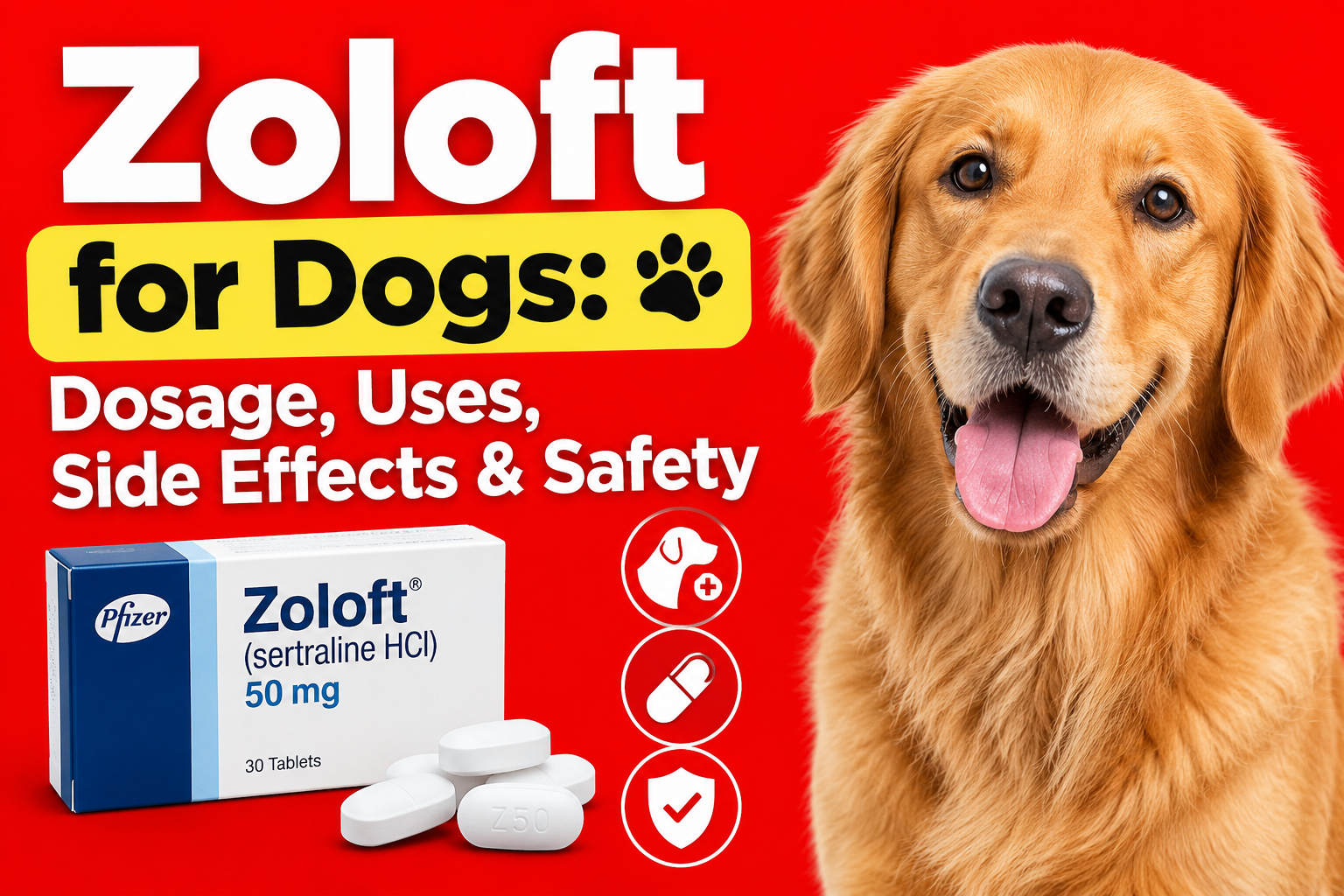
Zoloft for Dogs: Uses, Dosage, Side Effects, and Safety Guide
Zoloft for dogs is a medication that veterinarians may prescribe to help manage certain behavioral problems, including anxiety, fear, compulsive behaviors, and some forms of aggression. Its active ingredient, sertraline, belongs to a group of medications known as selective serotonin reuptake inhibitors (SSRIs). These medications affect serotonin activity in the brain and may help some dogs respond better to behavioral training.
Living with a dog that experiences severe anxiety or persistent behavioral challenges can be difficult for both the pet and its owner. Some dogs become extremely frightened during thunderstorms, while others struggle with separation anxiety, repetitive behaviors, or reactions to unfamiliar people and animals. In these situations, a veterinarian may recommend a combination of behavior modification, environmental changes, and prescription medication.
Although Zoloft is commonly known as a human antidepressant, veterinarians sometimes prescribe it off-label for dogs. However, it is not suitable for every pet, and its use requires professional supervision. Understanding its potential benefits, dosage considerations, side effects, and medication interactions can help dog owners make informed decisions about their pets’ health.
Key Takeaways About Zoloft for Dogs
- Active ingredient: Sertraline, a selective serotonin reuptake inhibitor (SSRI).
- Primary uses: May help manage certain anxiety-related, compulsive, and other behavioral conditions in dogs.
- Available forms: Tablets and, when appropriately prescribed, compounded oral liquids.
- Dosage: Depends on the dog’s weight, health, diagnosis, other medications, and response to treatment.
- Common side effects: Vomiting, diarrhea, reduced appetite, lethargy, tremors, and changes in sleep or behavior.
- Treatment timeline: Improvement may take several weeks, and the response varies between dogs.
- Important safety point: Zoloft should only be given under veterinary direction and should not be stopped suddenly without professional guidance.
What Is Zoloft for Dogs Used For?
Zoloft is a brand name for sertraline, an antidepressant medication used in human medicine. In veterinary practice, sertraline may be prescribed off-label for selected behavioral conditions in dogs.
Off-label prescribing means that a veterinarian uses a medication in a way that is not specifically approved on its product label. This practice is common in veterinary medicine, but it still requires careful assessment of the animal’s condition, medical history, and potential risks.
Depending on the individual dog’s needs, a veterinarian may consider sertraline for the following behavioral concerns.
Youtube Video
1. Anxiety and Fear
Some dogs experience persistent anxiety in response to everyday situations. They may hide, bark excessively, pace around the house, tremble, or struggle to settle down. Sertraline may help reduce anxiety in selected cases, making it easier for the dog to learn coping skills.
2. Noise Phobias
Fireworks, thunderstorms, construction sounds, and other loud noises can trigger intense fear in sensitive dogs. A veterinarian may consider medication as part of a broader plan that includes creating a safe environment and using gradual, appropriate behavior modification.
Sertraline is not an immediate rescue medication, so it should not be expected to provide instant relief during a sudden noise-related episode.
3. Compulsive Behaviors
Some dogs repeatedly chase their tails, lick certain areas, pace, or perform other repetitive actions. When these behaviors become excessive, they may interfere with daily life.
Because repetitive behaviors can also result from pain, skin disease, neurological conditions, or other medical problems, a veterinarian should evaluate the dog before recommending behavioral medication.
4. Certain Forms of Aggression
Aggression can have many causes, including fear, pain, territorial responses, and resource guarding. In selected cases, medication may help manage underlying anxiety that contributes to behavioral difficulties.
However, Zoloft does not automatically make an aggressive dog safe. A veterinarian or qualified veterinary behavior professional should develop an individualized treatment plan that prioritizes safety and appropriate behavior modification.
5. Urine Marking and Other Problem Behaviors
Some dogs repeatedly mark their surroundings with urine or engage in unwanted mounting behaviors. These actions may have medical, hormonal, environmental, or behavioral causes.
Medication may be considered in selected cases, but it is important to identify the underlying cause rather than treating every unwanted behavior as an anxiety disorder.
How Does Zoloft Work in Dogs?
Sertraline belongs to the selective serotonin reuptake inhibitor class of medications. Serotonin is a chemical messenger involved in several brain functions, including mood regulation and aspects of emotional processing.
After serotonin transmits a signal between nerve cells, it is normally taken back up by the cells that released it. Sertraline reduces this reuptake, increasing serotonin availability in the spaces between nerve cells.
Changes in serotonin signaling may help some dogs experience less anxiety or show fewer compulsive behaviors. The medication does not work in exactly the same way for every dog, and researchers are still studying the mechanisms behind many behavioral medications in animals.
Zoloft generally does not produce its full behavioral benefits immediately. Some dogs may begin showing changes within a few weeks, while others need longer or may not respond sufficiently. Regular veterinary follow-up helps determine whether the treatment is working as intended.
Zoloft Dosage for Dogs: What Owners Should Know
The appropriate Zoloft dosage for dogs depends on several factors, including body weight, the condition being treated, overall health, other medications, and the dog’s response to treatment.
Some veterinary references describe sertraline regimens within a range of approximately 1–3 mg per kilogram of body weight, often administered once daily. However, this range should not be treated as an individual prescription or a universal dosing recommendation.
Never calculate or administer a dose based only on your dog’s weight or an online dosage chart. A veterinarian must determine the appropriate dose and schedule for your pet.
Veterinarians may begin with a conservative dose and adjust it gradually according to the dog’s symptoms, tolerance, and response. The goal is to find a suitable treatment plan that provides meaningful benefits while minimizing adverse effects.
What Forms Does Zoloft Come In?
Sertraline may be available as tablets or as a compounded oral liquid prepared by an appropriate pharmacy. Availability depends on the pharmacy, prescription, and location.
If your dog has difficulty swallowing tablets, ask your veterinarian whether a suitable alternative formulation is available. Do not crush, split, or modify a tablet unless your veterinarian or pharmacist confirms that doing so is appropriate.
Can Zoloft Be Given With Food?
Sertraline may generally be administered with or without food according to the prescribed directions. If your dog experiences mild stomach upset, your veterinarian may recommend giving the medication with food.
Follow the instructions provided with your dog’s prescription, and contact the veterinary clinic if vomiting or other side effects persist.
How Long Does Zoloft Take to Work in Dogs?
Zoloft is not an instant solution for canine anxiety. Behavioral improvements may take several weeks to become noticeable, and some dogs require a longer period before the full benefit can be assessed.
During treatment, owners should observe changes in their dog’s behavior, sleep, appetite, activity, and ability to handle previously stressful situations.
A veterinarian may recommend follow-up appointments to assess progress and determine whether the treatment plan needs adjustment. If there is little improvement, the veterinarian may reconsider the diagnosis, dosage, behavior plan, or medication choice.
Do not increase the dose or give additional medication because your dog still appears anxious.
Common Side Effects of Zoloft in Dogs
Like other prescription medications, sertraline can cause side effects. Some dogs tolerate it well, while others experience changes that require veterinary attention.
Possible side effects include:
- Vomiting
- Diarrhea
- Reduced appetite
- Low energy or lethargy
- Tremors or shaking
- Changes in sleeping patterns
- Panting
- Restlessness or increased anxiety
- Sedation or unusual tiredness
The severity of these effects can vary. Mild digestive upset may improve, but persistent vomiting, significant behavioral changes, or new tremors should not be ignored.
Contact your veterinarian if you notice concerning symptoms after starting the medication or after a dose change. Do not independently change the dose or discontinue treatment without professional guidance.
Serious Risks: Serotonin Syndrome in Dogs
One of the most serious potential complications associated with sertraline is serotonin syndrome. This condition occurs when serotonin activity becomes dangerously excessive, sometimes because of an overdose or an interaction between medications that affect serotonin.
Warning signs may include:
- Tremors, muscle twitching, or rigidity
- Severe agitation or unusual restlessness
- A rapid heartbeat
- Elevated body temperature
- Dilated pupils
- Confusion or abnormal behavior
- Seizures
- Collapse or loss of consciousness
These symptoms require urgent veterinary assessment. If you suspect serotonin syndrome or an overdose, contact an emergency veterinary clinic immediately. Do not wait for symptoms to improve at home.
Keep all medications out of your dog’s reach, and never combine prescriptions, supplements, or over-the-counter products without checking with your veterinarian.
Which Dogs May Need Extra Caution?
Sertraline may not be appropriate for every dog. Before prescribing it, a veterinarian should review your pet’s medical history and current health.
Additional caution may be necessary for dogs with:
- Liver or kidney disease
- Seizure disorders
- Heart conditions
- Glaucoma
- High blood pressure
- Bleeding disorders
- Thyroid disease
- Electrolyte abnormalities
- A previous adverse reaction to an SSRI or a similar medication
This list is not exhaustive. A veterinarian may recommend additional monitoring or choose a different treatment depending on the dog’s circumstances.
Never give a dog human sertraline tablets from your medicine cabinet without an appropriate veterinary prescription.
Zoloft Interactions With Other Dog Medications
Sertraline can interact with other medications, potentially increasing side effects or causing dangerous reactions. Always provide your veterinarian with a complete list of your dog’s prescriptions, supplements, flea and tick treatments, and other products.
Medications and substances that may require particular attention include:
- Other antidepressants and SSRIs
- Monoamine oxidase inhibitors (MAOIs)
- Tramadol and certain other pain medications
- Some opioids
- Mirtazapine
- Certain antihistamines
- Some antifungal medications
- Nonsteroidal anti-inflammatory drugs (NSAIDs), such as carprofen
- Certain seizure medications
- Some heart medications and diuretics
- Amitraz-containing products, including certain parasite-control treatments
The significance of an interaction depends on the specific drug, dose, and individual dog. This list does not mean every combination is prohibited, but it does mean that combinations should be reviewed by a veterinarian.
Do not stop another prescribed medication or begin a new flea treatment simply because your dog is taking sertraline. Ask your veterinarian to check the complete treatment plan.
What If Your Dog Misses a Dose?
If you miss a scheduled dose, consult the prescription instructions or contact your veterinarian for advice. The appropriate next step depends on how much time has passed and when the next dose is due.
Never give two doses together or administer extra medication to compensate for a missed dose. Giving too much sertraline can cause serious adverse effects.
If your dog accidentally consumes several tablets or an unknown amount of liquid medication, seek urgent veterinary guidance, even if your dog initially appears normal.
Can You Stop Giving Zoloft to Your Dog Suddenly?
Sertraline should not be discontinued abruptly without veterinary advice. Depending on the treatment duration and the individual dog, suddenly stopping an SSRI may cause withdrawal-like symptoms or a return of the original behavioral problems.
Possible changes include restlessness, digestive upset, appetite changes, altered sleep, or worsening anxiety and behavior.
If the medication is no longer needed or is causing side effects, your veterinarian can develop an appropriate plan for reducing or discontinuing it. The schedule will depend on your dog’s treatment history, health, and clinical response.
Do not attempt to taper the medication using a schedule intended for another dog or a human patient.
How Much Does Zoloft Cost for Dogs?
The cost of sertraline treatment varies according to the prescribed strength, formulation, pharmacy, location, and frequency of refills.
Generic sertraline tablets may sometimes be relatively inexpensive. However, a previously quoted price, such as $15–$20 for 30 tablets, should not be assumed to represent the current price everywhere. Compounded liquids and veterinary consultations can cost more.
Additional expenses may include behavioral assessments, follow-up visits, laboratory testing when indicated, and professional training.
Ask your veterinarian or pharmacy for a current estimate based on your dog’s prescription. Never choose a dose or formulation simply because it is cheaper.
Why Behavioral Training Matters Alongside Medication
Medication may help lower anxiety or reduce certain repetitive behaviors, but it usually works best as part of a comprehensive behavioral plan.
Training can help dogs develop more appropriate responses to stressful situations. The plan may include positive reinforcement, gradual desensitization, counterconditioning, predictable daily routines, and environmental changes.
For example, a dog frightened by thunderstorms may benefit from access to a quiet, secure room while learning to associate storm-related sounds with positive experiences. A dog experiencing separation-related distress may need a carefully structured behavior plan rather than being left alone for increasingly long periods without preparation.
Avoid punishment-based training, particularly when fear or anxiety is involved, because punishment can increase distress.
Not every dog will eventually be able to stop medication. Some dogs need longer-term management, and that is not a failure. The goal is to improve the dog’s quality of life and support safe, sustainable behavior changes.
Frequently Asked Questions About Zoloft for Dogs
Is Zoloft FDA-approved for dogs?
Zoloft is a human medication, and sertraline is prescribed off-label for selected canine behavioral conditions. Its use should be guided by a veterinarian who can assess the potential benefits and risks.
Can Zoloft make dogs sleepy?
Yes, some dogs may experience sedation or reduced energy. Other dogs may show restlessness or changes in sleep. Contact your veterinarian if these effects are persistent, severe, or interfere with normal activities.
Can Zoloft help with separation anxiety?
A veterinarian may consider sertraline in selected cases involving anxiety, including some separation-related problems. Treatment generally requires a tailored behavior plan and may involve other options depending on the dog’s needs.
How long can a dog take Zoloft?
Treatment duration varies. Some dogs may need medication for a limited period, while others may require longer-term management. A veterinarian should regularly review progress and determine whether continuing treatment is appropriate.
Is Zoloft safe for every dog?
No medication is risk-free, and sertraline is not suitable for every dog. Potential interactions, medical conditions, side effects, and the underlying cause of the behavioral problem must be considered before treatment begins.
Final Thoughts
Zoloft (sertraline) is an SSRI antidepressant that veterinarians may prescribe off-label to help manage certain behavioral problems in dogs. Depending on the individual pet, it may help with anxiety, fear-related behaviors, or compulsive symptoms when used as part of a carefully planned treatment approach.
However, the medication can cause side effects, interact with other drugs, and occasionally lead to serious complications. Its dosage must be determined by a veterinarian, and owners should never give human prescription medication to their dogs without professional guidance.
For the best results, combine veterinary care with positive reinforcement, appropriate behavior modification, and a supportive home environment. If your dog shows persistent anxiety or unusual behavior, arrange a veterinary assessment to identify the underlying cause and discuss the safest treatment options.
Disclaimer: This article is for educational purposes only and does not replace professional veterinary advice, diagnosis, or treatment. Always consult a licensed veterinarian before giving your dog sertraline or changing an existing medication plan.