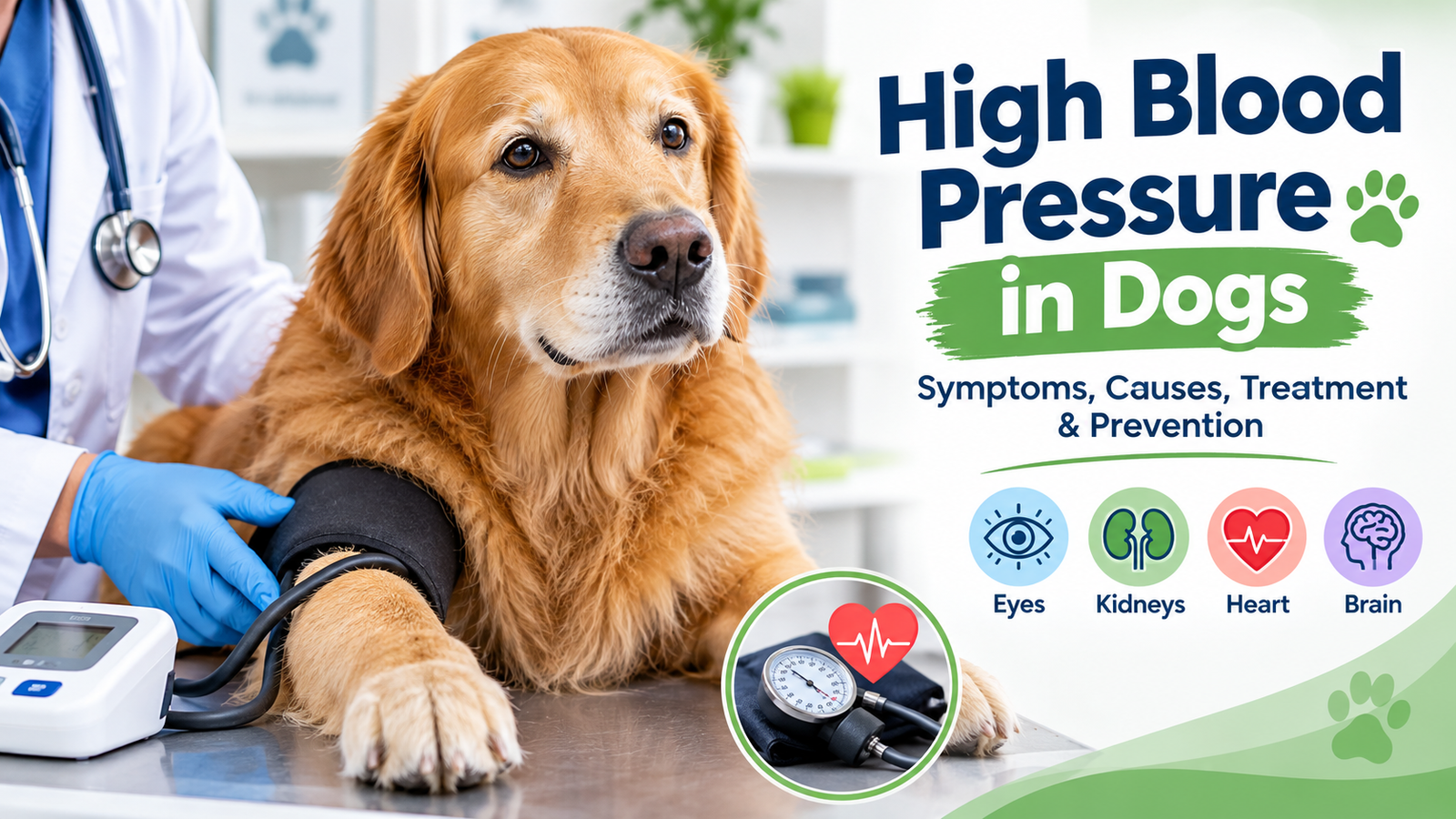
High Blood Pressure in Dogs: Symptoms, Causes, Treatment, and Prevention
High blood pressure in dogs is a medical condition that can affect your pet’s eyes, kidneys, heart, and brain. Also known as hypertension, this condition occurs when the pressure of blood flowing through the arteries remains abnormally high. Although it may not cause obvious symptoms at first, untreated hypertension can lead to serious complications.
Many dog owners associate high blood pressure with humans, but dogs can develop it too. In most cases, canine hypertension is linked to an underlying health problem, such as kidney disease, diabetes, or Cushing’s disease. Identifying and treating the underlying condition is often an important part of controlling a dog’s blood pressure.
Understanding the warning signs, diagnostic process, and available treatments can help you make informed decisions about your pet’s health.
Key Takeaways
- High blood pressure in dogs is often associated with an underlying medical condition.
- Early hypertension may not cause noticeable symptoms.
- Eye abnormalities, sudden vision loss, nosebleeds, seizures, and changes in behavior can be warning signs.
- Veterinarians diagnose hypertension by measuring blood pressure and evaluating the dog’s overall health.
- Treatment may include prescription medication, management of underlying diseases, and regular veterinary monitoring.
What Is High Blood Pressure in Dogs?
High blood pressure, medically called systemic hypertension, occurs when the force of blood against the walls of a dog’s arteries becomes excessively high.
Blood pressure naturally changes throughout the day depending on activity, excitement, pain, and stress. However, persistently elevated blood pressure can damage blood vessels and sensitive organs over time.
Dogs with hypertension may appear healthy during the early stages because the condition does not always cause noticeable discomfort. In other cases, high blood pressure can develop alongside an existing illness and make that condition more difficult to manage.
Veterinarians generally distinguish between primary hypertension, which occurs without an identifiable underlying cause, and secondary hypertension, which develops because of another disease. Secondary hypertension is particularly important in dogs because several common medical conditions can contribute to elevated blood pressure.
Youtube Video
What Causes High Blood Pressure in Dogs?
In many dogs, hypertension develops as a result of another health problem. Identifying that problem helps veterinarians determine the most appropriate treatment.
1. Kidney Disease
Kidney disease is one of the important conditions associated with high blood pressure in dogs. The kidneys help regulate fluid balance and blood pressure throughout the body.
When kidney function becomes impaired, these processes may be disrupted, allowing blood pressure to rise. High blood pressure can also cause additional damage to the kidneys, creating a cycle in which both conditions worsen.
Dogs diagnosed with chronic kidney disease may therefore require regular blood pressure checks.
2. Cushing’s Disease
Cushing’s disease, also called hyperadrenocorticism, occurs when a dog’s body produces excessive amounts of cortisol.
Cortisol affects several bodily functions, including metabolism and cardiovascular regulation. Dogs with Cushing’s disease may develop hypertension alongside increased thirst, frequent urination, increased appetite, a potbellied appearance, or hair loss.
Treating Cushing’s disease may help improve blood pressure, although some dogs also need separate hypertension medication.
3. Diabetes Mellitus
Diabetes affects how a dog’s body regulates blood glucose. It can be associated with other metabolic and cardiovascular problems that may increase the risk of hypertension.
Not every diabetic dog develops high blood pressure, but veterinarians may recommend additional monitoring depending on the dog’s health, symptoms, and test results.
4. Adrenal Gland Tumors
Certain adrenal gland tumors can release hormones that affect blood pressure. One example is pheochromocytoma, a relatively uncommon tumor that may produce excessive catecholamines.
These hormones can increase heart rate and constrict blood vessels, potentially causing severe or fluctuating hypertension.
5. Obesity and Other Health Problems
Excess body weight can contribute to broader metabolic and cardiovascular health concerns. However, obesity should not automatically be considered the direct cause of a dog’s hypertension.
Other illnesses, medications, and hormonal abnormalities may also influence blood pressure. Your veterinarian can investigate the most likely causes based on your dog’s medical history and examination.
Symptoms of High Blood Pressure in Dogs
One of the biggest challenges with canine hypertension is that symptoms may remain hidden until organ damage develops.
When symptoms occur, they can vary depending on which part of the body is affected.
Common warning signs include:
- Sudden or unexplained vision loss
- Persistently enlarged pupils
- Redness or bleeding inside the eyes
- Nosebleeds
- Blood in the urine
- Vomiting
- Reduced appetite
- Unusual tiredness or depression
- Disorientation or changes in behavior
- Head tilting or difficulty maintaining balance
- Seizures
- Signs of heart or kidney problems
These symptoms do not necessarily mean your dog has high blood pressure. They can also indicate other serious medical conditions.
Seek urgent veterinary care if your dog suddenly loses vision, has a seizure, collapses, or develops severe disorientation. Do not wait for additional symptoms to appear.
Can High Blood Pressure Cause Blindness in Dogs?
Yes. Damage to the eyes is one of the most concerning complications of severe hypertension.
High blood pressure can damage the small blood vessels that supply the retina, the light-sensitive tissue at the back of the eye. This damage may cause bleeding, swelling, or retinal detachment.
When the retina becomes detached, a dog may suddenly lose its vision. You might notice your pet bumping into furniture, struggling to find familiar objects, hesitating on stairs, or failing to respond to visual cues.
Some eye damage may improve when blood pressure is controlled promptly, but permanent vision loss is possible.
If your dog’s pupils appear unusually enlarged or your pet suddenly struggles to see, arrange an immediate veterinary examination.
Which Dog Breeds Are More at Risk?
High blood pressure can affect dogs of any breed, age, or size. However, certain breeds have a higher risk of developing medical conditions associated with hypertension.
For example:
- Dachshunds: May be predisposed to Cushing’s disease.
- Poodles: Certain varieties may have an increased risk of hormonal disorders, including Cushing’s disease.
- Schnauzers: Some are predisposed to diabetes and other metabolic conditions.
- Bichon Frises: Can develop diabetes, which may require additional health monitoring.
- Terriers: Certain terrier breeds may be susceptible to endocrine disorders.
These breed associations do not mean that every dog in these groups will develop high blood pressure. Individual risk depends on age, genetics, underlying disease, and overall health.
Senior dogs and dogs with chronic medical conditions may benefit from more frequent veterinary assessments.
How Do Veterinarians Diagnose Hypertension in Dogs?
A veterinarian usually diagnoses hypertension by measuring your dog’s blood pressure with specialized equipment.
The process is generally noninvasive and does not require surgery or a needle.
Blood Pressure Measurement
A veterinarian places an inflatable cuff around a suitable part of your dog’s leg or tail. The cuff is connected to equipment that measures blood pressure as it inflates and deflates.
Veterinary clinics may use Doppler devices or oscillometric blood pressure monitors, depending on the situation and available equipment.
Because anxiety can temporarily increase a dog’s blood pressure, measurements are often taken in a quiet environment after your pet has had time to settle.
The veterinarian may repeat the measurements and calculate an average to reduce the effect of individual inaccurate readings.
Additional Tests
If hypertension is confirmed or strongly suspected, your veterinarian may recommend additional investigations, such as:
- Blood tests to evaluate kidney function and other health indicators
- Urinalysis to assess kidney health and identify abnormalities
- Hormone testing when an endocrine disorder is suspected
- An eye examination to check for retinal damage
- Additional imaging or diagnostic tests when indicated
These investigations help identify the cause of hypertension and determine whether any organs have already been affected.
What Is a Normal Blood Pressure for Dogs?
Veterinarians interpret blood pressure readings alongside clinical signs, measurement conditions, and the dog’s medical history.
Systolic blood pressure refers to the pressure in the arteries when the heart contracts. The following categories are commonly used in veterinary practice:
| Systolic blood pressure | General interpretation |
|---|---|
| Below 140 mmHg | Minimal risk of target-organ damage |
| 140–159 mmHg | Low risk of target-organ damage |
| 160–179 mmHg | Moderate risk |
| 180 mmHg or higher | High risk |
These categories describe the risk of organ damage rather than providing a complete diagnosis by themselves. Persistent readings, symptoms, and the reason for testing all matter.
A single elevated reading does not always confirm hypertension, especially if a dog is frightened or excited. Your veterinarian will determine whether repeat measurements or treatment are necessary.
Can You Check Your Dog’s Blood Pressure at Home?
Accurately measuring a dog’s blood pressure at home can be challenging without appropriate equipment, training, and a reliable measurement technique.
Human blood pressure monitors are not automatically suitable for dogs. Differences in cuff size, positioning, movement, and device design can produce misleading results.
Some veterinary teams may teach owners to use a suitable veterinary device in selected circumstances. However, home measurements should only be used according to veterinary instructions.
You can still help by monitoring your dog’s behavior, appetite, thirst, urination, energy levels, and vision. Keep a record of new symptoms and report them during veterinary appointments.
Remember that observing your dog’s behavior cannot confirm whether its blood pressure is normal.
Treatment for High Blood Pressure in Dogs
Treatment depends on how high the blood pressure is, whether organ damage is present, and what caused the condition.
1. Treating the Underlying Disease
When hypertension develops because of kidney disease, Cushing’s disease, or another medical problem, managing that condition is an essential part of treatment.
Your veterinarian may recommend specific medications, dietary changes, additional testing, or ongoing care based on the diagnosis.
Some dogs experience improved blood pressure when the underlying disease is controlled. Others continue to need hypertension medication.
2. Prescription Blood Pressure Medication
Veterinarians may prescribe medications to reduce blood pressure and protect vulnerable organs.
Depending on the dog’s condition, treatment may include medications such as amlodipine, an angiotensin-converting enzyme inhibitor such as enalapril or benazepril, or an angiotensin receptor blocker such as telmisartan.
The most appropriate medication depends on the dog’s blood pressure, kidney function, other illnesses, and current prescriptions.
Never give your dog human blood pressure medication or change a prescribed dose without veterinary guidance. Some medications can cause dangerous drops in blood pressure or interact with other treatments.
3. Dietary Management
Dietary recommendations depend on the underlying cause of hypertension.
For dogs with kidney disease, a veterinarian may recommend a therapeutic kidney diet designed to support kidney function. In other cases, a complete and balanced diet with appropriate calorie content may be sufficient.
Do not drastically restrict sodium or use homemade diets without professional advice. Nutritional needs vary, and unnecessary dietary changes can create additional problems.
4. Weight Management and Exercise
Maintaining a healthy weight supports your dog’s overall health and may help manage conditions associated with hypertension.
If your dog is overweight, your veterinarian can recommend an appropriate feeding plan and gradual weight-loss target.
Regular walks and suitable physical activity can help maintain fitness. However, dogs with severe hypertension, heart disease, vision problems, or other complications may need activity restrictions until their condition is stabilized.
How Often Should a Dog With Hypertension Be Checked?
Dogs receiving treatment need follow-up appointments to determine whether their blood pressure is improving and whether medication adjustments are required.
Initially, rechecks may be scheduled relatively soon after treatment begins or changes. Once blood pressure is stable, some dogs may need monitoring every two to four months, while others require a different schedule.
Your veterinarian may also recommend periodic blood tests, urine tests, eye examinations, and assessments of the underlying disease.
Do not stop medication simply because your dog appears healthy. Hypertension can remain present even when there are no visible symptoms.
Can Anxiety Cause High Blood Pressure in Dogs?
Yes. Stress and anxiety can temporarily raise a dog’s blood pressure.
Some dogs become nervous in unfamiliar environments, especially at veterinary clinics. This can produce a higher reading than the dog’s usual blood pressure.
Veterinary teams may reduce stress by allowing the dog to settle, keeping the room quiet, using gentle handling, and repeating measurements.
However, anxiety should not automatically be assumed to explain every elevated reading. Repeated high measurements require appropriate veterinary assessment.
How Long Can a Dog Live With High Blood Pressure?
Life expectancy varies considerably depending on the underlying disease, the severity of hypertension, the presence of organ damage, and how well treatment works.
A dog with manageable hypertension and regular veterinary care may continue to enjoy a good quality of life for a long time.
However, hypertension associated with advanced kidney disease, serious hormonal disorders, or severe eye or heart complications may have a more complicated outlook.
The most important factors are early diagnosis, appropriate treatment, and consistent follow-up. Your veterinarian can provide a more individualized prognosis after evaluating your dog’s health.
Frequently Asked Questions
What are the first signs of high blood pressure in dogs?
Many dogs have no obvious early symptoms. When signs appear, they may include changes in vision, enlarged pupils, unusual behavior, nosebleeds, or other signs of organ damage.
What foods can help a dog with high blood pressure?
There is no single food proven to treat canine hypertension. A complete and balanced diet is important, while dogs with underlying kidney disease or other conditions may need a veterinarian-recommended therapeutic diet.
Can high blood pressure in dogs be cured?
Sometimes blood pressure improves when the underlying cause is successfully treated. Other dogs need long-term medication and monitoring to keep their blood pressure under control.
Is high blood pressure in dogs an emergency?
Severe hypertension accompanied by sudden blindness, seizures, collapse, or major neurological changes requires urgent veterinary care. Persistent hypertension without obvious symptoms also needs prompt assessment.
Can high blood pressure damage a dog’s kidneys?
Yes. High blood pressure can damage kidney blood vessels and worsen kidney function. Kidney disease can also contribute to hypertension, making monitoring especially important.
Final Thoughts
High blood pressure in dogs is a potentially serious condition that can affect the eyes, kidneys, heart, and nervous system. Because early hypertension often causes no visible symptoms, routine veterinary care and appropriate screening are particularly important for dogs with chronic illnesses.
If your dog develops unusual eye changes, sudden vision problems, seizures, or unexplained behavioral changes, seek veterinary care promptly. A veterinarian can measure blood pressure, investigate underlying conditions, and recommend suitable treatment.
With the right medical care, regular monitoring, and a management plan tailored to its needs, many dogs with hypertension can continue to live comfortable and active lives.