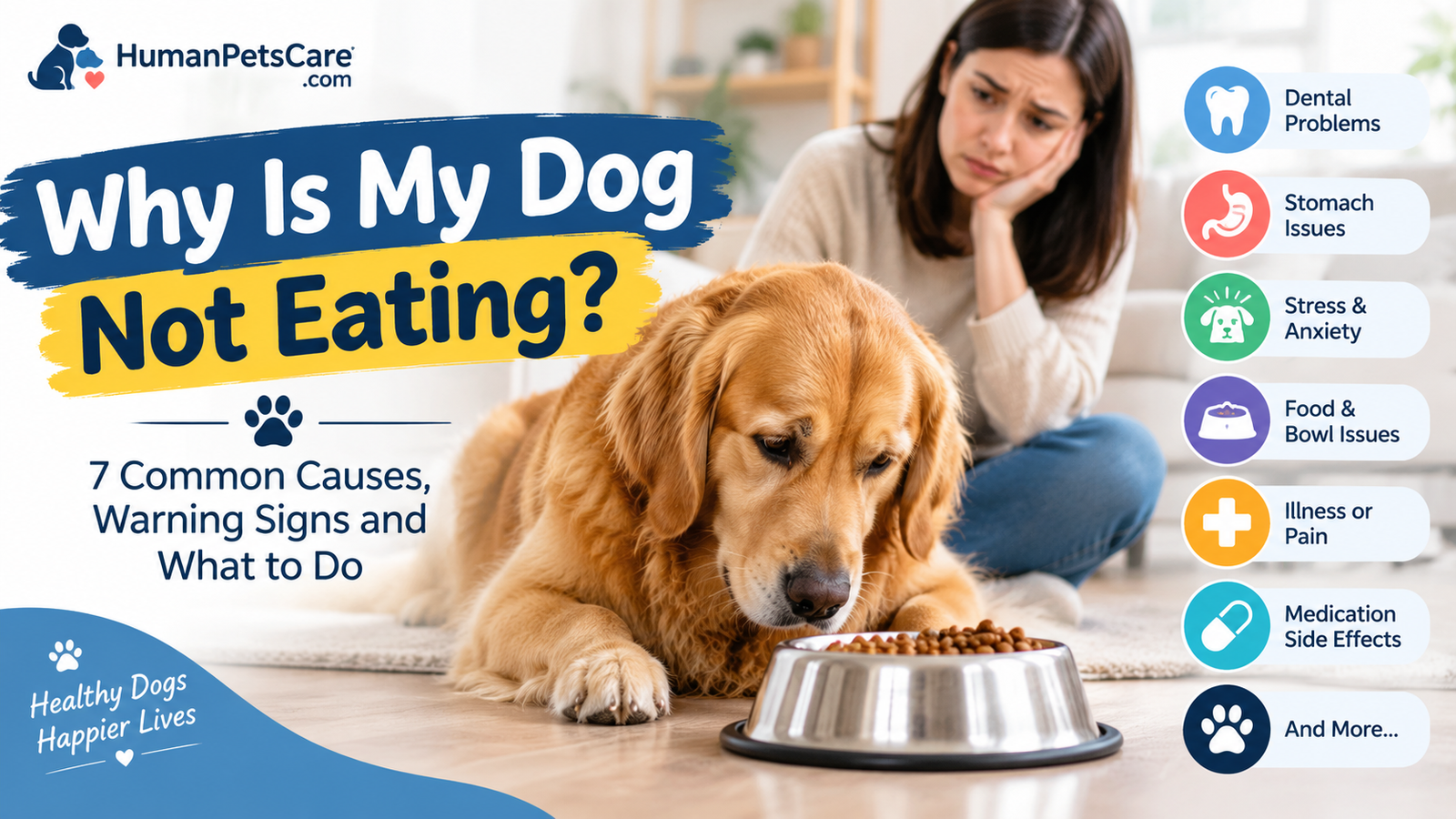
Why Is My Dog Not Eating? 7 Common Causes, Warning Signs, and What to Do
Introduction
Dogs usually get excited when they see their favorite food. So, when your dog suddenly refuses a meal or shows little interest in eating, it is natural to feel concerned. A reduced appetite can sometimes result from a simple issue, such as picky eating or a recent change in food. However, it can also be an early sign of pain, dental problems, stress, or an underlying medical condition.
Understanding why your dog is not eating is the first step toward helping them feel better. Some dogs may continue drinking water and behaving normally despite skipping a meal, while others may develop vomiting, diarrhea, weakness, or other symptoms that require veterinary attention.
In this guide, we explain seven common reasons dogs lose their appetite, how to recognize warning signs, and what you can safely do to encourage your dog to eat again.
Why Is My Dog Not Eating?
There are several possible reasons for appetite loss in dogs. The cause may be related to their food, environment, emotional well-being, or physical health. Paying attention to your dog’s normal eating habits can help you identify changes early.
1. Your Dog Is a Picky Eater
Some dogs are naturally selective about their food. They may prefer one flavor, texture, or brand and refuse to eat when something changes. Others learn to wait for treats or table scraps instead of eating their regular meals.
For example, if you frequently offer chicken, cheese, or other human foods whenever your dog refuses kibble, your pet may begin expecting something more appealing.
However, it is important to distinguish between a dog that has always been a picky eater and one that suddenly loses interest in food.
If your dog has recently stopped eating a previously preferred meal, check the expiration date, smell, freshness, and storage conditions of the food. A sudden appetite change should not automatically be blamed on picky eating.
What you can do:
- Keep meals consistent and establish a regular feeding schedule.
- Avoid giving excessive treats between meals.
- Introduce new food gradually rather than changing diets suddenly.
- Make sure your dog’s food is fresh and stored properly.
If your dog continues refusing food, consult a veterinarian instead of assuming they are simply being fussy.
Youtube Video
2. An Underlying Medical Condition
One of the most important reasons a dog may stop eating is an illness. Many health conditions can affect appetite, including digestive disorders, infections, kidney disease, liver problems, and other systemic illnesses.
Dogs may also eat less when they have a fever, nausea, or general discomfort. In some cases, appetite loss is one of the first noticeable signs that something is wrong.
Watch for additional symptoms, such as:
- Vomiting or diarrhea
- Unusual tiredness or weakness
- Unexplained weight loss
- Increased thirst or urination
- Coughing or sneezing
- Excessive drooling
- Changes in normal behavior
- Difficulty breathing
These symptoms do not identify a specific disease on their own, but they can help your veterinarian determine what examinations or tests are needed.
What you can do:
Contact your veterinarian if your dog’s appetite changes suddenly or does not return to normal. Seek urgent veterinary care if your dog refuses food and develops repeated vomiting, severe weakness, breathing difficulties, a swollen abdomen, or other concerning symptoms.
Puppies, senior dogs, and dogs with existing medical conditions may need attention sooner because they can become unwell more quickly.
3. Dental Problems and Mouth Pain
Dental disease is another common reason dogs refuse food. Although your dog may feel hungry, chewing can become painful when their teeth or gums are inflamed.
Broken teeth, gum disease, mouth injuries, and oral infections can make eating uncomfortable. Some dogs may approach their food bowl, sniff the food, and then walk away because biting or chewing hurts.
Other signs of dental problems include:
- Bad breath
- Red, swollen, or bleeding gums
- Drooling more than usual
- Dropping food while chewing
- Chewing on one side of the mouth
- Difficulty eating dry kibble
- Pawing at the mouth or face
- Swelling around the jaw or face
Dental discomfort may be less obvious in dogs that continue playing or interacting normally.
What you can do:
Arrange a veterinary examination if your dog shows signs of mouth pain or has difficulty chewing. Your veterinarian can check for damaged teeth, gum inflammation, and other oral problems.
Softening your dog’s usual food with warm water may make eating easier temporarily, but it will not treat the underlying dental condition. Avoid trying to pull out loose teeth or examining a painful mouth forcefully.
4. Pain, Injury, or Digestive Discomfort
Dogs may lose interest in food when they are experiencing pain anywhere in their bodies. Arthritis, back problems, injuries, abdominal discomfort, and infections can all affect their willingness to eat.
For example, a senior dog with joint pain may find it uncomfortable to stand beside a food bowl for an extended period. A dog with stomach discomfort may refuse food because eating makes nausea or abdominal pain worse.
Eating inappropriate foods can also cause digestive problems. Rich table scraps, spoiled food, and sudden dietary changes may upset a dog’s stomach. In more serious situations, swallowing a foreign object or a toxic substance can become a medical emergency.
Potentially dangerous substances include chocolate, caffeine, certain human medications, and products containing xylitol.
What you can do:
Observe whether your dog has difficulty standing, walking, lying down, or reaching the food bowl. Contact a veterinarian if pain appears to be affecting their appetite.
If your dog may have swallowed a toxic substance or a foreign object, seek immediate veterinary advice. Do not induce vomiting or give human painkillers unless a veterinarian specifically instructs you to do so.
5. Stress, Anxiety, or Changes at Home
Emotional changes can affect a dog’s appetite just as they can affect people’s eating habits. Dogs are sensitive to their surroundings, routines, and relationships with family members.
A stressful experience may temporarily reduce their interest in food.
Common triggers include:
- Moving to a new home
- Traveling or staying in unfamiliar places
- The arrival of a new baby or pet
- Separation from a favorite person
- The loss of an animal companion
- Loud noises or unfamiliar visitors
- Changes in the household schedule
Some anxious dogs may refuse meals when left alone, while others may feel uncomfortable eating in a busy or noisy environment.
What you can do:
Provide a quiet, comfortable feeding area away from loud noises and household activity. Maintain a consistent daily routine and give your dog time to adjust to changes.
If you have multiple pets, feed them separately when competition or tension around food appears to be a problem.
Stress should not be assumed to be the cause of appetite loss if your dog is also showing physical symptoms. Persistent changes in eating habits deserve veterinary assessment.
6. Food Bowl Problems or Changes in Food
Sometimes, the problem is related to the feeding setup rather than the food itself.
A dog may dislike the smell of a dirty bowl, struggle to reach a dish, or feel uncomfortable eating from a bowl that moves around. Some dogs also react negatively to a sudden change in food flavor, texture, or temperature.
Age and body shape can influence feeding comfort. For instance, a dog with arthritis may struggle to bend down, while some flat-faced breeds may find certain deep or narrow bowls difficult to use.
However, raised feeding bowls are not necessary for every dog. Ask your veterinarian whether a different bowl height would benefit your pet, especially if they have a medical condition.
What you can do:
- Wash food and water bowls regularly.
- Check that the bowl is stable and easy to reach.
- Try a suitable bowl with a comfortable shape.
- Introduce new food gradually over several days when possible.
- Store food according to the manufacturer’s instructions.
- Keep feeding areas separate from litter, waste, and strong odors.
If your dog suddenly refuses a familiar food, do not rely on changing the bowl alone. Medical causes should also be considered.
7. Medication Side Effects or Recent Vaccination
Certain medications can cause nausea, stomach upset, or reduced appetite. Some dogs may also eat less for a short time after a vaccination because they feel tired or mildly uncomfortable.
These effects are not always dangerous, but their severity and duration matter.
If your dog recently started a new medication, underwent a procedure, or received a vaccination, tell your veterinarian when the appetite change began.
What you can do:
Contact your veterinarian for advice if your dog stops eating after starting a medication or receiving a vaccination. Do not stop a prescribed medicine or change its dose without professional guidance.
Seek urgent care if appetite loss occurs alongside facial swelling, difficulty breathing, collapse, repeated vomiting, or other signs of a serious reaction.
What Can You Do If Your Dog Is Not Eating?
If your dog is alert, comfortable, drinking normally, and has no other concerning symptoms, you can try a few gentle feeding strategies while monitoring their condition.
1. Warm the Food Slightly
Slightly warming wet dog food may make its aroma more noticeable and encourage your dog to eat. Make sure the food is only lukewarm, not hot, and stir it thoroughly to avoid hot spots.
2. Add Warm Water to Dry Food
Adding a little warm water to kibble can soften its texture and make it easier to chew. This may be helpful for dogs that prefer softer food.
If your dog has trouble swallowing or appears to have mouth pain, arrange a veterinary examination rather than relying on softened food.
3. Offer a Suitable Wet Food
Some dogs find wet food more appealing because of its texture and smell. You can offer a small portion of a complete and balanced dog food that is appropriate for your pet’s age and health.
Avoid introducing several new foods at once, as this may upset the digestive system.
4. Try Calm, Gentle Hand-Feeding
Offering a few pieces of your dog’s regular food by hand may help if anxiety or a distracting environment is affecting their appetite.
Keep the experience relaxed. Never force food into your dog’s mouth or pressure them to eat.
5. Make Mealtimes Comfortable
Choose a quiet feeding location and maintain a consistent schedule. Remove distractions and give your dog time to approach the bowl.
Always provide access to fresh, clean water unless your veterinarian has given different instructions for a specific medical condition.
Important: These tips are appropriate only for dogs that are otherwise stable. They should never delay veterinary care when your dog appears sick or has stopped eating unexpectedly.
When Should You Take Your Dog to the Vet?
The length of time your dog refuses food, their age, medical history, and other symptoms all influence how quickly they need attention.
Contact your veterinarian promptly if your adult dog misses meals unexpectedly or shows a persistent decrease in appetite. Do not wait two full days if the change is unusual or your dog seems unwell.
Seek urgent veterinary care if your dog has appetite loss accompanied by:
- Repeated vomiting or severe diarrhea
- Blood in vomit or stool
- Marked weakness or collapse
- Difficulty breathing
- A swollen or painful abdomen
- Pale gums or signs of dehydration
- Suspected poisoning or swallowing a foreign object
Puppies, diabetic dogs, very small dogs, and pets with chronic health conditions may need earlier evaluation. If a puppy is not eating, contact a veterinarian promptly rather than waiting to see whether the appetite returns.
When speaking with your veterinarian, explain when your dog last ate, whether they are drinking water, whether they show interest in food, and whether their behavior or bathroom habits have changed.
This information can help your veterinarian determine the next steps.
Frequently Asked Questions
Why Is My Dog Not Eating but Acting Normal?
A dog that is acting normally but refusing food may be experiencing mild digestive discomfort, stress, a preference for different food, or an early medical problem. Normal behavior does not rule out illness.
Monitor the situation closely and contact your veterinarian if the refusal continues, the change is unusual, or other symptoms develop.
How Long Can a Dog Go Without Eating?
There is no single safe waiting period for every dog. Puppies, diabetic dogs, senior pets, and dogs with underlying illnesses may be at risk sooner than healthy adult dogs.
If your dog suddenly refuses food, contact your veterinarian for guidance rather than deliberately waiting for a particular time limit. Seek urgent care if additional warning signs appear.
Should I Force My Dog to Eat?
No. Force-feeding can cause stress and may create a risk of choking or aspiration if done incorrectly. It can also be inappropriate for dogs with nausea, swallowing difficulties, or certain medical conditions.
Instead, offer suitable food gently and seek veterinary advice if your dog continues to refuse meals.
Why Is My Dog Not Eating but Still Drinking Water?
Drinking water while refusing food may occur with stress, nausea, dental pain, or various medical conditions. It is encouraging that your dog is drinking, but this does not guarantee that the problem is harmless.
Contact your veterinarian if your dog’s appetite does not return promptly or if you notice other changes in their health.
Can I Give My Dog Chicken or Rice to Encourage Eating?
Plain, fully cooked chicken without bones, skin, heavy seasoning, or sauces may be suitable for some dogs in small amounts. Plain white rice may also be tolerated by some dogs.
However, chicken and rice alone do not provide complete and balanced nutrition for long-term feeding. They may also be unsuitable for dogs with certain allergies or medical conditions. Ask your veterinarian before using a special diet to manage ongoing appetite loss.
Final Thoughts
When your dog is not eating, the cause may be something relatively simple, such as picky eating, an uncomfortable feeding setup, or stress. However, appetite loss can also signal dental pain, an injury, digestive trouble, medication side effects, or a more serious illness.
You can try gentle measures such as warming food slightly, adding warm water to kibble, and creating a calm feeding environment when your dog otherwise appears well. Avoid force-feeding, human medications, and unapproved home remedies.
Most importantly, pay attention to sudden changes in appetite and any symptoms that occur alongside them. Contact your veterinarian promptly if your dog refuses food unexpectedly or the problem persists, and seek urgent care when serious warning signs appear.
Early assessment can help identify the cause and ensure your dog receives appropriate treatment before the problem becomes more serious.