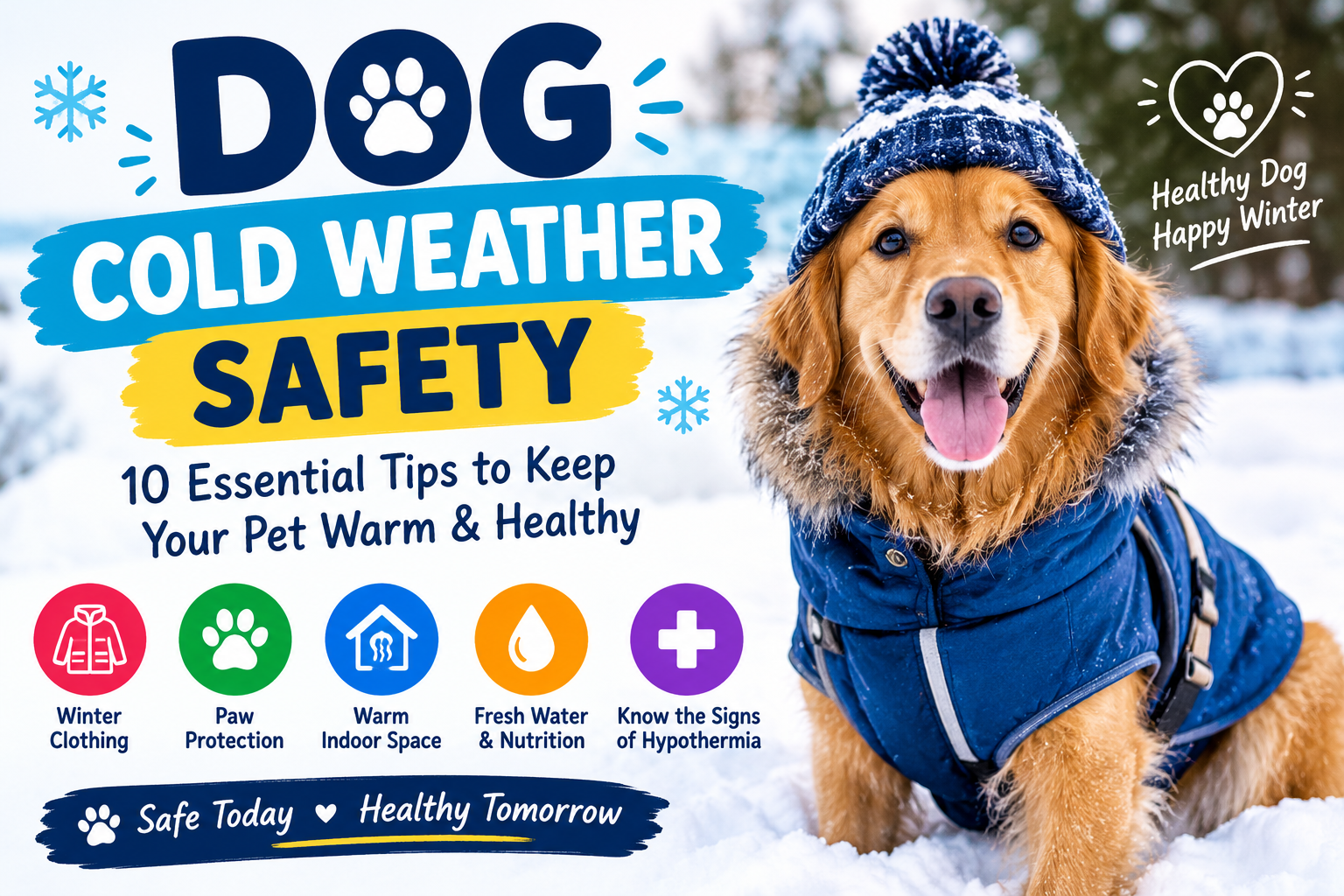
Dog Cold Weather Safety: 10 Essential Tips to Keep Your Dog Warm and Healthy
Introduction
Winter can be a wonderful season for dogs, but cold temperatures can also create serious health risks. While some breeds have thick coats that help them tolerate chilly weather, small dogs, puppies, senior pets, and short-haired breeds may become cold much faster.
Understanding dog cold weather safety is essential for protecting your pet from hypothermia, frostbite, dry skin, and painful paws. Even if your dog enjoys spending time outdoors, cold winds, rain, snow, and icy surfaces can make outdoor activities dangerous.
Fortunately, simple precautions can help your furry friend stay comfortable throughout the winter. Providing warm bedding, choosing appropriate clothing, adjusting outdoor walks, and recognizing warning signs can make a significant difference.
In this guide, you will discover 10 practical winter safety tips to help keep your dog warm, healthy, and happy.
1. Understand How Cold Weather Affects Dogs
Not every dog responds to cold weather in the same way. A Siberian Husky may tolerate lower temperatures better than a Chihuahua because of differences in coat thickness, body size, and adaptation to cold conditions.
However, even thick-coated dogs can experience cold-related health problems when exposed to extreme temperatures for too long.
Factors that affect a dog’s cold tolerance include:
- Breed and coat thickness
- Age and overall health
- Body weight and physical condition
- Wind, rain, snow, and humidity
- Length of outdoor exposure
Puppies, elderly dogs, underweight pets, and dogs with medical conditions may require additional protection.
There is no single temperature that is safe for every dog. Monitor your pet’s behavior and shorten outdoor activities when conditions become uncomfortable.
2. Provide Warm Bedding and a Comfortable Indoor Space
One of the easiest ways to improve dog cold weather safety is to create a warm sleeping area indoors.
Place your dog’s bed away from cold drafts, damp floors, and exterior doors that open frequently. A thick, washable bed with a soft blanket can provide insulation and help your pet rest comfortably.
Older dogs and pets with joint problems may benefit from supportive bedding that makes lying down and standing up easier.
Keep your dog’s sleeping area clean and dry. If your home becomes particularly cold at night, consider moving the bed to a warmer room.
Use heating devices carefully. Electric heating pads, space heaters, and fireplaces can cause burns or fires if used incorrectly. Always follow safety instructions and make sure your dog can move away from the heat source.
For more practical advice, read this related guide: Dog Safe in Cold Weather: 8 Easy Tips to Keep Your Dog Warm at Home.
3. Choose the Right Winter Coat for Your Dog
Dog sweaters and winter coats can help protect pets that struggle to stay warm outdoors.
Small breeds, short-haired dogs, puppies, and senior dogs may benefit from an extra layer during winter walks. Choose a coat that covers the chest and back without restricting breathing, movement, or bathroom breaks.
A water-resistant coat can be useful in damp weather, while a comfortable sweater may be enough for dry, cool conditions.
Follow these clothing tips:
- Check that the coat fits comfortably.
- Avoid clothing that restricts movement.
- Remove wet clothing after outdoor activities.
- Watch for overheating during exercise.
- Introduce new clothing gradually if your dog is unfamiliar with it.
Thick-coated breeds may not need additional clothing in mild conditions. Your dog’s comfort and behavior should guide your decision.
4. Protect Your Dog’s Paws From Ice and Road Salt
Winter sidewalks can expose dogs to ice, sharp debris, road salt, and chemical deicers. These substances may irritate paw pads, cause cracks, or lead to illness if swallowed during grooming.
To protect your dog’s paws, inspect them before and after walks. Look between the toes for trapped snow, ice, redness, or small cuts.
Dog boots can provide a protective barrier when they fit correctly and your pet tolerates them. A veterinarian-approved paw balm may help with dryness, but it cannot replace boots when protection from sharp ice or chemicals is needed.
After every winter walk:
- Rinse the paws with lukewarm water if salt or deicers may be present.
- Remove ice and debris gently.
- Dry the paws and the spaces between the toes.
- Check for cracks, swelling, or signs of pain.
If your dog develops persistent limping, bleeding, or painful paw irritation, contact your veterinarian.
5. Adjust Outdoor Walks During Winter
Dogs still need exercise when temperatures drop, but winter may require a different walking routine.
During extremely cold weather, choose shorter, more frequent walks instead of long outdoor adventures. Whenever possible, walk during the warmest part of the day and avoid harsh winds, freezing rain, and dangerously icy conditions.
Keep your dog on a leash in snowy areas. Snow can cover familiar landmarks, holes, sharp objects, and unsafe surfaces.
Watch your dog carefully for signs of discomfort, including shivering, whining, lifting the paws, slowing down, or trying to return home.
When outdoor conditions are unsafe, indoor activities can help maintain your dog’s physical and mental health.
6. Keep Your Dog Active With Indoor Games
Cold weather does not mean your dog must spend the entire day sleeping. Indoor exercise provides stimulation when outdoor walks are limited.
Try these simple activities:
Hide-and-seek: Ask your dog to stay in one room while you hide nearby, then encourage your pet to find you.
Food puzzles: Use a suitable puzzle toy to make mealtime more engaging.
Basic training: Practice commands such as sit, stay, come, and leave it.
Indoor fetch: Play gently in a spacious, nonslip area without fragile objects or sharp furniture edges.
Scent games: Hide a few pieces of your dog’s regular food around a safe room and encourage your pet to find them.
Adjust games to your dog’s age, fitness, and mobility. Avoid vigorous activities that could cause slipping or injury.
7. Provide Fresh Water and Balanced Nutrition
Dogs need fresh drinking water throughout the winter. Cold weather does not eliminate their hydration needs, and indoor heating may contribute to dry air.
Keep clean water available and check outdoor bowls frequently if your dog spends time outside. Replace frozen water immediately.
Feed your pet a complete and balanced diet suitable for its age, size, activity level, and health.
Some highly active dogs may need additional calories during cold weather, while dogs that exercise less indoors may need fewer. Avoid automatically increasing food portions because excessive weight gain can place extra stress on the joints.
If your dog has a medical condition, loses weight unexpectedly, or experiences changes in appetite, consult your veterinarian about appropriate nutrition.
8. Watch for Hypothermia and Frostbite
Hypothermia occurs when a dog’s body temperature falls dangerously low. Frostbite involves damage to tissues exposed to extreme cold, especially the ears, paws, nose, and tail.
Recognizing the warning signs early is an important part of winter pet care.
Possible signs of cold stress include:
- Shivering and trembling
- Weakness or unusual tiredness
- Pale or unusually cool skin
- Slow movement or difficulty walking
- Confusion or reduced responsiveness
- Swelling, pain, or discoloration of exposed skin
If your dog shows signs of cold stress, move the pet to a warm, dry place immediately.
For suspected hypothermia, wrap your dog in dry blankets and contact a veterinarian urgently. Do not use direct high heat or heating pads on high settings.
Do not rub or massage suspected frostbitten tissue. Severe weakness, confusion, slow breathing, or collapse requires emergency veterinary attention.
9. Protect Your Dog From Antifreeze and Winter Chemicals
Antifreeze is a particularly dangerous winter hazard because products containing ethylene glycol can cause severe poisoning, even in small amounts.
Keep automotive chemicals securely stored and clean spills immediately. Do not allow your dog to lick puddles around garages, driveways, or parked vehicles.
Road salt and deicing products can also irritate paws and cause illness if swallowed. Wiping and rinsing your dog’s paws after walks helps reduce the risk of accidental ingestion.
If you suspect your dog has swallowed antifreeze or a dangerous chemical, contact an emergency veterinarian immediately. Do not wait for symptoms or attempt to induce vomiting unless instructed by a veterinary professional.
10. Prepare for Different Weather Conditions Throughout the Year
Responsible pet care includes adapting to seasonal changes. Winter requires attention to cold exposure, while summer brings risks associated with excessive heat, hot pavement, and dehydration.
During winter, focus on warmth, dry bedding, paw protection, and safe outdoor exercise. During hot weather, provide shade, fresh water, ventilation, and exercise during cooler hours.
If you live in a region with hot summers, read Dog Summer Care in Japan: Keep Your Pet Safe From Extreme Heat — Complete Guide 2026.
You can also explore Summer Safety Tips for Dogs: How to Keep Your Dog Safe in Hot Weather for additional advice on protecting dogs from heat-related problems.
Preparing for both cold and hot weather helps pet owners maintain a consistent, year-round approach to animal health.
Frequently Asked Questions About Dog Cold Weather Safety
How cold is too cold for dogs?
Cold tolerance varies according to breed, size, coat, age, health, wind, and moisture. Small, short-haired, young, elderly, and sick dogs may need extra protection at temperatures that other dogs tolerate more comfortably.
Do dogs need winter coats?
Some dogs benefit from winter clothing, particularly small breeds and dogs with thin coats. Choose a comfortable, appropriately fitted coat and remove it if it becomes wet or causes overheating.
Can dogs sleep outside during winter?
Sleeping outdoors during severe cold is risky. Dogs should have access to a warm, safe indoor space whenever possible. Outdoor shelters alone may not provide adequate protection from extreme weather.
How can I protect my dog’s paws in winter?
Use suitable dog boots when needed, inspect the paw pads regularly, rinse away salt and chemicals, and dry the paws after walks. Seek veterinary advice if you notice painful cracks, swelling, bleeding, or persistent limping.
What are the first signs of hypothermia in dogs?
Shivering, weakness, pale skin, and unusual lethargy can indicate cold stress. More severe signs include confusion, slow breathing, and collapse. Suspected hypothermia requires urgent veterinary attention.
Should dogs exercise during cold weather?
Yes, most dogs still need regular exercise. Adjust the duration and intensity of walks to the weather and your dog’s tolerance. Indoor games and training sessions are useful alternatives when outdoor conditions are unsafe.
Conclusion
Dog cold weather safety starts with understanding your pet’s individual needs and recognizing the risks associated with low temperatures. Warm bedding, suitable clothing, paw protection, shorter walks, balanced nutrition, and indoor activities can all help keep your dog comfortable during winter.
Pay special attention to puppies, senior pets, small breeds, and dogs with health conditions. Protect your pet from antifreeze and deicing chemicals, and learn to recognize the warning signs of hypothermia and frostbite.
Remember that pet care changes with the seasons. By combining the right winter precautions with safe summer habits, you can help your dog stay healthier and happier throughout the year.