Introduction
Keeping your dog active and entertained is essential for its physical health, mental stimulation, and emotional well-being. However, daily walks and outdoor play are not always possible. Rainy weather, extreme heat, cold temperatures, busy schedules, or limited outdoor space can make it difficult to give your furry friend enough exercise.
Fortunately, there are many fun indoor activities for dogs that can help keep them busy, happy, and mentally stimulated. From hide-and-seek to interactive puzzle games, these activities allow dogs to burn energy, develop problem-solving skills, and strengthen their bond with their owners.
The best part is that you do not need expensive equipment or a large house to entertain your dog. Many indoor dog games use simple household items and can be adapted to your pet’s age, size, energy level, and abilities.
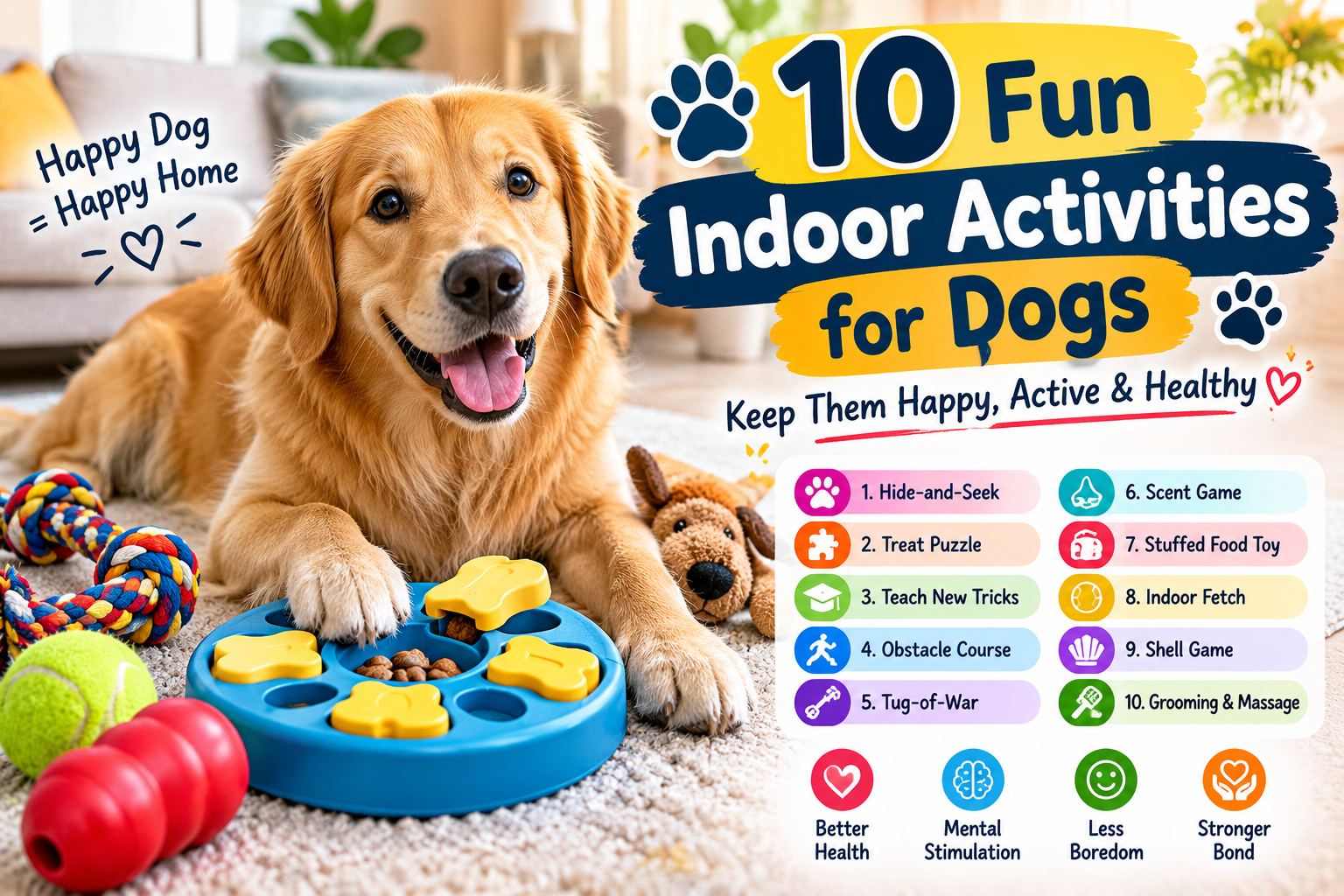
In this guide, you will discover 10 fun indoor activities for dogs, how to play them safely, and practical tips for keeping your dog entertained at home.
Why Are Indoor Activities Important for Dogs?
Indoor activities provide more than entertainment. Dogs need regular physical movement and mental challenges to maintain a healthy lifestyle. Without enough stimulation, some dogs may develop unwanted behaviors, such as excessive barking, chewing furniture, digging at carpets, or constantly seeking attention.
Interactive indoor games can help reduce boredom and provide opportunities for learning. Mental exercises can be particularly helpful for dogs that cannot participate in long walks because of their age, mobility, or weather conditions.
Indoor activities can also strengthen the relationship between you and your pet. Playing together encourages communication, builds trust, and gives your dog positive attention.
However, indoor play should complement appropriate outdoor exercise, toilet breaks, socialization, and veterinary care rather than replace every aspect of your dog’s daily routine.
1. Play Hide-and-Seek
Hide-and-seek is one of the easiest and most enjoyable indoor games for dogs. It encourages your dog to use its natural sense of smell and listening skills while searching for you.
How to Play
Start by asking your dog to stay in one room or have another person gently hold its attention. Hide behind a doorway, behind a sofa, or in another easy-to-find location. Call your dog’s name and encourage it to find you.
When your dog discovers your hiding place, reward it with praise, affection, or a small treat.
As your dog becomes more confident, choose slightly more challenging hiding spots. Keep the game simple enough that your pet does not become frustrated.
Benefits of Hide-and-Seek
- Encourages mental stimulation and problem-solving.
- Strengthens your bond with your dog.
- Reinforces name recognition and recall.
- Provides light physical activity indoors.
Keep hiding places safe and accessible. Avoid areas containing sharp furniture edges, unstable objects, or slippery floors.
2. Create a DIY Treat Puzzle
Dogs enjoy using their noses and brains to discover food. A homemade treat puzzle is a simple way to provide mental enrichment without purchasing expensive toys.
How to Make a Treat Puzzle
Take a few sturdy, clean paper cups or use a dog-safe puzzle toy. Place a small treat under one cup while your dog watches. Let your pet sniff and investigate to discover the reward.
You can also hide treats inside a loosely folded towel, provided your dog does not chew or swallow fabric.
Start with an easy puzzle and gradually increase the difficulty when your dog understands the game.
Why Dogs Love Treat Puzzles
Treat puzzles encourage natural sniffing and foraging behaviors. They can keep dogs occupied while helping them learn patience and persistence.
Use small portions of your dog’s regular food or appropriate treats to avoid excessive calorie intake. Supervise your dog throughout the activity, especially if it tends to chew or swallow non-food objects.
Avoid small pieces that could become choking hazards.
3. Teach Your Dog New Tricks
Training sessions are excellent indoor activities because they combine learning, mental exercise, and positive interaction.
You do not need professional equipment to teach your dog simple tricks. A few minutes of practice in a quiet room can be both useful and enjoyable.
Tricks to Teach at Home
Consider teaching your dog to:
- Sit and stay.
- Shake paws.
- Touch your hand with its nose.
- Spin in a circle.
- Lie down on a comfortable mat.
- Go to its bed when asked.
Choose one trick at a time. Use a clear verbal cue, reward the behavior you want, and keep sessions short.
Training Tips
Positive reinforcement is generally an effective training approach. Reward your dog with praise, play, or small treats when it performs the desired behavior.
Avoid shouting or punishing your dog for mistakes. If your pet becomes distracted, simplify the exercise and try again later.
Training is particularly useful for energetic dogs because it gives them a constructive task. Older dogs can also enjoy learning, provided the movements are appropriate for their physical abilities.
4. Set Up a Safe Indoor Obstacle Course
An indoor obstacle course can turn an ordinary room into an exciting play area. It encourages dogs to explore, follow directions, and move their bodies.
How to Build an Obstacle Course
Use household items to create a simple course. For example, arrange cushions on the floor, place a sturdy object for your dog to walk around, or create a low obstacle that it can step over comfortably.
You can guide your dog around the course using treats or verbal cues.
Start with two or three obstacles and let your dog explore at its own pace.
Safety Considerations
Avoid slippery floors, unstable furniture, high jumps, and narrow spaces. Do not encourage your dog to jump over tall obstacles or climb on furniture that could tip over.
Puppies, senior dogs, and pets with joint problems need especially gentle activities. Walking around objects and stepping over low obstacles is usually safer than jumping.
An obstacle course should be fun rather than physically demanding. Stop if your dog appears tired, uncomfortable, or reluctant to continue.
5. Play Tug-of-War
Tug-of-war is a popular indoor game that can provide physical activity and a satisfying way for dogs to interact with their owners.
How to Play Safely
Choose a sturdy tug toy designed for dogs. Invite your dog to take one end while you hold the other. Allow your pet to pull gently, and occasionally pause to encourage calm behavior.
Teach a release cue, such as “drop it,” by exchanging the toy for a treat or another reward.
Keep the toy at a comfortable height and avoid sudden jerking movements.
Benefits of Tug-of-War
This game can help dogs release energy, practice self-control, and strengthen their relationship with their owners.
Tug-of-war does not automatically make a dog aggressive. What matters is how the game is managed and whether the dog can respond to cues and remain comfortable.
Avoid rough tugging with puppies whose teeth and jaws are still developing. Dogs with neck, back, dental, or joint problems may need a different activity after consultation with a veterinarian.
6. Organize a Scent-Tracking Game
A dog’s sense of smell is incredibly useful, and scent-based activities can provide meaningful mental enrichment. You can turn this natural ability into an enjoyable indoor game.
How to Play
Ask your dog to wait while you hide a few pieces of its regular kibble around one safe room. Begin with easy hiding spots, such as beside a chair or near its bed.
Give your dog a cue such as “find it” and allow it to search.
As your pet learns the game, place the food in more challenging but accessible locations.
Benefits of Scent Games
Scent tracking encourages natural sniffing behavior and can help occupy dogs that enjoy exploring their surroundings. It may also be a useful low-impact option for pets that cannot run or jump comfortably.
Always keep food away from electrical cords, cleaning products, houseplants that may be toxic, and small spaces where your dog could become trapped.
Count the hidden food as part of your dog’s daily meals to help maintain a healthy weight.
7. Give Your Dog a Stuffed Food Toy
A stuffed food toy can keep a dog engaged while providing a rewarding challenge. Many dogs enjoy licking and working to remove food from a suitable toy.
How to Prepare It
Choose a durable toy made specifically for dogs. Fill it with a small amount of your pet’s regular wet food or another dog-safe ingredient.
For example, you might use plain pumpkin puree without added sugar or spices, provided it is appropriate for your dog. You can also use some of your dog’s normal kibble softened with water.
Some toys can be chilled or frozen according to the manufacturer’s instructions to make the activity last longer.
Why This Activity Helps
Working to access food provides mental stimulation and can encourage slower eating. A stuffed toy may also help a dog settle into a calm activity after playtime.
Introduce the toy while supervising your pet. Check it for damage before and after each use, and remove it if pieces begin to break off.
If your dog has food allergies, digestive problems, or a prescribed diet, choose ingredients with guidance from your veterinarian.
8. Play Indoor Fetch in a Safe Space
Fetch does not always require a garden or outdoor field. In a sufficiently spacious room, you can play a gentle version of fetch with your dog.
How to Play
Choose a soft ball or lightweight toy designed for dogs. Toss it a short distance along a clear, nonslip area and encourage your dog to bring it back.
Keep throws low and gentle. Reward your dog when it returns the toy, and take breaks between rounds.
If your home is small, replace throwing with rolling the toy a short distance.
Benefits of Indoor Fetch
Fetch can provide movement and help energetic dogs use some of their excess energy. It can also reinforce recall, retrieving, and attention skills.
Avoid playing near glass tables, stairs, sharp corners, or fragile objects. Do not throw toys on polished floors where your dog may slide.
If your dog has breathing difficulties, joint pain, or limited mobility, choose a gentler activity instead. Always allow your pet to rest and drink water as needed.
9. Introduce a Shell Game
The shell game is a simple brain exercise that challenges your dog to identify where a treat is hidden.
How to Play
Place three sturdy, dog-safe cups upside down on the floor. Let your dog watch while you hide a small treat under one cup.
Encourage your dog to investigate the cups and discover the treat.
Once your dog understands the rules, you can slowly move the cups between rounds. Begin with very easy arrangements and increase the challenge gradually.
Benefits of the Shell Game
This activity encourages concentration, observation, and problem-solving. It is also an easy way to introduce dogs to interactive games without requiring much physical movement.
Choose cups that cannot easily crack or break. Avoid lightweight objects that your dog may chew, swallow, or push into its mouth.
Never force your dog to participate. If it loses interest, offer an easier version or try another game.
10. Enjoy a Relaxing Grooming and Massage Session
Not every indoor activity needs to involve running or searching. Calm activities can be equally valuable, especially after an energetic play session.
A gentle grooming or massage session can help your dog become more comfortable with handling while allowing you to notice changes in its coat, skin, paws, or body.
How to Make It Enjoyable
Choose a quiet area where your dog feels safe. Use a brush appropriate for its coat type and gently brush in the direction of hair growth.
If your dog enjoys being touched, use slow, gentle strokes along areas it normally likes to have petted. Avoid pressing hard on joints, the abdomen, or any painful area.
Reward relaxed behavior with praise or a small treat.
Benefits of Calm Indoor Activities
- Encourage positive interaction and trust.
- Help your dog become familiar with routine grooming.
- Give you an opportunity to notice skin irritation, lumps, or parasites.
- Provide a peaceful alternative to high-energy games.
Watch your dog’s body language. If it moves away, stiffens, growls, or seems uncomfortable, stop and give it space. Never force grooming or massage.
If you notice a new lump, persistent itching, a wound, or signs of pain, seek veterinary advice.
Tips for Keeping Your Dog Safe During Indoor Play
Indoor games should match your dog’s individual needs. A young, energetic dog may enjoy scent games and training, while a senior dog may prefer gentle sniffing activities and relaxed grooming.
Follow these practical safety tips:
Choose a suitable play area: Clear toys, electrical cords, sharp objects, and breakable items from the floor.
Use nonslip surfaces: Slippery flooring can increase the risk of falls and joint injuries. Place nonslip mats in the play area if necessary.
Supervise your dog: Watch closely when using food puzzles, homemade toys, towels, or small objects.
Keep sessions short: Start with five to ten minutes and adjust according to your dog’s interest, energy, and comfort.
Avoid overheating: Provide fresh water and allow breaks, especially for dogs that become breathless quickly.
Use appropriate rewards: Treats should be small and safe for dogs. Avoid chocolate, grapes, raisins, onions, xylitol, and other foods known to be dangerous to dogs.
Respect your dog’s limits: Stop an activity if your pet seems frightened, exhausted, painful, or unusually distressed.
If your dog has a medical condition or restricted activity plan, ask your veterinarian which indoor games are appropriate.
How to Create a Daily Indoor Activity Routine for Dogs
A simple routine can help keep your dog engaged without overwhelming it. You do not need to perform all ten activities every day. Choose a few based on your pet’s preferences and physical abilities.
For example, a balanced indoor routine could include:
Morning: Spend five minutes practicing basic commands, followed by a short scent game using part of your dog’s breakfast.
Afternoon: Offer a treat puzzle or stuffed food toy while you supervise.
Evening: Play a gentle game of hide-and-seek or indoor fetch, followed by a calm grooming session.
Adjust the schedule to your dog’s age, breed, health, energy level, and usual exercise needs. Some dogs prefer several short sessions throughout the day, while others enjoy longer periods of quiet enrichment.
Look for signs that your dog is enjoying the activities, such as relaxed body language, enthusiastic participation, and willingness to return to the game.
If your dog becomes frustrated or loses interest, change the activity rather than forcing it to continue.
Frequently Asked Questions (FAQs)
1. What are the best indoor activities for dogs?
Some of the best indoor activities include hide-and-seek, treat puzzles, trick training, scent games, tug-of-war, stuffed food toys, and gentle fetch. The best choice depends on your dog’s age, health, temperament, and energy level.
2. How can I entertain my dog indoors without toys?
You can play hide-and-seek, practice obedience commands, hide pieces of your dog’s regular food, or teach simple tricks. Gentle grooming and supervised scent games can also provide enrichment without specialized equipment.
3. How long should I play with my dog indoors?
Start with short sessions of around five to ten minutes and adjust according to your dog’s response. Several brief activities throughout the day may be more suitable than one long session. Your dog’s overall exercise needs will depend on its age, breed, and health.
4. How do I keep my dog busy while I work from home?
Try a suitable food puzzle, a durable stuffed food toy, or a short training session before you begin working. Rotate activities to prevent boredom, and supervise any toy or puzzle that could break or become a choking hazard.
5. Are indoor games enough exercise for dogs?
Indoor games can provide physical activity and mental stimulation, but they do not necessarily replace walks, toilet breaks, outdoor exploration, or social opportunities. Follow your veterinarian’s advice and adapt your dog’s exercise routine to its individual needs.
6. What indoor activities are best for puppies?
Puppies often enjoy short training sessions, gentle hide-and-seek, simple food puzzles, and supervised sniffing games. Avoid excessive jumping, slippery surfaces, and strenuous activity while their bodies are developing.
7. How can I entertain an older dog indoors?
Older dogs may enjoy scent games, gentle training, comfortable food puzzles, and calm grooming. Choose low-impact activities and consult your veterinarian if your dog has arthritis, reduced mobility, or another health condition.
Conclusion
Keeping your dog happy at home does not require expensive equipment or hours of complicated preparation. These 10 fun indoor activities for dogs provide simple ways to encourage movement, mental stimulation, positive behavior, and stronger relationships with your pet.
From hide-and-seek and scent tracking to treat puzzles and gentle grooming, you can choose activities that match your dog’s interests and abilities. Rotate games regularly, use positive reinforcement, and prioritize safety during every session.
Remember that each dog is different. Pay attention to your pet’s body language, provide plenty of rest, and adjust activities to its individual needs. With a little creativity and consistency, indoor play can become an enjoyable part of your dog’s daily routine.