A Life Hidden in Plain Sight
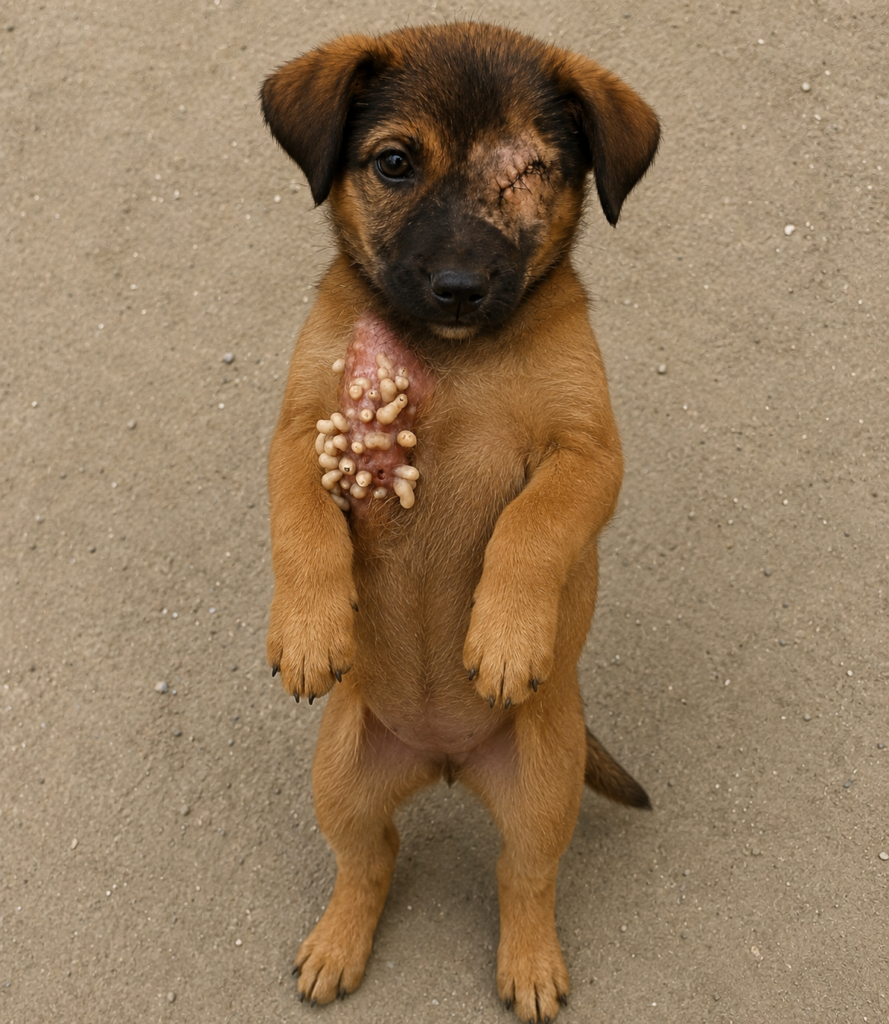
The stray dog had likely spent months wandering through streets and empty lots in search of food and water. Without regular meals, medical care, or a safe place to rest, his body became weak. The large swollen mass near his hind leg drew attention, but few people knew what it was or how much pain it caused.
He slept wherever he could—near construction sites, under trees, or beside abandoned buildings. Rain soaked him during storms, and heat exhausted him during the day. Yet he continued to survive, driven by the same instinct that keeps so many homeless animals alive: the hope that tomorrow might be better.
For local residents, he became a familiar sight. They saw him lying quietly in the same area day after day. What they did not realize was that his condition was getting worse with each passing week.
The Moment Everything Changed
One morning, a volunteer from a small animal rescue group noticed the dog while delivering food to other strays. Unlike the others, he did not rush forward. He simply lifted his head and watched from a distance, too weak to stand properly.
The volunteer approached slowly, speaking softly so the frightened animal would not run away. Up close, the severity of the condition became clear. The growths were inflamed, irritated, and likely causing significant discomfort. Leaving him there was no longer an option.
With patience and care, the rescuer managed to secure the dog and transport him to a veterinary clinic. It was the first time in a very long time that someone had touched him with kindness instead of fear.
The Veterinary Examination
At the clinic, veterinarians performed a full examination. They cleaned the affected area, checked for infection, and assessed his overall health. He was underweight, dehydrated, and exhausted, but he still wagged his tail gently when someone spoke to him.
The medical team explained that conditions like severe skin disease, tumors, infections, or neglected wounds can become life-threatening if left untreated. Early veterinary care is essential for any dog showing unusual swelling, bleeding, or skin changes.
For this stray dog, treatment would take time. He needed medication, proper nutrition, rest, and regular monitoring. Recovery would not happen overnight, but for the first time, he had a chance.
Learning to Trust Again
The first few days were difficult. The dog was nervous around people and startled easily. Years of surviving on the streets had taught him to expect danger. Yet the shelter staff continued to feed him gently, change his bedding, and speak to him calmly.
Slowly, he began to relax.
He started eating full meals. He slept more deeply. When volunteers entered his kennel, he lifted his head and greeted them instead of shrinking away. Small changes became signs of a healing spirit.
Animals often remember kindness even after experiencing neglect. Given safety and consistency, many rescued dogs learn to trust again. This dog was no exception.
The Long Road to Recovery
Treatment continued for weeks. The swelling gradually improved, and his energy began to return. His coat looked healthier, and he gained weight. The dog who once lay motionless on the roadside started walking around the shelter courtyard with curiosity.
Volunteers gave him a simple name and celebrated every milestone:
- Finishing a full meal
- Walking without hesitation
- Playing with a toy
- Wagging his tail when someone approached
These moments may seem small, but for a rescued stray, they are signs of a new life beginning.
Why Stories Like This Matter
Across the world, millions of stray dogs face hunger, injury, disease, and loneliness. Many survive without medical care for years. Their suffering is often invisible because people become accustomed to seeing them on the streets.
But every animal has a story.
When communities support rescue efforts, provide food and water, and seek veterinary help for injured animals, lives can change dramatically. One phone call, one rescue, or one act of compassion can mean the difference between suffering and recovery.
This dog survived because someone stopped and cared.
Simple Ways to Help Stray Dogs
You do not need a shelter to make a difference. Even small actions can help homeless animals:
- Provide clean water during hot weather.
- Offer nutritious food when possible.
- Contact local rescue groups if an animal appears injured or sick.
- Support spay and neuter programs to reduce suffering in stray populations.
- Share rescue stories to encourage compassion in others.
These simple steps can improve the lives of countless animals in your community.
A New Beginning
Months after his rescue, the dog barely resembled the exhausted animal found on the roadside. His eyes were brighter, his body stronger, and his personality playful. He enjoyed short walks, gentle attention, and quiet naps in the sun.
Most importantly, he no longer faced the world alone.
The shelter staff hoped that one day he would find a permanent home where he could spend the rest of his life safe, loved, and cared for. Whether adopted or not, he had already achieved something extraordinary: he survived.
His journey reminds us that recovery is possible even after great suffering. With medical care, patience, and compassion, animals can heal both physically and emotionally.
Conclusion
The image of a sick stray dog lying beside the road is heartbreaking, but it is also a reminder of the power of kindness. Behind every abandoned animal is a life that wants comfort, safety, and a chance to be loved.
This dog’s story began with pain, neglect, and loneliness. It continued with rescue, treatment, and hope. And it now stands as a reminder that compassion can change a life that others have forgotten.
If you ever see an injured or suffering animal, remember that your decision to stop, help, or call for assistance may become the turning point in that animal’s story.
Sometimes the smallest act of kindness becomes someone’s second chance at life.