
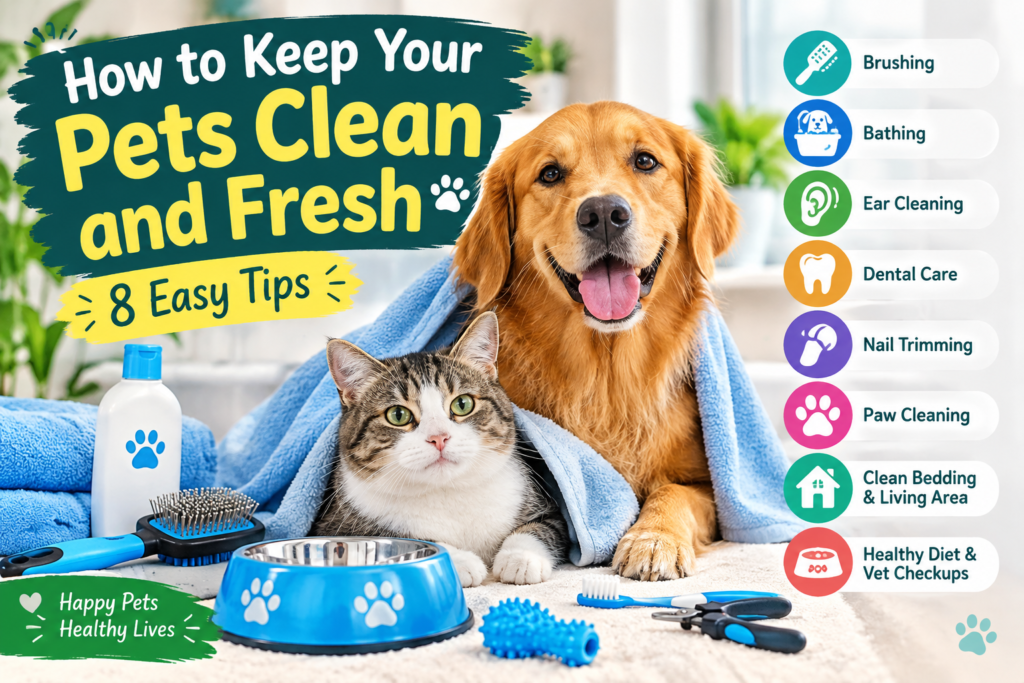

How to Keep Your Pets Clean and Fresh: Easy Grooming Tip
Introduction
Keeping your pets clean and fresh is an important part of responsible pet ownership. Regular grooming, proper bathing, dental care, and a clean living environment help your pets stay comfortable, healthy, and happy. Whether you have a dog, cat, or another furry companion, simple daily hygiene habits can make a big difference.
Pets can collect dirt, shed hair, develop unpleasant odors, and experience skin problems if their grooming needs are neglected. Fortunately, you do not need expensive products to maintain good pet hygiene. A consistent routine and pet-safe grooming supplies are often enough to keep your furry friend looking and feeling their best.
Here are eight easy ways to keep your pets clean and fresh.
1. Brush Your Pet Regularly
Regular brushing removes loose hair, dirt, and debris from your pet’s coat. It also helps prevent tangles and mats, especially in long-haired breeds.
Dogs with thick or long coats may need daily brushing, while short-haired pets may need brushing less frequently. Cats also benefit from regular brushing, which can reduce loose hair and help prevent hairballs.
Choose a brush suitable for your pet’s coat type. Brush gently and check for redness, bumps, or unusual skin changes.
2. Bathe Your Pet When Needed
Bathing helps remove dirt, excess oil, and unpleasant smells. However, the right bathing frequency depends on your pet’s species, coat, lifestyle, and skin condition.
Use lukewarm water and a shampoo specifically formulated for your pet. Human shampoos can irritate animal skin because their skin has different needs.
Avoid bathing too frequently unless your veterinarian recommends it, as excessive washing may dry out the skin. Rinse thoroughly and dry your pet carefully, especially around skin folds and between the toes.
3. Keep Your Pet’s Ears Clean
Ear hygiene is important because dirt and excess moisture can contribute to irritation and ear infections.
Check your pet’s ears regularly for redness, swelling, unusual discharge, or a strong odor. If cleaning is needed, use a veterinarian-approved ear cleaner and follow the product instructions.
Never insert cotton swabs or other objects deep into the ear canal. If your pet frequently shakes its head, scratches its ears, or shows signs of pain, consult a veterinarian instead of attempting to treat a possible infection at home.
Youtube Video
4. Maintain Healthy Teeth and Gums
Dental care is an essential part of keeping pets clean and fresh. Plaque and tartar buildup can cause bad breath, gum inflammation, and painful dental disease.
Brush your pet’s teeth with a pet-specific toothbrush and toothpaste. Never use human toothpaste, as some ingredients may be unsafe for animals.
Daily brushing is ideal when your pet tolerates it. Dental chews approved for your pet’s species and size may provide additional support, but they do not replace brushing or professional dental care.
Arrange veterinary dental examinations as recommended.
5. Trim Nails Safely
Overgrown nails can make walking uncomfortable and may affect your pet’s movement. Regular nail checks help you determine when trimming is necessary.
Use nail clippers designed for your pet and remove only small amounts at a time. Be careful not to cut the quick, the sensitive area containing blood vessels and nerves.
If your pet has dark nails, struggles during trimming, or becomes frightened, ask a veterinarian or professional groomer for help.
6. Clean Paws After Outdoor Activities
Pets can bring mud, dust, grass, and other debris into the home after walks or outdoor play.
Wipe your dog’s paws with a damp cloth or pet-safe wipe when necessary. Check between the toes and around the paw pads for small stones, cuts, redness, or irritation.
Dry the paws thoroughly, particularly in damp weather. For cats that go outdoors, check their paws regularly for dirt or injuries.
Avoid harsh cleaning chemicals and do not apply disinfectants to your pet’s paws unless specifically directed by a veterinarian.
7. Keep Bedding and Living Areas Clean
A fresh-smelling pet also needs a clean environment. Pet beds, blankets, toys, collars, and food bowls can collect dirt, hair, saliva, and food residue.
Wash bedding and blankets regularly according to their care instructions. Clean food bowls after meals and refresh water bowls daily.
Vacuum areas where your pet spends time to remove loose hair and dust. Clean toys using methods appropriate for their materials, and discard damaged items that may pose a safety risk.
A clean environment can help reduce unpleasant odors and make your home more comfortable for everyone.
8. Maintain a Healthy Diet and Regular Veterinary Care
A balanced, species-appropriate diet supports healthy skin, a shiny coat, and overall well-being. Provide fresh drinking water and feed your pet according to its nutritional needs.
Persistent bad breath, greasy fur, excessive scratching, unusual body odor, or recurring ear problems may indicate an underlying health issue rather than poor hygiene alone.
Regular veterinary checkups can help identify dental disease, skin infections, parasites, and other conditions that require treatment.
Avoid using perfumes, essential oils, or deodorizing sprays not specifically confirmed as safe for your pet.
Conclusion
Learning how to keep your pets clean and fresh does not need to be complicated. Regular brushing, appropriate bathing, dental hygiene, safe nail trimming, clean paws, and fresh bedding all contribute to better pet care.
Every pet has different grooming needs, so adjust your routine according to its coat, age, lifestyle, and health. Gentle handling and pet-safe products make grooming more comfortable and enjoyable.
By following these eight simple tips, you can help your furry companion stay clean, comfortable, and healthy while strengthening the bond you share.
Disclaimer: This article is for general educational purposes and does not replace professional veterinary advice.